

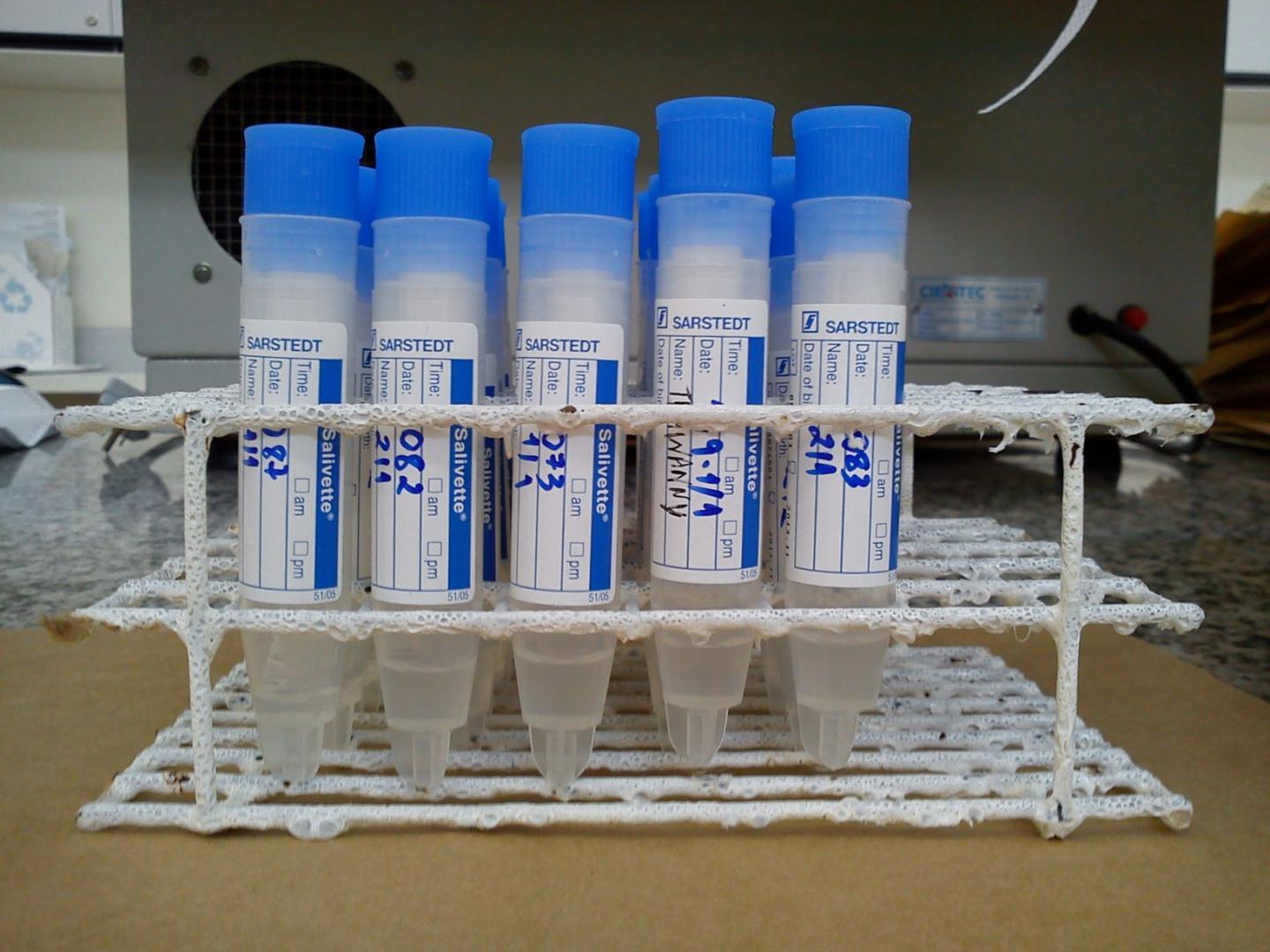

IMAGE: Brazilian researchers found the level of uric acid in saliva to be a good indicator of body fat percentage in a study designed to identify reliable biomarkers that can be…
view more
Credit: Paula Midori Castelo/UNIFESP
In addition to helping us chew and swallow, keeping the mouth moist and protecting us against germs, saliva can also be used for early detection of the risk of developing diseases associated with surplus body fat.
Researchers at the Federal University of São Paulo (UNIFESP) and the University of Campinas (UNICAMP) in Brazil performed a study in which they used the level of uric acid in saliva to predict body fat percentages in teenagers and identify those with surplus fat even if they had no symptoms of chronic obesity-related disease.
The study was supported by FAPESP (São Paulo Research Foundation). The results are published in the journal Nutrition Research.
The goal of the study was to identify reliable biomarkers in saliva that correlated with those found in the blood as a contribution to the development of quick tests to monitor health, especially in children.
“The idea is to enable saliva to be more widely used as an alternative biological sample for clinical analysis. The advantage of saliva is that it can be collected several times noninvasively and painlessly, like urine,” Paula Midori Castelo, a professor at UNIFESP in Diadema and principal investigator for the project, told Agência FAPESP.
According to Castelo, the study showed the level of salivary uric acid to be a good predictor of body fat percentage even in adolescents considered healthy, although the link between these two factors is poorly understood and will have to be investigated further.
Uric acid is the end-product of the metabolic breakdown of purines, which are nitrogenous bases in DNA and RNA. It accumulates in the blood and, in much smaller proportions, in the saliva. Although uric acid acts as an antioxidant, when levels become too high in the blood and saliva owing to dysregulated purine degradation, it can lead to a predisposition to develop hypertension, inflammation and cardiovascular disease.
Methods
The researchers collected saliva samples from 129 girls and 119 boys. In addition to uric acid, they measured the levels of several other substances, including cholesterol and vitamin D.
The subjects were aged 14-17 and were students at public schools in Piracicaba, São Paulo State. They first answered a questionnaire on their medical and dental history. They also underwent an oral examination to exclude participants with cavities and/or periodontal disease (gum inflammation).
“Cavities and periodontal disease are known to influence salivary parameters such as pH [acidity], electrolytic composition and biochemistry. Both relate to the secretion of substances that can change the composition of saliva,” Castelo explained.
The remaining participants then submitted to an anthropometric evaluation that included measures of height, weight and body fat percentage, as well as skeletal muscle mass, using a bioelectrical impedance analyzer, which gauges resistance to a weak current as it passes through the body.
Saliva was sampled at home after the subjects had fasted for 12 hours. The samples were collected using a Salivette, a plastic tube containing a cotton swab. Levels of cholesterol, uric acid and other substances were measured by high-performance liquid chromatography (HPLC), an analytical chemistry technique that separates, identifies and quantifies each component in a mixture.
Statistical analysis of the data showed that the adolescents with a high level of salivary uric acid also had a higher body fat percentage.
Using linear regression (a statistical technique that analyzes the relationships between variables), the researchers were also able to predict body fat percentage based on the level of salivary uric acid.
“The level of this compound in saliva proved to be a reliable indicator of body fat accumulation, even in adolescents who were not being treated for chronic disease. It could be the basis for an accurate noninvasive method of monitoring dietary health and achieving early detection of changes in nutritional state,” Castelo said.
###
About São Paulo Research Foundation (FAPESP)
The São Paulo Research Foundation (FAPESP) is a public institution with the mission of supporting scientific research in all fields of knowledge by awarding scholarships, fellowships and grants to investigators linked with higher education and research institutions in the State of São Paulo, Brazil. FAPESP is aware that the very best research can only be done by working with the best researchers internationally. Therefore, it has established partnerships with funding agencies, higher education, private companies, and research organizations in other countries known for the quality of their research and has been encouraging scientists funded by its grants to further develop their international collaboration. You can learn more about FAPESP at http://www.
Disclaimer: AAAS and EurekAlert! are not responsible for the accuracy of news releases posted to EurekAlert! by contributing institutions or for the use of any information through the EurekAlert system.







