

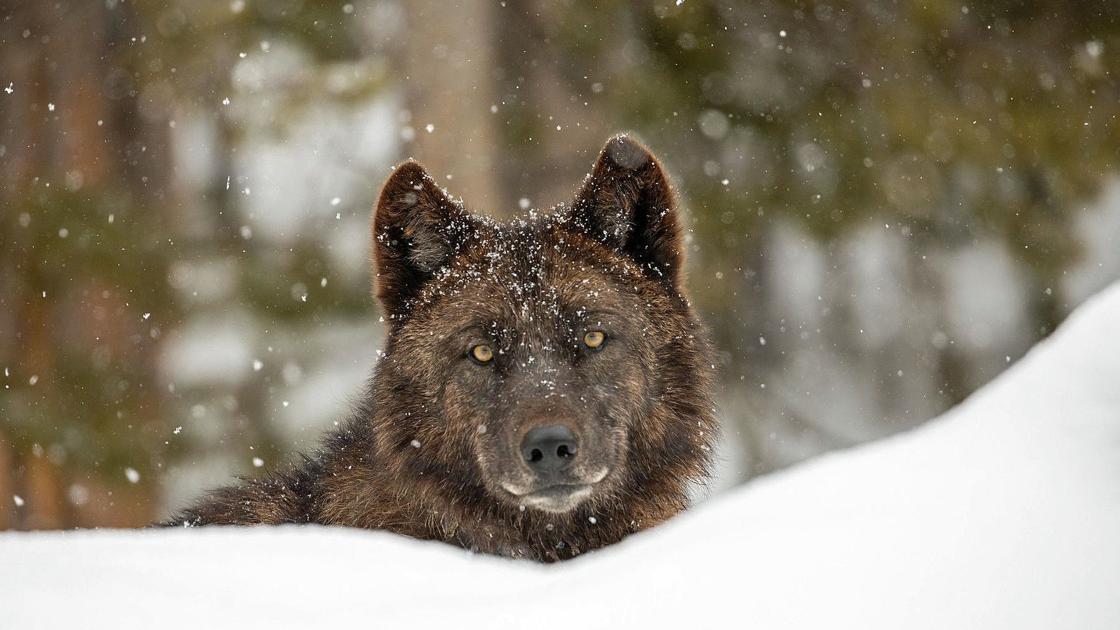

Alexandra DeCandia spent years working on her doctoral thesis on wolf genetics in Yellowstone and its effects on how wolves experience mange. With her colleagues, DeCandia found support for the “monoculture theory”: wolves with severe mange tend to have less genetic variation than wolves with mild symptoms.
Responses
Mange isn’t specific to wolves. It’s also found in more than 100 other mammals. In humans the infections are referred to as scabies. Animals infected by mange vary in the severity of their reactions, which can range from itchy skin lesions to hair loss, weight loss, secondary infections and even death.
These varied reactions, DeCandia and her fellow researchers found, can depend on an animal’s genetic diversity. More genetic variety gives an animal better tools to fight the infection.
“We noticed some very different responses,” DeCandia said. “Some wolves clear the infection in a short amount of time. Others develop really severe symptoms, like over 50 percent hair loss or secondary infections. It’s really a stark contrast between the two responses. So we wanted to know if there was a genetic component.”
The scientists compared the situation to one in agriculture known as the “monoculture effect.” Plants with a similar genetic composition, like a field of corn, will be less likely to fight off a disease, allowing it to spread throughout the entire population.
“Genetics are this really powerful tool for helping us learn about wildlife populations, whether in Yellowstone or captivity,” DeCandia said. “It tells us so much about their health and allows us to look into their past.”







