

RICHMOND — The draft of a comprehensive study of the Beaver River watershed is now complete and the Richmond Conservation Commission will present the results at a virtual public meeting on Wednesday.
Prepared by the environmental consulting firm, the Horsely Witten Group, the study was funded by a $30,000 grant from the Narragansett Bay Estuary Program and the Environmental Protection Agency’s Southern New England Program Watershed Restoration Project.
As required under terms of the grant, the town contributed in-kind services but did not have the funds to contribute $10,000 for the mandatory non-federal funding match. Beaver River Valley Community Association founder John Peixinho stepped in and donated the $10,000, making it possible for the commission to submit the grant application.
Commission Chair James Turek prepared the funding request, which was submitted in May 2019. Horsely Witten was selected to conduct the study, which began in April 2020.
Turek explained that the study did not include original research, but rather, the analysis of existing data.
“They were pretty much hired to do what you call a desktop analysis,” he said. “They weren’t set on doing a whole bunch of testing and field work and whatnot, but basically to take existing data, mostly digital data, and analyzing it into a series of overlays with descriptions of environmental conditions in the watershed.”
Although it relied on existing data, the firm did confirm its accuracy by making field visits, a procedure known as “ground truthing.”
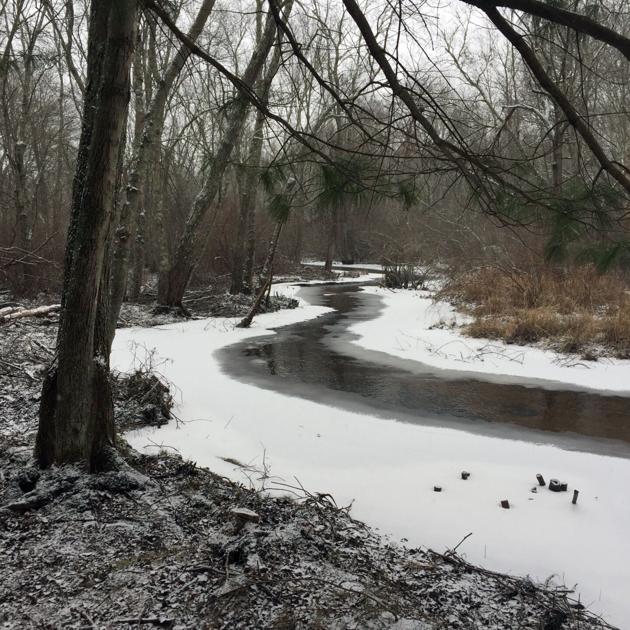
The 12-square miles of the Beaver River watershed lie almost entirely within the town of Richmond, with a small section extending into Exeter. The river, which joins the Pawcatuck River near Shannock, is one of eight tributaries in the Wood-Pawcatuck watershed to have been declared part of the National Wild and Scenic River system.
Turek said a Stakeholder Advisory Group provided information to the consultants but did not direct the research.
“The town formed a team of potential interested parties that served as stakeholders to provide input on how we might do the analysis, helping provide input and how to carry it out – not telling the consultant how to do things but what were some of the important metrics, if you will, that would be important to look at,” he said.
In addition to the Conservation Commission, several organizations participated in the stakeholder group including the Rhode Island Department of Environmental Management, Trout Unlimited Rhode Island, The Nature Conservancy, Protect Rhode Island Brook Trout, Beaver River Valley Community Association, Wood-Pawcatuck Watershed Association and the Richmond Rural Preservation Land Trust.
Christopher Fox, executive director of the Wood-Pawcatuck Watershed Association, said he was reviewing the draft report.
“I just need to make sure that they didn’t miss anything, but because I was participating in all those stakeholder meetings, I really don’t think I’m going to find anything missing,” he said.
Fox noted that the new study builds on a regional flood resiliency plan that WPWA completed in 2014.
“One of the things that I really loved this work that the Conservation Commission wanted to undertake is, to my knowledge, this is the first time in a formal way a town has specifically taken the elements of the Flood Resiliency Management Plan and its recommendations within their town and started to build on it.”
Horsely-Witten’s 142-page draft report contains analyses of the environmental components of the watershed, from the hydrology of the river to the uses of land bordering it. With only 3% impervious, or paved surface and about 80% of the land covered in forest, the natural qualities of the watershed have been relatively well-preserved.
Richmond Town Planner Shaun Lacey said the study’s recommendations would pave the way for future conservation initiatives.
“One of the goals of this study is that it would allow the town to apply for future grant opportunities to implement some of these priorities that are stated within the document,” he said. “Grant opportunities for infrastructure improvements such as culverts, grant opportunities to allow for technical assistance in prescribing stronger regulations to protect the watershed, maybe future opportunities to acquire land or acquire the development rights of land to protect it from development pressure in the future.”
Turek said members of the public would be invited to hear the recommendations of the report and comment on its findings at Wednesday’s virtual meeting.
“We’ll have the public meeting to get more input, any other comments people may have like ‘did you consider this?’ or ‘why did you forget that?’ or ‘how did you do this?’,” he said. “That’s what the purpose of the public meeting is.”
Instructions on how to join the meeting are posted on the town’s website at richmondri.com.







