
GLOBAL RESEARCH SYNDICATE
No Result
View All Result
  • Login
  • Latest News
  • Consumer Research
  • Survey Research
  • Marketing Research
  • Industry Research
  • Data Collection
  • More
    • Data Analysis
    • Market Insights
  • Latest News
  • Consumer Research
  • Survey Research
  • Marketing Research
  • Industry Research
  • Data Collection
  • More
    • Data Analysis
    • Market Insights
No Result
View All Result
globalresearchsyndicate
No Result
View All Result
Home Data Collection

CU Boulder researchers see little change to single-cell organism

globalresearchsyndicate by globalresearchsyndicate
January 16, 2021
in Data Collection
0
CU Boulder researchers see little change to single-cell organism
0
SHARES
10
VIEWS
Share on FacebookShare on Twitter

For two consecutive weeks, Sarah Hurley slept in her car parked outside her working lab.

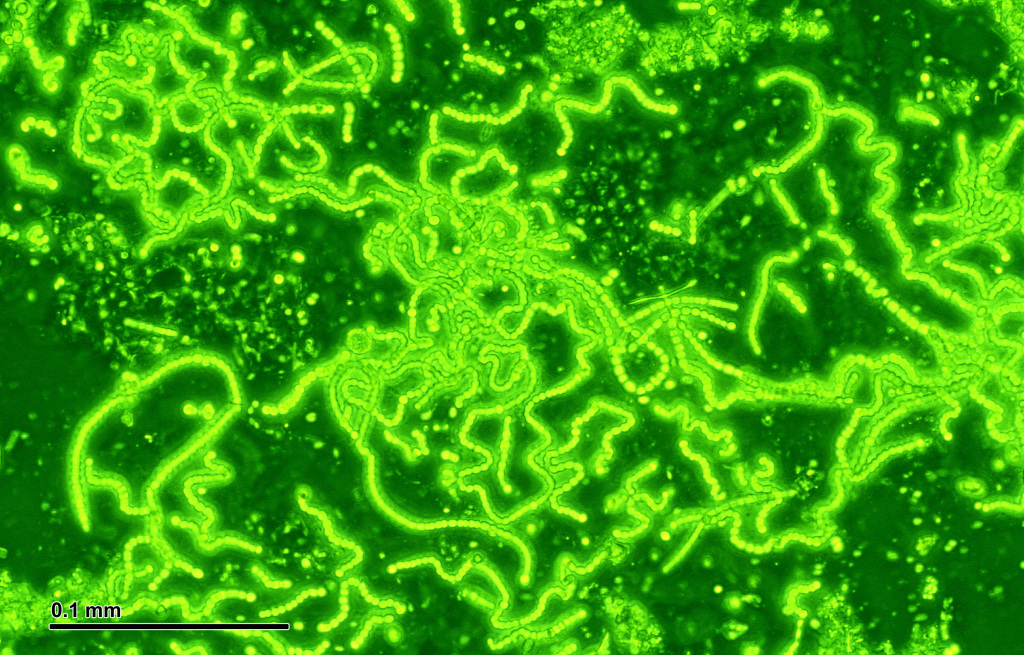
Cyanobacteria cells as seen under the microscope. Doc. RNDr. Josef Reischig, CSc., CC BY-SA 3.0, via Wikimedia Commons

The doctoral research assistant’s focus was on cyanobacteria, a single-celled organism that has been found in nearly every large body of water on Earth for over two billion years.

Because culturing cyanobacteria requires frequent monitoring, Hurley returned to the University of Colorado Boulder’s Sustainability, Energy and Environment Laboratory building on East Campus every three hours for 14 days to check on its growth.

“By the end of those two weeks, I was no longer a person,” she said. “I would go in and instead of driving between my house in north Boulder and back to (assistant professor) Jeff’s (Cameron) lab on campus, I would put my sleeping bag in my car because it was easier to just roll out of bed and go check on the cultures.”

The project’s genesis began in 2017 as a proposal for Hurley’s post-doctoral project. Along with Cameron and another CU Boulder assistant professor Boswell Wing, the trio’s goal was to discover if ancient cyanobacteria held similar characteristics to what is found today. In current times, cyanobacteria is more commonly known as “blue-green algae” and is the toxic substance found in many local reservoirs.

An answer was soon found when the group compared modern beta-cyanobacteria with a genetically modified form of cyanobacteria that lacked carboxysomes, a protein-lined compartment that allows the concentration of carbon dioxide. They discovered that the altered cyanobacteria actually mimicked current forms of beta-cyanobacteria. She said the results were “counterintuitive.”

“We thought that because CO2 levels were higher (today), essentially that these genetically engineered cyanobacteria would be more like ancient cyanobacteria,” Hurley said. “The breakthrough came when we had the data from the two different types of cyanobacteria and we compared that to the record two billion years ago and saw that modern-like cyanobacteria were responsible for this record.”

Although scientists have not discovered what the cyanobacteria may have looked like two billion years ago, it still holds an important lens into Earth’s history.

“What Sarah’s work showed is that basically cyanobacteria got as good as they were ever going to get two billion years ago,” Wing said. “That to me is pretty remarkable.”

Wing added that the project’s results will allow scientists to experiment on and understand how ancient cyanobacteria operated two billion years ago.

The group’s four years of hard work was rewarded on Jan. 6 when their study was published in the scientific journal, Science Advances. Although the journal requires a publishing fee, Cameron said it was important for them to reach a large audience.

Another rewarding aspect of the venture was the “unusual” alliance between CU Boulder’s geology and biochemistry departments, Wing said. His expertise focuses on biogeology while Cameron and Hurley specialize in chemistry.

“If there was from my perspective a hurdle that we had to get over, part of it was just figuring out how to talk to each other about the same things and (to) use the same vocabulary and then decide what were the interesting questions to study,” Wing said.

To help the researchers, biochemistry graduate student Nicholas HIll and then-undergraduate research assistant Claire Jasper joined the project. Hill’s contribution focused on the molecular genetics of producing the cyanobacteria, which was then given to Jasper who helped culture it.

“This project had a ton of different elements to it,” Hurley said. “There (was) modeling and measurements and culturing and each of those parts of the project probably took six months on their own. Seeing it all come together was really gratifying.


Related Posts

How Machine Learning has impacted Consumer Behaviour and Analysis
Consumer Research

How Machine Learning has impacted Consumer Behaviour and Analysis

January 4, 2024
Market Research The Ultimate Weapon for Business Success
Consumer Research

Market Research: The Ultimate Weapon for Business Success

June 22, 2023
Unveiling the Hidden Power of Market Research A Game Changer
Consumer Research

Unveiling the Hidden Power of Market Research: A Game Changer

June 2, 2023
7 Secrets of Market Research Gurus That Will Blow Your Mind
Consumer Research

7 Secrets of Market Research Gurus That Will Blow Your Mind

May 8, 2023
The Shocking Truth About Market Research Revealed!
Consumer Research

The Shocking Truth About Market Research: Revealed!

April 25, 2023
market research, primary research, secondary research, market research trends, market research news,
Consumer Research

Quantitative vs. Qualitative Research. How to choose the Right Research Method for Your Business Needs

March 14, 2023
Next Post
Impact of COVID-19 on Consumer Foodservice Market 2020 | Trends, Growth Demand, Opportunities & Forecast To 2026

Impact of COVID-19 on Consumer Foodservice Market 2020 | Trends, Growth Demand, Opportunities & Forecast To 2026

Categories

  • Consumer Research
  • Data Analysis
  • Data Collection
  • Industry Research
  • Latest News
  • Market Insights
  • Marketing Research
  • Survey Research
  • Uncategorized

Recent Posts

  • Ipsos Revolutionizes the Global Market Research Landscape
  • How Machine Learning has impacted Consumer Behaviour and Analysis
  • Market Research: The Ultimate Weapon for Business Success
  • Privacy Policy
  • Terms of Use
  • Antispam
  • DMCA

Copyright © 2024 Globalresearchsyndicate.com

Welcome Back!

Login to your account below

Forgotten Password?

Retrieve your password

Please enter your username or email address to reset your password.

Log In
This website uses cookies to improve your experience. We'll assume you're ok with this, but you can opt-out if you wish. Cookie settingsACCEPT
Privacy & Cookies Policy

Privacy Overview

This website uses cookies to improve your experience while you navigate through the website. Out of these cookies, the cookies that are categorized as necessary are stored on your browser as they are essential for the working of basic functionalities of the website. We also use third-party cookies that help us analyze and understand how you use this website. These cookies will be stored in your browser only with your consent. You also have the option to opt-out of these cookies. But opting out of some of these cookies may have an effect on your browsing experience.
Necessary
Always Enabled
Necessary cookies are absolutely essential for the website to function properly. This category only includes cookies that ensures basic functionalities and security features of the website. These cookies do not store any personal information.
Non-necessary
Any cookies that may not be particularly necessary for the website to function and is used specifically to collect user personal data via analytics, ads, other embedded contents are termed as non-necessary cookies. It is mandatory to procure user consent prior to running these cookies on your website.
SAVE & ACCEPT
No Result
View All Result
  • Latest News
  • Consumer Research
  • Survey Research
  • Marketing Research
  • Industry Research
  • Data Collection
  • More
    • Data Analysis
    • Market Insights

Copyright © 2024 Globalresearchsyndicate.com



