

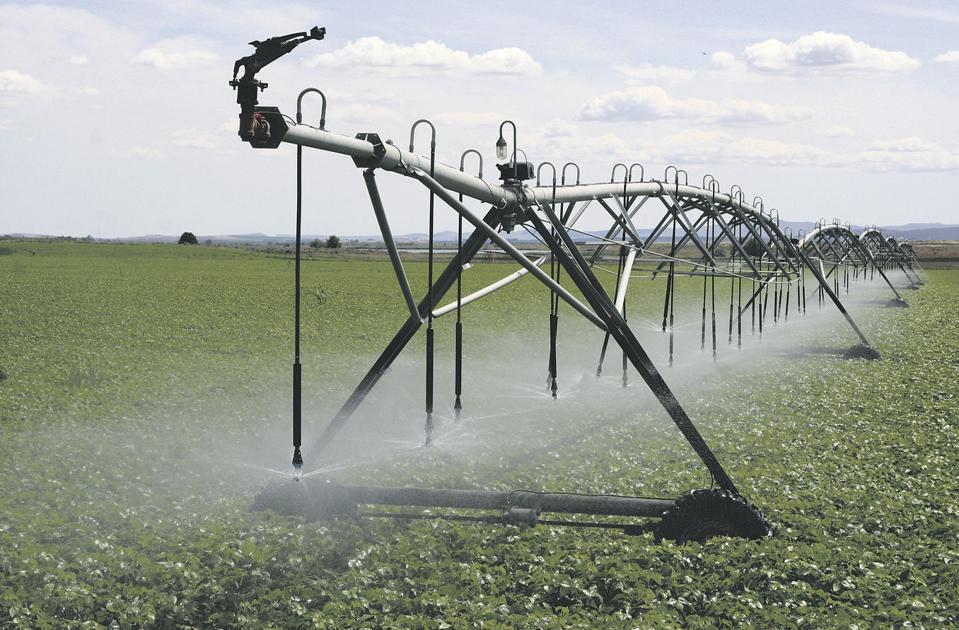
A survey of farmers who irrigate will help Washington State University researchers better understand grower views of water management.
The researchers will survey owners of irrigated in the Okanogan, Methow, Walla Walla, and Yakima river basins in December and January.
The survey asks people about their use of weather forecasts and how they might best be improved, basic information about their operations, their views on water management policies, and their views and experience with water markets.
New technologies include improved seasonal forecasting, remote measurement of a crop’s water use and computer-aided water markets, said Georgine Yorgey, associate director of WSU’s Center for Sustaining Agriculture and Natural Resources in Mount Vernon.
“We’re interested in how people already make decisions in those arenas, and how they might use these technologies if they existed,” Yorgey said.
The results could inform development of such products, through the university and private companies, she said.
To improve seasonal water supply forecasts, the researchers may learn whether farmers value forecasts that are earlier, or more accurate, and in which format they would like to receive the information, said Joe Cook, survey lead and scientist with WSU’s School of Economic Sciences.
Results would be passed along to the various university researchers working on seasonal forecasts, Cook said.
The survey is part of a larger project funded by the USDA and led by the State of Washington Water Research Center, which focuses on developing new technology and practices that provide better information to support water use decisions for people and the environment.
The researchers led a series of listening sessions last year. The survey will ask a broader set of people, Cook said.
The researchers are sending the survey to 1,500 randomly selected farmers. Cook estimated that roughly 10,000 farmers fit the criteria to be surveyed.
The survey takes 15 to 20 minutes to complete, Yorgey said.
Cook and Yorgey expect to release results of the survey by the summer of 2021.
The survey does not ask any questions that would put anyone’s water right at risk of relinquishment. All responses will be kept confidential.
The five-year project, now about halfway through, received $5 million through the USDA National Institute of Food and Agriculture.







