

- Cities were already undergoing transformation before the pandemic – and COVID-19 has only accelerated this process.
- Here are six areas of focus to hack our cities into becoming more open, welcoming spaces geared towards the jobs and lives of the future.
Our cities are changing at an accelerating rate. This trend began well before the COVID-19 pandemic, and is only being hastened by it.
We propose six ways to ‘hack a city’ in order to make it future-proof. Following along the lines of the famous MIT Hacks, these non-sequential steps can disrupt life in cities by employing catalytic and creative methods. Adherence to a project plan with clear, specific and attainable goals will ensure the impact of these measures on cities’ societal, ecological and economical dimensions as well as their scalability. All stakeholders in a given city – from mobility providers to governments and public institutions – provide existential resources for this project and serve as beacons of light for newcomers from various skill levels.
1. Architecture
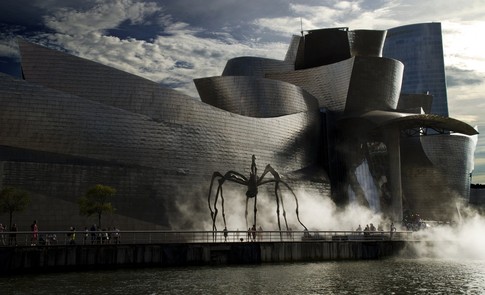
The Guggenheim Museum, Bilbao. The Kiasma, Helsinki. The Opera House, Sydney.
These buildings are all strongly linked to their cities as landmarks. Admittedly, the German term ‘Sehenswürdigkeit’ (worthy to be seen) draws this connection far better than its English equivalent. The influence of some buildings goes far beyond their original function as offices, art spaces or libraries. The function of a building exceeds its physical boundaries and it becomes a central piece in the culture and identity of a city. The Guggenheim Museum, for example, is the progenitor of the ‘Bilbao effect‘, a phenomenon where cultural investment plus striking architecture brings economic prosperity to a city.
2. Politics
Increased digitalization and information spread through social networks has drastically reduced people’s trust in governments, which are viewed as dishonest representatives of the few; according to the Edelman Trust Barometer, governments are trusted about as much as the media, significantly below NGOs and businesses. Higher trust in local governments respective to their central counterparts, however, presents a route for improvement – namely proximity. Municipal governments need to put their citizens closer to the decision-making process – an approach that has been termed ‘distributed governance‘. Citizens’ assemblies with randomly selected members and access to external experts, for example, can increase levels of civic political participation while also serving as sources of political innovation. This model is being deployed already in Germany.
3. Ownership structures
Subscription models, as part of the platform economy, are outperforming classical business models and taking over more industries each year. As well as media (such as Spotify, Netflix and news outlets), this approach now encompasses industries such as real estate and furniture. New living concepts include fully-furnished apartments for medium-term temporary co-living and even turnkey locations, blurring the line between rented accommodation and hotels. These offers attract entrepreneurs and remote workers through the creation of communities. On the other hand, even investments in real estate have been democratized with the introduction of platforms that permit micro-investments in property.
4. Mobility concepts
Currently, widespread mid-range mobility solutions are restricted to public transport and cars. Start-ups like Munich-based Lilium and Volocopter seek to revolutionize urban air mobility, expand the radius of our lives and provide new alternatives to common means of transport. While urban transport used to be prevalent only in two dimensions (underground trains like the London Tube excluded), air travel creates new opportunities through the inclusion of another dimension alone. Similarly, the concept for a cable car above and along a major urban road in Munich allows this connection to link urban quarters on various layers.
5. Technology, talent and tolerance
According to the American urban studies theorist Richard Florida, cities thrive creatively when they exhibit the three T’s: technology, talent and tolerance. It is not sufficient to be adept in one or two of these categories; instead, a well-balanced mix is required to sustainably develop a city. The first and also the least controversial of the T’s is technology; from new inventions like software, robotics and biotechnology to improvements in manufacturing systems and processes, technology makes economies and societies more efficient and productive. Regarding talent, economists agree that skilled, ambitious, educated and entrepreneurial people – whom they refer to as human capital – are a central force in economic progress. Tolerance – or, broadly speaking, openness to diversity – provides an additional source of economic advantage that works alongside technology and talent.
Cities represent humanity’s greatest achievements – and greatest challenges. From inequality to air pollution, poorly designed cities are feeling the strain as 68% of humanity is predicted to live in urban areas by 2050.
The World Economic Forum supports a number of projects designed to make cities cleaner, greener and more inclusive.

These include hosting the Global Future Council on Cities and Urbanization, which gathers bright ideas from around the world to inspire city leaders, and running the Future of Urban Development and Services initiative. The latter focuses on how themes such as the circular economy and the Fourth Industrial Revolution can be harnessed to create better cities. To shed light on the housing crisis, the Forum has produced the report Making Affordable Housing a Reality in Cities.
6. Territorial assets
Why do talented, creative people with lots of choices opt to locate in certain places? The answer lies in the combination of all the previous steps, and can be explained by a city’s unique set of characteristics that define a place and make it attractive; what’s there, who’s there and what’s going on. For younger demographics, juicy labour markets are equally as important as lifestyle, social interaction, the dating scene, diversity, authenticity, scenes and identity. Aside from that, a happy city life requires physical and economic security, basic services, high-quality leadership, openness and aesthetics.
Where to start?
Data is essential to better understand cities. Open-data initiatives such as the project launched in New York City – where anyone can access freely available datasets on everything from WiFi hotspots and bicycle routes to air quality and parking violations – can lead to the creation of whole new business models, by using geographical or construction data, for example. The challenge to solve is how cities’ data can be collected systematically. Once this has been established, we can learn by comparing cities’ cultures and what we have to change in our cities before reopening them after COVID-19. As a glimpse into the future, this can mean adapting transportation and larger infrastructure by changing the design of stations, seating and travel paths, as well as protecting the local economy as well as frontline workers in service-oriented spaces.







