
GLOBAL RESEARCH SYNDICATE
No Result
View All Result
  • Login
  • Latest News
  • Consumer Research
  • Survey Research
  • Marketing Research
  • Industry Research
  • Data Collection
  • More
    • Data Analysis
    • Market Insights
  • Latest News
  • Consumer Research
  • Survey Research
  • Marketing Research
  • Industry Research
  • Data Collection
  • More
    • Data Analysis
    • Market Insights
No Result
View All Result
globalresearchsyndicate
No Result
View All Result
Home Consumer Research

Birth Control Pill Won’t Raise Depression Risk – Consumer Health News

globalresearchsyndicate by globalresearchsyndicate
November 12, 2020
in Consumer Research
0
Birth Control Pill Won’t Raise Depression Risk – Consumer Health News
0
SHARES
3
VIEWS
Share on FacebookShare on Twitter

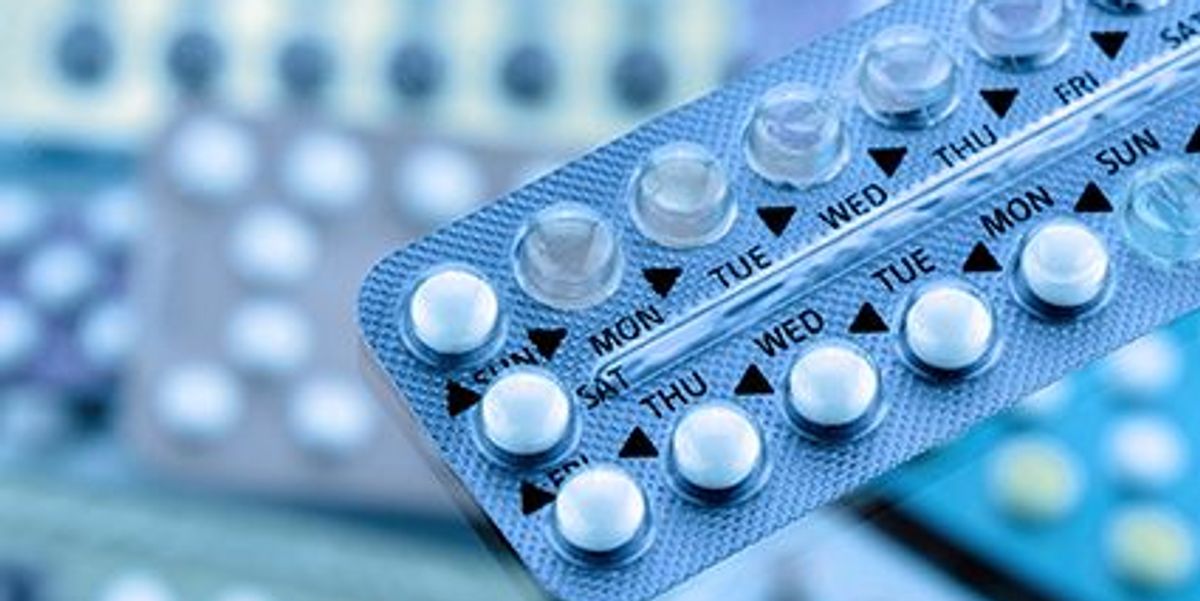
THURSDAY, Nov. 12, 2020 (HealthDay News) — Women who struggle with mental health problems will sometimes forgo the most effective forms of birth control because of concerns about worsening those issues, but a new study delivers a reassuring finding: The pill and other forms of hormonal birth control do not raise depression risk.

“This is a very common concern,” explained senior study author Dr. Jessica Kiley, chief of general obstetrics and gynecology at Northwestern University Feinberg School of Medicine, in Chicago.

“For some patients with anxiety disorders, when you discuss a contraceptive’s potential side effect, they get very worried. We’re hoping to encourage women to focus on their contraceptive needs and learn about options that are unlikely to cause depression,” Kiley said.

The hormonal contraceptives the study authors discussed include birth control pills, IUDs (intrauterine devices) and vaginal rings.

The study, which was published online Nov. 10 in the American Journal of Psychiatry, is a comprehensive review of published research of birth control methods for women with psychiatric disorders.

According to corresponding author Dr. Katherine Wisner, professor of psychiatry and behavioral sciences and obstetrics & gynecology at Northwestern, “When you review the entirety of the literature and ask, ‘Do hormonal contraceptives cause depression?,’ the answer is definitely no.” Wisner is also director of the Asher Center for the Study and Treatment of Depressive Disorders.

Clinical studies and trials of women with psychiatric disorders have found similar rates of mood symptoms in women regardless of whether they were using hormonal contraceptives or not. In some cases, the contraceptives may even stabilize the mood symptoms of women with psychiatric disorders, the study authors said.

And the physical and mental stress of an unintended pregnancy could trigger a new and recurrent bout of depression, including postpartum depression, Wisner added.

The review authors hope the findings will lead to more collaboration between gynecologists and psychiatrists, who can work together to help their mutual patients. Psychiatrists don’t typically receive enough training on contraceptives to properly counsel women on their birth control choices, according to the report. And women also should be screened for depression at routine gynecological appointments, Wisner said.

“Women should know they always have access to many types of birth control, regardless of their history or likelihood of mental illness,” Wisner said. “They shouldn’t feel like they’re out there flailing on how to not get pregnant.”

It is important to get a baseline sense of a woman’s mental health before contraceptive use, so her psychiatrist can monitor her symptoms after starting it, Wisner added. This is especially critical for women with bipolar disorder, who have mood fluctuations around their menstrual cycle, she explained in a university news release.

Although interactions between psychiatric drugs and contraceptives are infrequent, doctors do need to be aware of important exceptions, Wisner said.

Those exceptions include the antipsychotic clozapine and the bipolar/seizure drug carbamazepine, which can sometimes interfere with certain contraceptives, Wisner said. Natural compounds such as St. John’s Wort may also decrease the effectiveness of hormonal contraceptives.

More information

The Anxiety and Depression Association of America offers information and resources for people with these conditions.

SOURCE: Northwestern University, news release, Nov. 10, 2020

Related Posts

How Machine Learning has impacted Consumer Behaviour and Analysis
Consumer Research

How Machine Learning has impacted Consumer Behaviour and Analysis

January 4, 2024
Market Research The Ultimate Weapon for Business Success
Consumer Research

Market Research: The Ultimate Weapon for Business Success

June 22, 2023
Unveiling the Hidden Power of Market Research A Game Changer
Consumer Research

Unveiling the Hidden Power of Market Research: A Game Changer

June 2, 2023
7 Secrets of Market Research Gurus That Will Blow Your Mind
Consumer Research

7 Secrets of Market Research Gurus That Will Blow Your Mind

May 8, 2023
The Shocking Truth About Market Research Revealed!
Consumer Research

The Shocking Truth About Market Research: Revealed!

April 25, 2023
market research, primary research, secondary research, market research trends, market research news,
Consumer Research

Quantitative vs. Qualitative Research. How to choose the Right Research Method for Your Business Needs

March 14, 2023
Next Post
COVID-19 Impact On Demand And Supply Analysis, 2020

Bovine Mastitis Market 2020 Shows Decline Due To Pandemic, As Per The Business Research Company’s Bovine Mastitis Drugs And Diagnostics Global Market Report 2020-30: COVID-19 Implications And Growth

Categories

  • Consumer Research
  • Data Analysis
  • Data Collection
  • Industry Research
  • Latest News
  • Market Insights
  • Marketing Research
  • Survey Research
  • Uncategorized

Recent Posts

  • Ipsos Revolutionizes the Global Market Research Landscape
  • How Machine Learning has impacted Consumer Behaviour and Analysis
  • Market Research: The Ultimate Weapon for Business Success
  • Privacy Policy
  • Terms of Use
  • Antispam
  • DMCA

Copyright © 2024 Globalresearchsyndicate.com

Welcome Back!

Login to your account below

Forgotten Password?

Retrieve your password

Please enter your username or email address to reset your password.

Log In
This website uses cookies to improve your experience. We'll assume you're ok with this, but you can opt-out if you wish. Cookie settingsACCEPT
Privacy & Cookies Policy

Privacy Overview

This website uses cookies to improve your experience while you navigate through the website. Out of these cookies, the cookies that are categorized as necessary are stored on your browser as they are essential for the working of basic functionalities of the website. We also use third-party cookies that help us analyze and understand how you use this website. These cookies will be stored in your browser only with your consent. You also have the option to opt-out of these cookies. But opting out of some of these cookies may have an effect on your browsing experience.
Necessary
Always Enabled
Necessary cookies are absolutely essential for the website to function properly. This category only includes cookies that ensures basic functionalities and security features of the website. These cookies do not store any personal information.
Non-necessary
Any cookies that may not be particularly necessary for the website to function and is used specifically to collect user personal data via analytics, ads, other embedded contents are termed as non-necessary cookies. It is mandatory to procure user consent prior to running these cookies on your website.
SAVE & ACCEPT
No Result
View All Result
  • Latest News
  • Consumer Research
  • Survey Research
  • Marketing Research
  • Industry Research
  • Data Collection
  • More
    • Data Analysis
    • Market Insights

Copyright © 2024 Globalresearchsyndicate.com




