

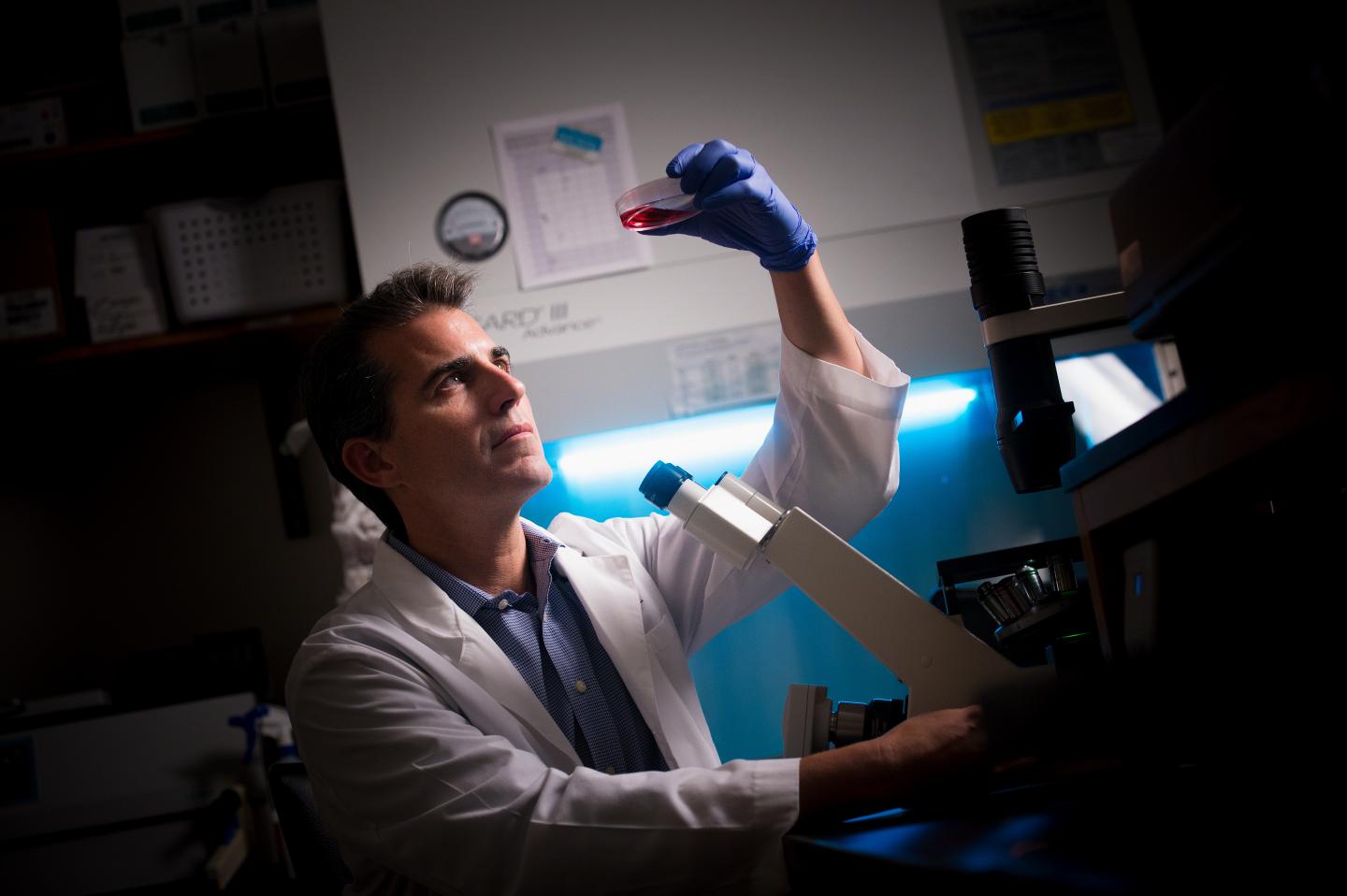

IMAGE: Jinghui Zhang, Ph.D., chair of the St. Jude Department of Computational Biology.
view more
Credit: St. Jude Children’s Research Hospital
(MEMPHIS, TENNESSEE – October 14, 2020) Researchers have used insight from a comprehensive genomic analysis of neuroblastoma to learn about the process driving one of the most common childhood solid tumors. The findings revealed possible approaches for developing precision medicines to improve patient outcomes. St. Jude Children’s Research Hospital scientists led the study, which appears today in the journal Nature Communications.
The analysis involved whole genome, whole exome and whole transcriptome sequencing of 702 neuroblastoma samples. The tumors included 23 samples from patients who relapsed. The work identified associations among common mutational traits that researchers hope to exploit therapeutically.
“This combined analysis of a large cohort of tumors provided insight into previously unrecognized correlations at work in neuroblastoma as well as the discovery of less common driver mutations,” said corresponding author Jinghui Zhang, Ph.D., chair of the St. Jude Department of Computational Biology.
The co-corresponding authors are Michael Dyer, Ph.D., chair of the St. Jude Department of Developmental Neurobiology and a Howard Hughes Medical Institute investigator, and Michael Hogarty, M.D., of the Children’s Hospital of Philadelphia.
Connecting the dots between common mutations and oxidative stress
Researchers used a common mutational pattern almost like a fingerprint to identify internal processes fueling the tumor’s growth and spread. Investigators knew DNA-damaging molecules called reactive oxygen species and oxidative stress are elevated in neuroblastoma. Reactive oxygen species are generated in the mitochondria of cells. The analysis found an association between a chromosomal mutation in 65% of neuroblastomas and the DNA-damaging molecules. These tumors have an extra piece of chromosome 17. That piece includes genes expressed in the mitochondria. The results suggest that mitochondrial gene defects may lead to increased production of reactive oxygen species, fueling tumor growth and drug resistance.
A St. Jude Cloud search of more than 1,000 pediatric tumor genomes from 39 cancer types found the association was not unique. Researchers reported that more than 20% of samples from another cancer, rhabdomyosarcoma, had increased expression of mitochondrial genes and a pattern of increased oxidative stress. The finding strengthened the newly identified connection between mitochondrial gene defects and the mutational process.
“Thanks to this analysis, we have a deeper understanding of the alterations driving neuroblastoma, including how tumors form, progress and respond to therapy,” Dyer said. “That is the foundation for translational research going forward.”
Neuroblastoma predictors
Neuroblastoma develops in fetal nerve cells called neuroblasts that fail to mature normally. While 7 to 10% of childhood cancers are neuroblastoma, the tumor accounts for half of all cancers in infants. This cancer generally begins in the adrenal glands, but it can also start in the chest, the spine or spinal cord regions, abdomen and other areas.
Treatment and outcomes vary widely based on patient age. Survival rates for the youngest patients (younger than 18 months old) are about 95%. For older, high-risk patients, survival rates are only about 50%.
This study reinforced the association between patient age and the mutations driving the disease. For example, the genes MYCN and TERT were commonly altered in patients 3.8 years of age or younger while mutations in ATRX were more frequent in children with a median age of 5.6 years.
MYCN, ATRX and a “beautiful convergence”
The analysis offered insight into previous research from Dyer and his colleagues. The researchers noted that while MYCN or ATRX were potent drivers of neuroblastoma, the mutations did not occur together.
“In most cancers, you would expect to find patients with both mutations who did even worse,” Dyer said. “But we never found this combination, which was a surprise.”
Dyer said this analysis suggests why. MYCN and ATRX mutations induce oxidative stress. Dyer hypothesized that, when combined, the mutations may be lethal to tumor cells.
“This was a beautiful convergence of two different approaches to understanding the mutational processes underway inside cells,” he said.
Recurring, but less common gene alterations The analysis included data from St. Jude, including the St. Jude-Washington University Pediatric Cancer Genome Project; the Therapeutically Applicable Research to Generate Effective Treatments (TARGET) initiative, managed by the National Cancer Institute; and the Children’s Oncology Group, a clinical cooperative trials group.
The large number of samples aided efforts to find recurring, but less common neuroblastoma alterations that may be candidates for precision medicines. The newly identified mutations were in the genes FGFR1 and ALK.
###
Samuel Brady, Ph.D., and Yanling Liu, Ph.D., of St. Jude are the first authors. The other authors are Xiaotu Ma, Alexander Gout, Kohei Hagiwara, Xin Zhou, Jian Wang, Michael Macias, Xiaolong Chen, John Easton, Heather Mulder, Michael Rusch, Lu Wang, Joy Nakitandwe, Shaohua Lei, Eric Davis, Cheng Cheng and James R. Downing, of St. Jude; Arlene Naranjo, University of Florida; John Maris, The Children’s Hospital of Philadelphia; and Nai-Kong Cheung, Memorial Sloan Kettering Cancer Center, New York.
The research was funded in part by grants (CA021765, CA216391-01A1, CA220500, CA180899) from National Cancer Institute of the National Institutes of Health; and ALSAC, the St. Jude fundraising and awareness organization.
St. Jude Children’s Research Hospital
St. Jude Children’s Research Hospital is leading the way the world understands, treats and cures childhood cancer and other life-threatening diseases. It is the only National Cancer Institute-designated Comprehensive Cancer Center devoted solely to children. Treatments developed at St. Jude have helped push the overall childhood cancer survival rate from 20% to 80% since the hospital opened more than 50 years ago. St. Jude freely shares the breakthroughs it makes, and every child saved at St. Jude means doctors and scientists worldwide can use that knowledge to save thousands more children. Families never receive a bill from St. Jude for treatment, travel, housing and food — because all a family should worry about is helping their child live. To learn more, visit stjude.org or follow St. Jude on social media at @stjuderesearch.







