

Pune: An e-commerce website that facilitates the sale/purchase of used goods has updated its security policy, making it mandatory for sellers to upload their location data while posting advertisements.
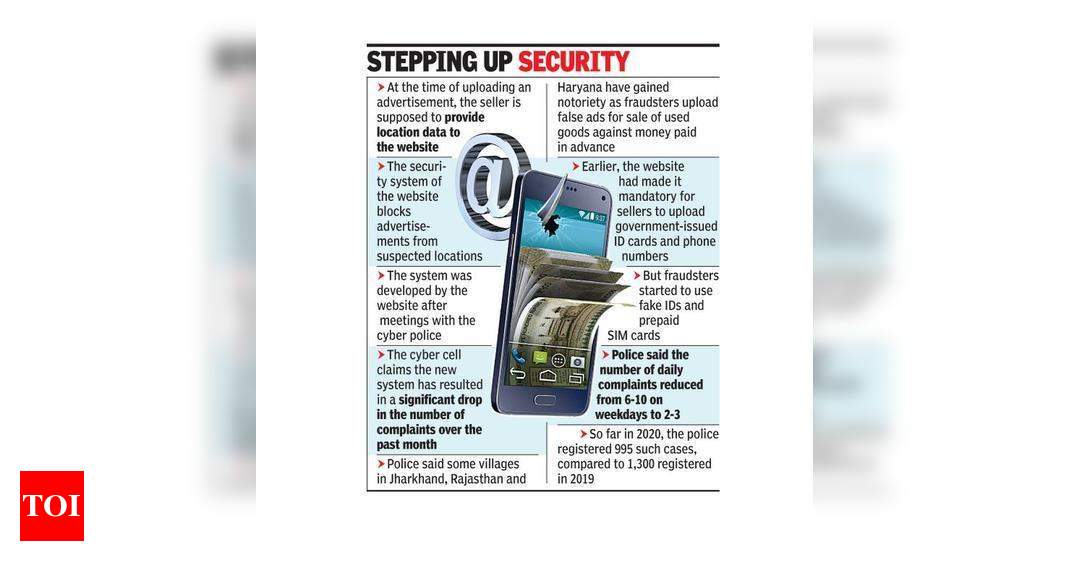
Pune cyber police say this feature has resulted in a drastic drop in cyber fraud complaints in the past month. According to the police, the website monitors the location data and flags any advertisements posted from places notorious for a large number of fraud complaints. These advertisements are then blocked from the website.
The website developed this feature in consultation with Pune cybercrime police. Over the course of several meetings with the website administrators in a bid to reduce the number of complaints, this idea was born, police said.
“On weekdays, we used to receive six to 10 complaints related to fraud on the website. Now, it has come down to two or three complaints per day,” inspector (cyber) Rajkumar Wakchaure said, adding that they expect the number of complaints to dip further in due course.
“Some villages in Jharkhand, Rajasthan, and Haryana have gained notoriety as fraudsters upload fictitious advertisements for the sale of used motorcycles, cars and electronic goods against money paid in advance,” Wakchaure explained, adding, “Once they receive the money, they discard the SIM card and leave the purchaser in the lurch. Now, with the location feature, advertisements from these places won’t be allowed to be posted.”
Earlier, the website, in a bid to prevent this type of fraud, had made it mandatory for sellers to upload government-issued identification, such as Aadhaar card, and a phone number. “But the fraudsters then started using fake ID cards and prepaid SIM cards to upload the advertisement and vanish with the buyers’ money. As this wasn’t working out, we sought a technology-based solution to block advertisements from a particular geographical location,” Wakchaure said.
“That paved way for this system and now, it is compulsory for a seller to start his location while uploading the advertisement,” he said.
An official from the website, refusing to divulge his identity, said, “We are coordinating with the police to reduce crime and will continue to work on different solutions.”
So far this year, the police have registered 995 cases pertaining to misuse of the website’s services. Last year, more than 1,300 complaints were received by the police.
Police said in many cases, fraudsters from Rajasthan and Noida posed as Army officers looking to sell their cars or two-wheelers, in a bid to add a sense of authenticity. They even uploaded fake Army ID cards to win the buyers’ confidence.
Cybercrime police teams have raided several places in these villages and arrested residents in the past, but the ploy of using the portal to commit fraud was still prevalent in the city, police said.
Pune cyber police say this feature has resulted in a drastic drop in cyber fraud complaints in the past month. According to the police, the website monitors the location data and flags any advertisements posted from places notorious for a large number of fraud complaints. These advertisements are then blocked from the website.
The website developed this feature in consultation with Pune cybercrime police. Over the course of several meetings with the website administrators in a bid to reduce the number of complaints, this idea was born, police said.
“On weekdays, we used to receive six to 10 complaints related to fraud on the website. Now, it has come down to two or three complaints per day,” inspector (cyber) Rajkumar Wakchaure said, adding that they expect the number of complaints to dip further in due course.
“Some villages in Jharkhand, Rajasthan, and Haryana have gained notoriety as fraudsters upload fictitious advertisements for the sale of used motorcycles, cars and electronic goods against money paid in advance,” Wakchaure explained, adding, “Once they receive the money, they discard the SIM card and leave the purchaser in the lurch. Now, with the location feature, advertisements from these places won’t be allowed to be posted.”
Earlier, the website, in a bid to prevent this type of fraud, had made it mandatory for sellers to upload government-issued identification, such as Aadhaar card, and a phone number. “But the fraudsters then started using fake ID cards and prepaid SIM cards to upload the advertisement and vanish with the buyers’ money. As this wasn’t working out, we sought a technology-based solution to block advertisements from a particular geographical location,” Wakchaure said.
“That paved way for this system and now, it is compulsory for a seller to start his location while uploading the advertisement,” he said.
An official from the website, refusing to divulge his identity, said, “We are coordinating with the police to reduce crime and will continue to work on different solutions.”
So far this year, the police have registered 995 cases pertaining to misuse of the website’s services. Last year, more than 1,300 complaints were received by the police.
Police said in many cases, fraudsters from Rajasthan and Noida posed as Army officers looking to sell their cars or two-wheelers, in a bid to add a sense of authenticity. They even uploaded fake Army ID cards to win the buyers’ confidence.
Cybercrime police teams have raided several places in these villages and arrested residents in the past, but the ploy of using the portal to commit fraud was still prevalent in the city, police said.







