
GLOBAL RESEARCH SYNDICATE
No Result
View All Result
  • Login
  • Latest News
  • Consumer Research
  • Survey Research
  • Marketing Research
  • Industry Research
  • Data Collection
  • More
    • Data Analysis
    • Market Insights
  • Latest News
  • Consumer Research
  • Survey Research
  • Marketing Research
  • Industry Research
  • Data Collection
  • More
    • Data Analysis
    • Market Insights
No Result
View All Result
globalresearchsyndicate
No Result
View All Result
Home Data Collection

As Delta makes landfall, Southwest Louisiana is still without a working radar

globalresearchsyndicate by globalresearchsyndicate
October 10, 2020
in Data Collection
0
As Delta makes landfall, Southwest Louisiana is still without a working radar
0
SHARES
25
VIEWS
Share on FacebookShare on Twitter

This is the story of how a moving research radar will be helping the Lake Charles, Louisiana, National Weather Service (NWS) outpost, whose radar was broken during Hurricane Laura.

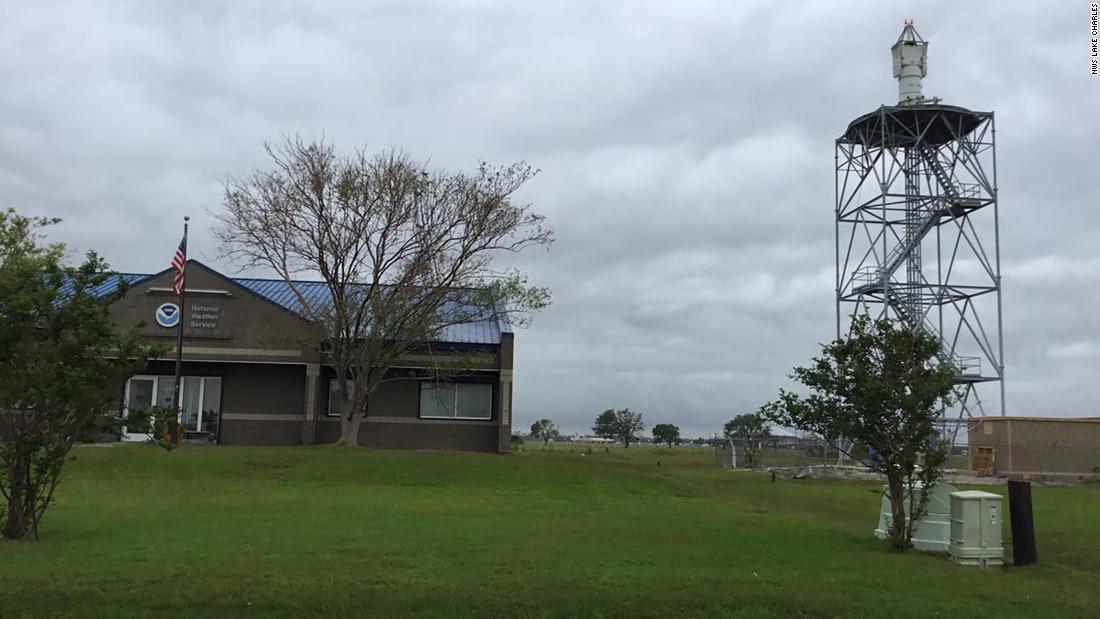
The radar dome sits on top of an over 60-foot tower, and since wind speeds are often stronger the higher you go up, this likely led to its demise.

The problem is, the radar equipment is still not fixed, and another hurricane arrived Friday night in the the same area of Louisiana.

The radar dome at the NWS Lake Charles sits on top of a tower that was battered by winds and is now out of commission as another hurricane heads toward it.

Normally, when one radar site goes out, other nearby NWS offices can step in since many radar sites overlap a little.

“We have multiple radars to use, including one in Houston, Fort Polk, and Slidell,” said Roger Erickson, Warning Coordination Meteorologist for the Lake Charles NWS Office.

But those neighboring radars don’t cover the entire area, so what do you do about the gaps left behind?

“For this hurricane, we will have a portable doppler radar as well,” Erickson added.

A mobile radar, that is primarily used for research has been deployed to Louisiana to help fill in those gaps, and also provide high resolution, low-level data as well.

“In this particular case, the Shared Mobile Atmospheric Research and Teaching (SMART) Radar is here to enhance the existing coverage and provide high resolution data where the eye and eyewall are expected to pass,” says Addison Alford, a graduate research assistant at the University of Oklahoma. “In past research deployments of the SMART Radars in hurricanes, we routinely transmit our data to a webpage that can assist the NOAA NWS in their critical mission to provide life-saving warnings to the public.”

The SMART radar deployed to Louisiana

Addison will personally be on that mobile radar truck assisting with those critical, life-saving operations.

“University of Oklahoma Professor, Dr. Mike Biggerstaff, is the director of the SMART Radar Program and is leading this particular mission. Mr. Gordon Carrie, a data scientist at the university, has helped deploy the SMART Radars for 11 land-falling hurricanes and is managing the real-time transmission of our data. Hurricane Delta will be my eighth land-falling hurricane with the SMART Radars.”

And they won’t just help with the landfall, they will work with NOAA to determine when to shut down the system.

“That will likely be when Hurricane Delta has moved inland into northern Louisiana, beyond our operational radar range,” Alford explains.

So what exactly can this radar do to help?

“The SMART Radar program routinely makes our typically research-focused data sets available in near real-time to local National Weather Service offices, including research missions into hurricanes,” says Alford.

“We typically set up near the path of a hurricane in our research missions and can help provide additional information to the NOAA NWS,” he adds.

And the team is able to transmit data in near-real time for the NOAA NWS, the National Hurricane Center (NHC), emergency managers, and the public, due to an existing partnership between the Weather Channel, AT&T, and the University of Oklahoma.

AT&T owns WarnerMedia, the parent company of CNN.

“In some hurricanes, we also combine our data with a nearby NWS radar or the other SMART Radar to calculate wind speeds at about 500-800 feet above the surface,” Alford says. “We can make wind maps for use by the NWS during the hurricane and for reference by emergency managers as they are assessing where the strongest winds occurred.”

Mobile radars have been involved in 14 deployments for land-falling hurricanes, but they aren’t limited to just hurricanes.

“Mobile radars are often used for collecting research data sets of severe weather, including supercell thunderstorms that often produce tornadoes, damaging winds and hail as well as hurricanes,” Alford says.

Radar, he says, can provide the highest resolution data, collecting information nearest the surface when a storm is close to the radar location.

“By making a radar mobile, researchers can collect very high resolution data sets of severe weather and hurricanes, which helps us to better understand what we don’t know about the atmosphere and improve forecasts,” he says.

Addison Alford inside the SMART radar

This has happened before

In 2017, Hurricane Maria devastated Puerto Rico, causing widespread damage with an estimated value of 90 billion dollars and over 2,500 fatalities.

Nearly the entire island was left without power and clean water after power lines and municipal water supplies were lost.

One important thing that was damaged was the San Juan NWS radar.

The radar’s elevation put it in the path of some of the strongest winds in Hurricane Maria, causing it to be battered by as high as Category 5 hurricane level winds.

Those winds ultimately decimated the radar, leaving Puerto Rico without radar data, which is vital in severe weather situations.

The GOES (geostationary earth orbiting satellite) minute-by-minute scans were still experimental at the time, but they became a life-saving tool for the San Juan office.

“We used the rapid scan to help us generate warnings for flooding and tornadoes,” said Ernesto Morales, Warning Coordination Meteorologist for San Juan, Puerto Rico NWS Office.

Thankfully, nine months later the radar was back to fully operational.

Damaged radar in Puerto Rico from Hurricane Maria

Related Posts

How Machine Learning has impacted Consumer Behaviour and Analysis
Consumer Research

How Machine Learning has impacted Consumer Behaviour and Analysis

January 4, 2024
Market Research The Ultimate Weapon for Business Success
Consumer Research

Market Research: The Ultimate Weapon for Business Success

June 22, 2023
Unveiling the Hidden Power of Market Research A Game Changer
Consumer Research

Unveiling the Hidden Power of Market Research: A Game Changer

June 2, 2023
7 Secrets of Market Research Gurus That Will Blow Your Mind
Consumer Research

7 Secrets of Market Research Gurus That Will Blow Your Mind

May 8, 2023
The Shocking Truth About Market Research Revealed!
Consumer Research

The Shocking Truth About Market Research: Revealed!

April 25, 2023
market research, primary research, secondary research, market research trends, market research news,
Consumer Research

Quantitative vs. Qualitative Research. How to choose the Right Research Method for Your Business Needs

March 14, 2023
Next Post
Trending News Corona impact on Construction Silica Sand Market Research Report, Growth Trends and Opportunities for the Forecast Period, 2020-2025|Strata Systems,TenCate,GSE,Agru America Inc,NAUE – 3w Market News Reports

Trending News Corona impact on Headspace Sampler Market Consumption, Strategy Analysis and Forecast by 2026 – PRnews Leader

Categories

  • Consumer Research
  • Data Analysis
  • Data Collection
  • Industry Research
  • Latest News
  • Market Insights
  • Marketing Research
  • Survey Research
  • Uncategorized

Recent Posts

  • Ipsos Revolutionizes the Global Market Research Landscape
  • How Machine Learning has impacted Consumer Behaviour and Analysis
  • Market Research: The Ultimate Weapon for Business Success
  • Privacy Policy
  • Terms of Use
  • Antispam
  • DMCA

Copyright © 2024 Globalresearchsyndicate.com

Welcome Back!

Login to your account below

Forgotten Password?

Retrieve your password

Please enter your username or email address to reset your password.

Log In
This website uses cookies to improve your experience. We'll assume you're ok with this, but you can opt-out if you wish. Cookie settingsACCEPT
Privacy & Cookies Policy

Privacy Overview

This website uses cookies to improve your experience while you navigate through the website. Out of these cookies, the cookies that are categorized as necessary are stored on your browser as they are essential for the working of basic functionalities of the website. We also use third-party cookies that help us analyze and understand how you use this website. These cookies will be stored in your browser only with your consent. You also have the option to opt-out of these cookies. But opting out of some of these cookies may have an effect on your browsing experience.
Necessary
Always Enabled
Necessary cookies are absolutely essential for the website to function properly. This category only includes cookies that ensures basic functionalities and security features of the website. These cookies do not store any personal information.
Non-necessary
Any cookies that may not be particularly necessary for the website to function and is used specifically to collect user personal data via analytics, ads, other embedded contents are termed as non-necessary cookies. It is mandatory to procure user consent prior to running these cookies on your website.
SAVE & ACCEPT
No Result
View All Result
  • Latest News
  • Consumer Research
  • Survey Research
  • Marketing Research
  • Industry Research
  • Data Collection
  • More
    • Data Analysis
    • Market Insights

Copyright © 2024 Globalresearchsyndicate.com





