

Monitoring schemes to count bees and other pollinating insects provide excellent value for money, and could help save species and protect UK food security, researchers have found.
The study led by the University of Reading and the UK Centre for Ecology & Hydrology, found that the costs of running nationwide monitoring schemes are more than 70 times lower than the value of pollination services to the UK economy, and provide high quality scientific data at a much lower cost than running individual research projects.
Dr. Tom Breeze, an ecological economist at the University of Reading, led the research. He said: “Pollinating insects are the unsung, unpaid heroes of British farming, but we know many species need help. Pollinators are vital for our food security and natural ecosystems but are under threat from many factors including habitat loss and climate change.
“Our analysis shows that large-scale and long-term pollinator monitoring schemes can be cost-effective and add tremendous value to food security and wider scientific research.”
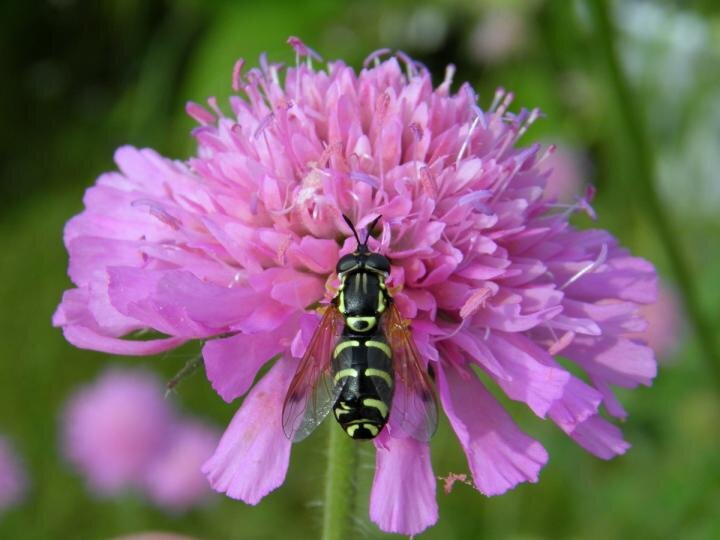
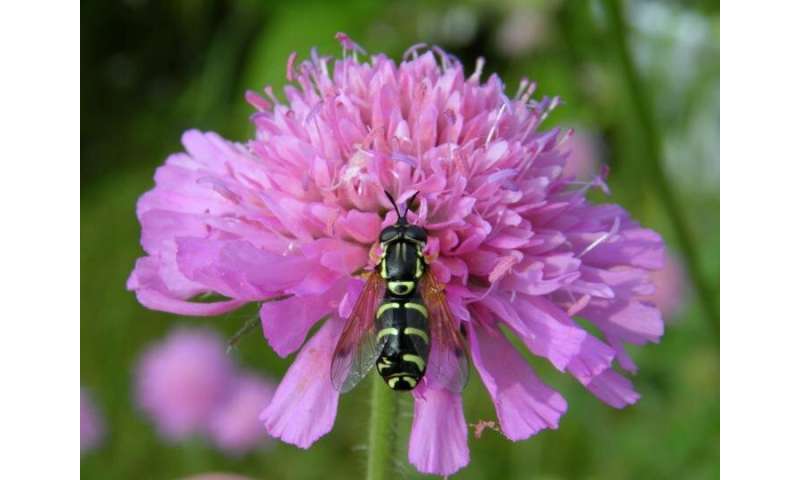
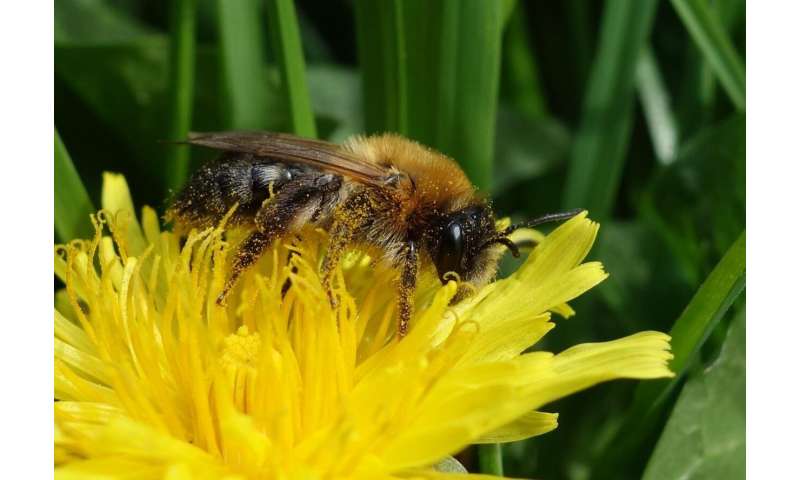
Monitoring insect pollinators, such as wild bees and hoverflies, is vital to understanding where and why they are declining in order to better target efforts to protect them. National pollinator strategies for England, Scotland, Wales and Ireland have highlighted monitoring as a priority for government action, but need to compete with other funding needs.
This new study, published in the Journal of Applied Ecology, has demonstrated that a well-designed monitoring scheme provides excellent value for money, compared with traditional research funding models.
Senior author Dr. Claire Carvell of the UK Centre for Ecology & Hydrology, who is coordinator of the UK Pollinator Monitoring and Research Partnership, said: “Monitoring bees and other pollinators is challenging due to the sheer number of species involved, the difficulty in identifying them and the shortage of specialist skills needed.
“This research has been instrumental in helping design a world-leading Pollinator Monitoring Scheme (PoMS) for the UK which combines both professional and volunteer involvement, and generates data for research and policy that we can’t really accomplish with standard research grants. And at a lower cost too.”
Rebecca Pow MP, Minister for Pollinators at Defra, said: “This year, we have seen an increased appreciation for nature in England in response to the Coronavirus pandemic and the nation building back greener.
“The UK Pollinator Monitoring Scheme (PoMS) is an excellent way to inspire people to take action to protect our pollinators. Our pollinators may be small, but they play a key role in our ecosystem, and this scheme creates world-leading evidence helping us to better understand their status.
“It’s tremendously positive to see the UK government and devolved administrations, research institutions and the public working together to understand these essential and precious creatures.”
Researchers looked at the costs compared with the monetary benefits of monitoring schemes. Working with a range of scientists and experts in wildlife management, the team calculated how much it would cost to run various different types of monitoring scheme for 10 years. These ranged from schemes where all the work was handled by professional research staff, to schemes where members of the public work with scientists to collect the data.
The costs calculated ranged from £6,000/year for a volunteer scheme collecting counts of insects visiting flowers, to £300,000/year for a scheme involving both volunteers and professionals to collect and process the data; £900,000/year for a professional scheme using more intensive sampling to collect species-level pollinator data and up to £2.7M/year for a professional scheme to monitor the pollination and yields of the UK’s crops for shortfalls.
Using information from field research, the team explored the impact of pollinator losses on the yields of insect pollinated crops grown in the UK. These include apples, berries, beans, oilseed rape and tomatoes. This potential loss of yield, given a 30% decline in pollinator numbers over 10 years, was estimated at over £188M per year, 70 times the costs of even the most expensive monitoring scheme to track and respond to declines.
The team also compared the monitoring scheme costs with the costs of carrying out a series of separate studies answering different questions. This was done by surveying pollinator researchers from across Europe about how they would design studies to answer eight key research questions, such as, the impact of climate change, and whether current farmland conservation measures are working.
The cost of implementing all these studies was compared with the costs of a pollinator monitoring scheme to show the value added by monitoring to UK science.
The study demonstrated that well-designed monitoring schemes provide excellent value for money, providing data to answer these eight big research questions for at least 33% less cost than traditional research funding models.
Volunteers already contribute to our understanding of the status of wildlife by recording species that they see and sharing this information. There are a number of established, professionally-coordinated monitoring schemes involving volunteers, for example the UK Butterfly Monitoring Scheme and the Breeding Bird Survey.
Additionally there are well-established wildlife recording schemes such as the Bees, Wasps and Ants Recording Society and the Hoverfly Recording Scheme. By combining the strengths of professionals and often highly-skilled volunteers, these citizen science approaches are invaluable in providing information at scales that would not otherwise be practical.
Professor Helen Roy of the UK Centre for Ecology & Hydrology said: “It is incredibly exciting to consider the benefits to people and nature achieved through the implementation of the Pollinator Monitoring Scheme. Volunteers can play a critical role in gathering much needed data from across Britain while increasing everyone’s understanding of these important and much loved insects.”
The authors conclude that pollinator monitoring is an excellent investment that supports UK food security and environmental science, and helps conserve iconic British species.
Tom D. Breeze et al, Pollinator monitoring more than pays for itself, Journal of Applied Ecology (2020). DOI: 10.1111/1365-2664.13755
Citation:
Pollinator monitoring more than pays for itself (2020, October 8)
retrieved 8 October 2020
from https://phys.org/news/2020-10-pollinator.html
This document is subject to copyright. Apart from any fair dealing for the purpose of private study or research, no
part may be reproduced without the written permission. The content is provided for information purposes only.







