

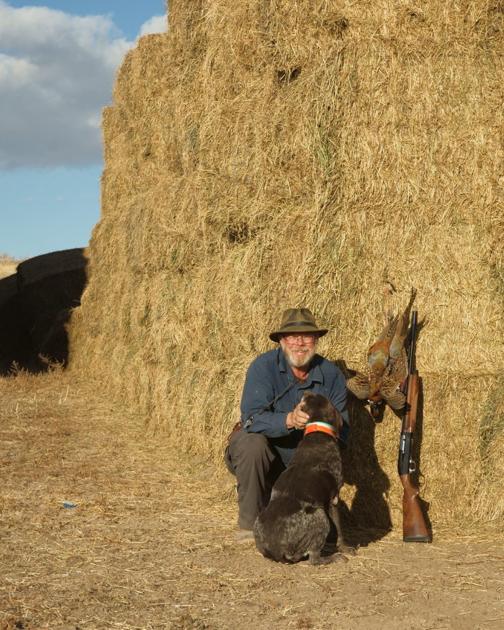
Winter severity and spring nesting conditions influence gamebird numbers, although winter generally affects vpheasants and quail more than gray partridge and our native grouse species (sage-grouse, sharp-tailed grouse, ruffed grouse, spruce grouse, and dusky grouse).
The 2019-20 winter was generally mild with scattered snowstorms throughout the season. Some cold, wet conditions occurred during spring especially in sharptail habitat, but the nesting season should have been reasonably favorable for most upland species in southeastern Idaho.
Forest Grouse
Two species of “forest grouse,” ruffed and dusky (aka blue), occur in southeastern Idaho. The Idaho Department of Fish and Game (IDFG) does not conduct surveys for ruffed or dusky grouse and relies on harvest information and anecdotal reports to assess population status. Harvest data over the past 5 years suggests relatively stable numbers for both species. This year IDFG personnel have reported numerous observations of these birds, but some of the most recent reports noted chicks were very small for this time of year, indicating either a late hatch or substantial renesting. IDFG Regional Wildlife Manager Zach Lochyer said he is anticipating another fair year for ruffed and dusky grouse hunters.
Sage-grouse
IDFG reports that lek counts increased slightly between 2019 and 2020 but cautioned that counts were variable. The agency stated that sage-grouse numbers are down 53% from peak counts in 2016, with larger declines north of the Snake River. This year the sage-grouse hunting season will be open on Sept. 19-20 for the two-day season in parts of eastern Idaho and Sept. 19-25 for the seven-day season in part of western Idaho. An area east of I-15 in eastern Idaho that’s been closed for the last two years has been re-opened. Unlike the previous few years, I’ve observed several sage-grouse broods this summer and am hopeful that hunting might be a little better than in recent years.
Wing collections are important for analyzing sage-grouse populations so don’t forget to deposit wings in a wing barrel if you encounter one or mail them in if IDFG sends you a mail request.
Chukar and Gray Partridge
IDFG does not conduct surveys for chukar or gray partridge and relies on anecdotal reports to assess population status. Chukars occur in only a few localized areas in southeastern Idaho and numbers are generally low.
In contrast, the gray partridge is widely distributed throughout the area. Like sharptails, this partridge is commonly found in CRP fields but I have also successfully hunted them in farmland and sagebrush habitats. Although populations fluctuate, numbers appear generally stable over the long term. Gray partridge can provide upland hunters with some excellent outings, especially those with pointing dogs. I expect this year will be similar to last year.
Columbian Sharp-tailed Grouse
IDFG data indicate sharp-tailed grouse numbers have declined over the last 10 years. Zach Lochyer told me that sharptail lek counts this year were generally similar to or slightly above the 2019 counts. He also said that field personnel have not observed many broods. Low sharptail numbers are likely due to poor CRP management practices resulting in lower production of broods. Unfortunately, this year it looks like hunters will experience sharptail numbers similar to those of last year.
Pheasant
IDFG no longer conducts surveys or check stations for pheasant in southeastern Idaho; my personal observations and those of some bird-hunting buddies suggest numbers are relatively low but comparable to last year. An IDFG biologist told me that the agency plans to expand pheasant stocking throughout the state this fall and will continue stocking pheasants at Sterling Wildlife Management Area as well as Mud Lake, Market Lake, and Cartier WMAs north of Idaho Falls. Check the IDFG website for more information.
Jack Connelly has lived in Bingham County for the last 43 years. He is an avid outdoorsman and has hiked, camped, hunted, and fished over much of the U.S. as well as parts of Europe and Asia. Connelly worked as a biologist for the Idaho Department of Fish and Game for over 30 years. He now enjoys retirement with his wife Cheryl raising chickens and bird dogs at their home in Blackfoot.







