


Meet Generation Novel, a growing cross-generational psychographic of digital-first consumers galvanized by the disruptive effects of COVID-19. This emergent and significant customer segment isn’t just digital-centric. It’s also emotionally charged, as pandemic-fueled fear, anxiety, and worry take their toll. With the impact of the novel coronavirus likely to endure, companies must prioritize the study of Gen N. Doing so will help executives understand how consumers’ increased and accelerated use of technology affects their preferences, behaviors, and routines. These insights can guide brand, product, and market strategies to be more timely, relevant, and empathetic at a time when there is no pandemic playbook to follow.
When the onset of COVID-19 led to closures and shelter-in-place rules, the physical normal we knew changed overnight. The mechanics of life—communicating with loved ones, keeping up with news, working, learning, and shopping—were now centered on digital platforms.
As a result, a new set of digitally influenced norms and behaviors were born among consumers who had been slow or unmotivated to adopt digital in all facets of life before COVID-19. At the same time, digital natives and early adopters found themselves well prepared to live, work, learn, and shop remotely during the waves of lockdowns.
One thing is clear. The sudden and ongoing closures of public life are radically accelerating the digital transformation of consumer habits, markets, and organizations alike. Companies that track how digital devices, apps, and networks influence consumer decisions and in turn, how those decisions affect companies will be in a better position to ride through waves of disruption and uncertainty.
From Generation C to Generation N
Before COVID-19 and the rise of Generation Novel, I studied how mobile, social, and real-time web trends were shaping a new, less analog kind of customer. I called this ever-growing, always-on customer segment “Generation C (Connected),” and it was at the core of customer experience innovation over the past decade.
Over the years, I learned that customers who lived digital-first lifestyles were much more intentional, impatient, and demanding. They were also more efficient in their decision-making. They didn’t go through the decision-making journey in a linear fashion like their traditional consumer counterparts. Instead, they jumped in and out of searches, read reviews, watched videos on YouTube, asked questions on social media, and downloaded apps, all usually from a mobile device. They expected their experiences to be defined by relevant, platform-native choices, mostly for mobile screens. They expected immediacy and convenience. Connected customers also demanded that their digital journey was integrated, seamless, and intuitive. Those brands that didn’t deliver on these fronts were vulnerable to digital-savvy companies.
Now, Generation C is morphing into an evolved next phase of consumerism, Generation N. This is a developing psychographic group comprised of those customers who were previously hyperconnected (Gen C) as well as those who are now fast becoming digital-first because of COVID-19 shutdowns.
What’s more, Gen N is also defined by a powerful somatic marker that’s forging a deeply entrenched emotional bookmark in our lives. This emotional bookmark is shaped by a unifying set of deeply personal and charged emotional ties. With much of the media spotlight on death tolls, infection rates, business closures, and unemployment, this pandemic is overwhelming our mental health.
A recent Accenture report underscores the extent of consumer anxiety:
- 64 percent of consumers are fearful of their own health
- 82 percent are fearful of the health of others
- 64 percent are worried about the impact on their personal job security
- 88 percent are worried about the impact on the economy
People are thinking, feeling, and making decisions differently. Added together, Gen N represents a connected consumer, by choice or by default, whose decisions are now also driven by the stressors, feelings, and consequences of a global pandemic.
Getting to know Generation N
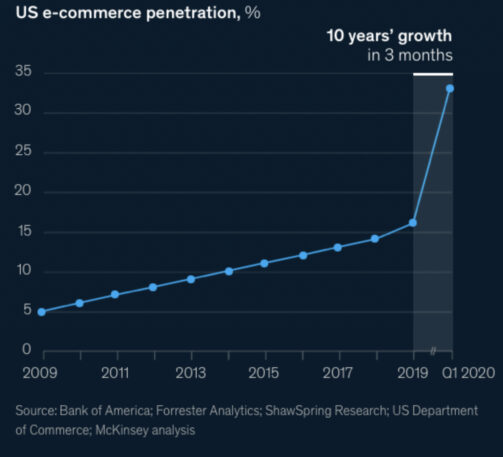
As the U.S. woke up to the COVID-19 crisis in March, the trajectory of consumerism shifted, accelerating toward digital experiences at a blinding pace after two decades of steady growth. Just how fast are things moving? McKinsey estimates that COVID-19 served as a great accelerant, advancing 10 years of U.S. e-commerce growth in just 90 days’ time.
It’s not just speed that companies need to consider as they expedite digital transformation investments to keep up. Consumer attention and loyalty is up for grabs right now.
As a result of the prolonged nature of shelter-in-place rules, new consumer sentiment, behaviors, habits, and values are not only forming, but are also likely to stick. Studies have shown that on average, it takes 66 days for new behaviors to become automatic.
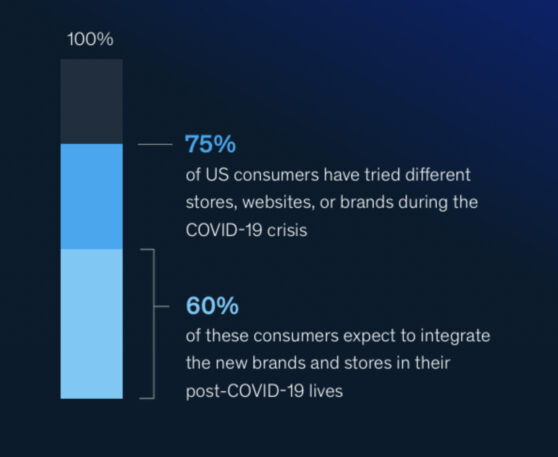
As an example, McKinsey also discovered that 75 percent of U.S. consumers have tried different stores, websites, or brands during this crisis. Here’s what matters most. Of those consumers, 60 percent reported that they expect to integrate new brands and stores in their post-pandemic lives.
While stores across all industries are opening to an extent, the conveniences of digital shopping are enticing consumers and becoming habit-forming for a broader set of consumers.
Control, health, and well-being
In times of a global pandemic, digital boasts advantages that customers appreciate such as health and safety, greater choices, flexibility and control, time savings, and overall convenience. Combined, these hallmarks accelerate and solidify digital behaviors and routines.
Today’s trends are all pointing to what the next normal will look like:
E-commerce is thrust into the spotlight, turning everyone into connected customers. According to the Q2 Global Shopping Index published by Salesforce—where I am global innovation analyst—as of July 16, 2020, 42 percent of customers were reportedly shopping online as usual with another 39 percent digitally shopping more than usual. Twenty-one percent of customers said that they were spending more on discretionary items in the time of COVID.
Customers are choosing to shop at home even as stores open. A study by IPSOS revealed that even though brick-and-mortar retailers were opening at varying levels across the country in June 2020, a massive 61 percent of customers were delaying shopping in physical stores for fear of getting sick.
Even with store openings, digital is first in growth. Between April and June, global digital revenue increased in the U.S. by an unprecedented 71 percent compared to the previous year. Some of the historic growth driving that number includes a 37 percent surge in online traffic, 35 percent improvement in conversions, and 34 percent greater spending.
Contactless engagement is the new standard for engagement. Over 35 percent of U.S. consumers report that they prefer more contactless shopping and delivery options than before.
Social media is finally, quantifiably, advancing social commerce. Research shows that 17 and 28 percent of consumers are buying products in social media more than usual and about the same, respectively. Purchases from a social channel referral saw the biggest increases in Q2 2020, growing 104 percent across the entire industry.
Gen N members are becoming more conscious about what they buy and the brands they support. COVID-19 is prompting consumers to question their desire to buy things. In a recent study reported by MarTech, 58 percent of customers stated that COVID-19 had notably impacted their view of brands.
A Generation N game plan
This is the time for companies to relearn who their customer is: their intentions and aspirations, and what it is they value and why. Those paying attention will source the insights necessary to transform and enhance operational and business models, products and services, and customer experiences.
- Observe. Experience the existing journey and each touchpoint (physical and digital) through the lens of Generation N.
- Organize. Create a human and data-centered, cross-functional organization that prioritizes real-time shopping behaviors and consumer preferences, intentions, and values.
- Operationalize. Assemble executive sponsors and stakeholders responsible for touchpoints across the customer journey to assess patterns and convert insights into actionable pilots and programs.
- Invent. Explore opportunities to add new value to customer experiences, at every step, that align with and enhance customer progression. Take this opportunity to reimagine the customer experience for a digital-first consumer instead of adapting legacy journeys for digital platforms.
- Measure. Do more than just attempt to document ROI or track traditional KPIs. Consider customer-facing metrics that capture sentiment, satisfaction, customer experiences, and resulting performance in digital realms.
This isn’t about how B2C or B2B organizations respond in times of crisis. It’s about people-to-people interactions and how organizations learn from disruption at a human level.







