

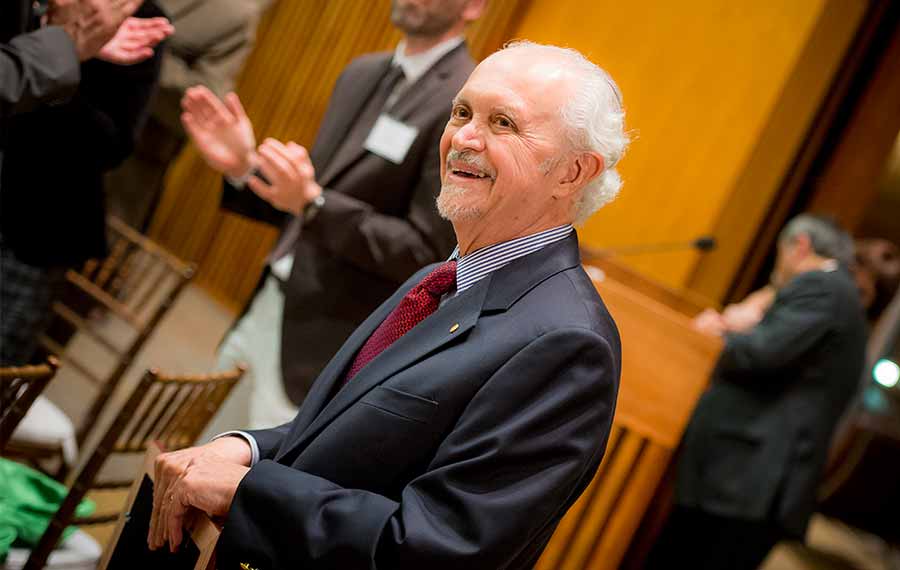
In a letter to the Proceedings of the National Academy of Sciences, a group of scientists requested that the journal retract a paper that allegedly made “falsifiable claims” about the transmission pathway of COVID-19 on June 18. UC San Diego Nobel Laureate professor Mario Molina and Texas A&M University professor of atmospheric science Renyi Zhang co-authored the paper and was published on PNAS on June 11, 2020.
The research article claimed that the spread of COVID-19 came dominantly through airborne transmission. It also argued that face coverings were effective in preventing the transmission of the virus and that other mitigation measures such as social distancing were insufficient by themselves.
The paper posits three ways of virus transmission: direct deposit on people by coughing or sneezing, indirect contact through a surface, and airborne route via droplets and fine particles. As the number of confirmed infected cases in the U.S. continued to increase linearly from April 1 to May 9, Molina and Zhang’s analysis found that there was no profound impact of federal protections regarding social distancing and quarantining on reducing the spread of the disease.
Because these physical separations aimed to target and minimize virus transmission via direct and indirect deposit, the continual growth of the pandemic suggested the main virus pathway was airborne transmission.

To further strengthen the case, the team studied the impact of face covering in the three epicenters, including Wuhan, Italy, and New York City. They projected a linear regression based on the reported numbers of confirmed cases before and after the face covering policy was implemented.
The team found mandated face covering significantly reduced the predicted infections in Italy and New York City. Because face covering blocked airborne transmission and inhalation of virus-bearing particles, the analysis indicated airborne transmission is the major routine of COVID-19. However, the actual mechanism of the pathway remains unclear.

While the previous studies of SARS-CoV-1 and Middle East Respiratory Syndrome coronavirus have shown airborne transmission results in longer travel distance and activity time, the paper’s claim about the airborne transmission of COVID-19 led a group of scientists from epidemiology and public health to cast doubt on the validity of the research.
Dr. Noah Haber from the Meta-Research Innovation Center at Stanford University and other scientists said that they agreed that mask-wearing was important in slowing the spread of COVID-19 in the retraction request letter which came one week after the research paper’s publication. However, the scientists felt that the article made ”dangerously misleading” claims due to research design flaws and called for the paper’s retraction, especially because of “the paper’s outsized and immediate public impact.”
The letter specifically pointed out six other errors regarding the methodology of the research, which can be summarized into three key points: 1) Ignoring the lagging time between the virus transmission and reported infection cases. 2) The date of policy implementation is unrepresentative for the varied behaviors among the population in response to the pandemic. 3) The analysis using linear regression without statistical uncertainty is not valid for infection dynamics and comparisons among the three epicenters.
In response to the letter, Molina and Zhang penned a statement that addressed the errors mentioned in the retraction letter. It claimed that the excerpts the letter cited were taken out of context and that the statistical uncertainty of the linearity was already expressed in terms of the coefficient of determination R^2 on the graphs.
“As you might see in our letter, we believe [the retraction letter] does not make much sense.” Molina wrote in an email to The UCSD Guardian, “We would be happy to discuss the science, to respond to sensible questions about our paper etc., but the retraction letter’s reasoning is clearly not valid.”
In addition to claiming that the retraction letter’s conclusion was not valid, Molina and Zhang, in return, have questioned some statements in the letter. Molina and Zhang are submitting another paper in which they will take a closer look at state measures. At the publication of this article, the paper in question has not been removed from the PNAS.
Photo courtesy of Erik Jepsen for UC San Diego Publications.







