

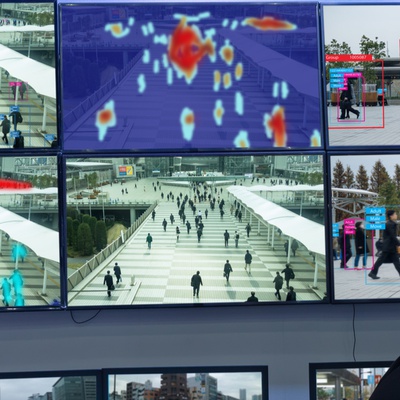
Rep. Eddie Bernice Johnson, D-Texas, recently introduced police reform-focused legislation that would mandate several federal agencies to comprehensively examine—and make deliberate moves to confront—law enforcement entities’ use of force on the frontlines and potential partiality in contemporary policing technologies.
The Promoting Fair and Effective Policing Through Research Act would direct the National Institute of Standards and Technology to expand its investigations and standards development efforts around biases in biometric identification and facial recognition tech, require the Homeland Security Department to help minimize excessive use of force in police response, and enable new research into policing policies and practices supported and spearheaded by the National Academies and National Science Foundation.
The bill would authorize millions in funding between 2021 and 2026 to underpin the efforts.
“We are a nation in mourning. Our shared anguish over the loss of George Floyd, Breonna Taylor, Ahmaud Arbery, Rayshard Brooks, Botham Jean and countless other Black men and women at the hands of police has spurred a growing chorus of Americans to demand not only justice, but meaningful and lasting change,” Johnson, who is the first African-American woman to chair the House Science, Space and Technology Committee, said in a statement. “We must dig deep to examine how the history and culture of policing in America has brought us to this tumultuous place. And, in our search for solutions, we must be guided by evidence grounded in data and scientific research.”The legislation opens with a proclamation that the U.S. does not presently have accurate, overarching data to fully grasp patterns in policing and use of force on civilians, and “the best available evidence reveals increased likelihood” of law enforcement officials applying force against individuals who are not white, have disabilities or mental health conditions, are members of the LGBT community, have low incomes—and people who fall in the intersections of such groups. Unfairness and bias within advanced technologies that police increasingly harness “have the potential to exacerbate such disparities,” the bill notes, and in her own statement Johnson added that Congress and the nation “must study the influence of technology and big data on vulnerable populations and work to root out any biases.”
The legislation would mandate NIST to implement an extensive program to boost research that would inform the production of benchmarks, methods, measurements, standards and beyond for biometric identification technologies and other advanced policing tools. This would include creating common definitions around privacy, transparency, bias and other terms within biometric systems, building curated, standardized and privacy-protected datasets to support relevant research, and more. Further, the bill would also require the agency to establish a “biometrics vendor test program” to more thoroughly assess the effectiveness of currently used or in-development biometric and facial recognition technologies by providing vendors with a means to evaluate their products. This would involve conducting “research and testing to improve and benchmark the accuracy, efficacy, and fairness of biometric identification systems, including research and testing on demographic variations, capture devices, presentation attack detection, template protection, de-identification, and comparison of algorithm and human facial recognition capability,” according to the bill, and the agency would need to produce reports for the public on the findings.
Under the legislation, Homeland Security would need to work directly with federal law enforcement training centers to develop a program that’s dedicated to “reducing excessive use of force and lethal use of force by law enforcement.” Through such an effort, the agency would be expected to confirm the scientific basis for a national standard for police use of force continuums, disseminate relevant guidelines and best practices for federal, state, local and tribal law enforcement agencies, and more.
Within 45 days the bill’s enactment, the National Academies would need to enter into an agreement with the National Science Foundation director to conduct a study to pinpoint research gaps across present law enforcement policies and practices, identify those that have been “shown to reduce the incidence and mitigate the negative consequences of police violence,” and subsequently make recommendations to NSF, the Justice Department and relevant law enforcement agencies on how to best implement effective new solutions.
And NSF would also be directed to financially enable social and behavioral research led by academic institutions and nonprofit organizations to better address the roots, impacts and ways to potentially reduce use of force; current policing policies, practices, data and technologies that are applied in policing; organizational configurations within law enforcement agencies, and several other topics. Collaborative partnerships between social science researchers and policing organizations would also need to be promoted by NSF.
“We must assess the organizational influences on policing—such as recruitment, training, and performance evaluation. We must examine promising practices for promoting accountability and fostering community trust,” Johnson said. “Finally, we must establish meaningful partnerships between law enforcement and researchers to empower jurisdictions to tailor proven solutions to meet their needs and the needs of the communities they serve.”
To support the implementation of the activities, the legislation would authorize Congress to appropriate $10 million to NSF, $2 million to NIST and $2 million to Homeland Security “for each of fiscal years 2021 through 2026.”
Johnson’s bill is one of the multiple pieces of legislation focused on police reform introduced in recent weeks, including the Justice in Policing Act, which Johnson mentioned during the introduction of her own act, stating that “we must have a national database on police use of force, and I am glad to see this included” in that specific bill.
“I am heartened that we, as a nation, are engaging in a substantive discourse about the role of policing in American society,” she added. “This day is long overdue and has come at too high a cost, but we must seize this opportunity.”
Johnson’s legislation was referred to the Science, Space and Technology, Homeland Security and Judiciary committees.







