

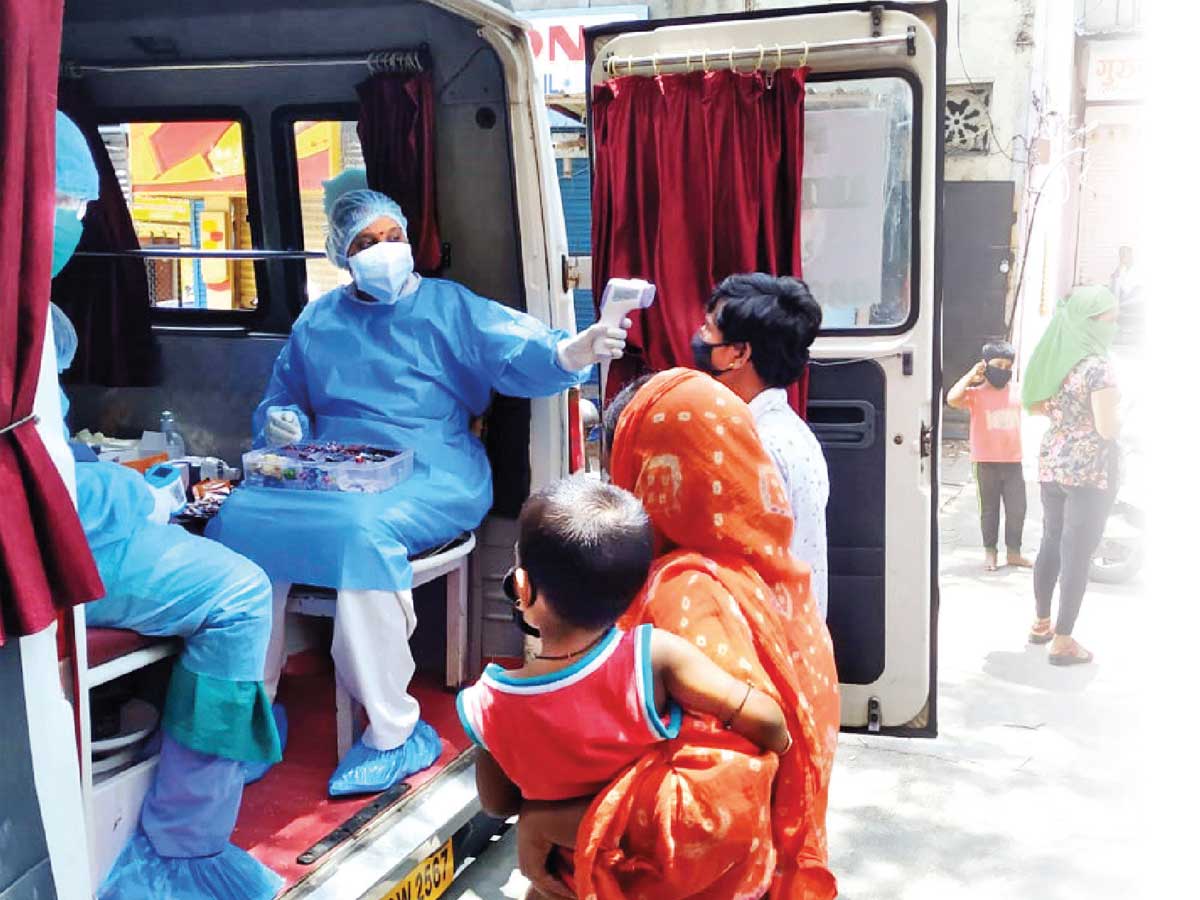
Women living in
While COVID-19 does not differentiate between genders, when it comes to fighting the
Further, this problem is not just contained to sealed-off areas. Even the female nursing staffers themselves who are working in these areas for the past two months are facing issues procuring sanitary pads, as the
The appalling development comes at a time when the Bombay High Court is already dealing with a petition filed by two law students against both the state and central governments, asking for the declaration of sanitary napkins as an essential commodity, so as to regularise their supply and safeguard the health of millions of women, especially impoverished ones, during the lockdown.
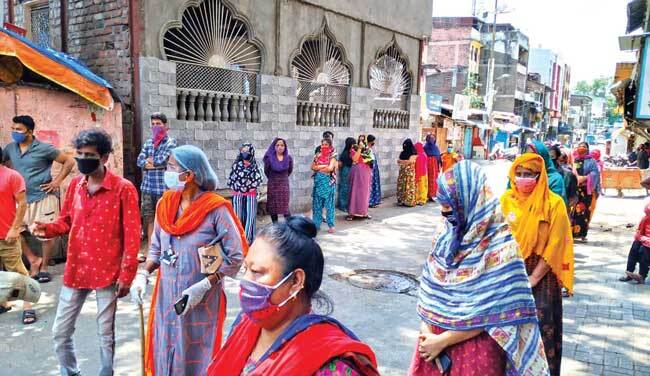
Most shops are shut in hotspot areas, limiting access to products for menstrual hygiene; the female health staff have to go all the way to the ward office to change pads each time
Speaking on condition of anonymity, one of the nurses who is on COVID-19 duty in the worstaffected area of Bhavani Peth, said, “It has been over eight weeks now that we are working on this special duty and the civic administration has provided enough
These female frontline workers spend hours on field in containment areas, but are left hunting for a secure spot to change and dispose their pads when menstruating. “With no option, most women travel all the way to the nearest ward office to change their pads and go back on field. This needs to be done multiple times a day, depending on flow for each person. This is the kind of roundabout we have been sent on for the last two months,” said a nurse.
Some of these women assist doctors in checking people for COVID-19, while others go door to door for surveys in containment zones. While speaking to residents of the said areas, they found that the issue of lack of supply of menstrual products is quite a major problem. “During the survey of women about their health issues, many of them told us that they are unable to purchase sanitary pads as most shops in containment zones are shut, including chemists. They also told us that while the civic body distributed ration kits to address the food issue, there was no supply of sanitary napkins, forcing many to go back to the traditional method of using cloth during their periods — something that health workers have been discouraging due to related health and hygiene issues for years now,” another nurse recounted.
For some sections of society, speaking about menstruation and its related issues remains a taboo. Thanks to this, many women are also not stepping out amidst police protection to buy sanitary pads.
A female nursing staffer assigned to survey added, “Some of the women, especially in slum areas, shared that whenever they step out, they are questioned by police deployed in their areas about the reason for coming out of the house — but, they feel uncomfortable to tell male cops about the need to purchase intimate hygiene products. So, they said they just return home, embarrassed.”
In the fight against
When contacted on the development,







