


A new study published on the preprint server medRxiv* by researchers from Iceland and the U.S. shows how treatment with angiotensin-converting enzyme inhibitors (ACEIs) or angiotensin receptor blockers (ARBs) does not raise angiotensin-converting enzyme 2 (ACE2) levels in human serum – and cautions against the discontinuation of these drugs among patients affected with coronavirus disease (COVID-19).
The ongoing COVID-19 pandemic, caused by the severe acute respiratory syndrome coronavirus 2 (SARS-CoV-2), is linked to major respiratory failure; naturally, the elderly and those with underlying chronic diseases are at highest risk of dying. Co-morbidities most frequently associated with COVID-19-related mortality are hypertension (high blood pressure) and type 2 diabetes.
Albeit lower survival rates can be attributed to the inherent frailty of such at-risk populations, it has also been suggested that the administration of ACEIs and ARBs may up-regulate ACE-2 levels and, in turn, affect the susceptibility to severe COVID-19 outcomes.
It is well known that SARS-CoV-2 and other SARS coronaviruses need to bind to ACE2 in order to enter host cells, utilizing this protein as their functional receptor. There is a certain amount of evidence on how ACEIs and ARBs can up-regulate ACE2 levels. However, these data are predominantly from animal studies of the heart tissue, while an analogous effect has not been documented in serum or pulmonary tissues.
However, based on these preliminary findings, clinicians started recommending the discontinuation of ACEIs and ARBs when patients were treated for COVID-19. Not only is there no scientific or clinical evidence to back up the above-mentioned connection, but such actions may actually put patients at risk – especially the elderly.
This is why researchers from Iceland and the United Stated decided to carefully appraise the effect of ACEIs and ARBs usage on serum levels of the key enzymes in the human circulatory renin-angiotensin system: renin, ACE, and ACE2.
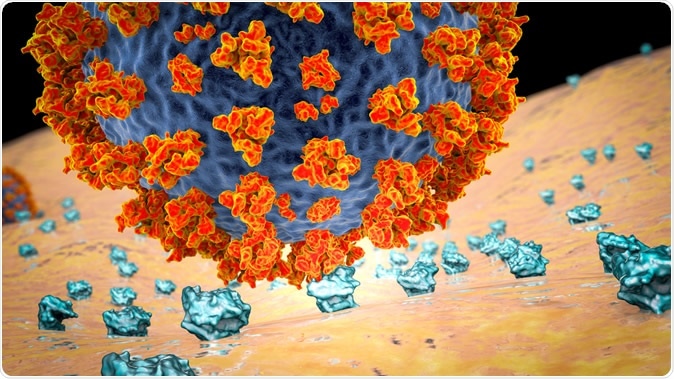
SARS-CoV-2 virus binding to ACE2 receptors on a human cell, the initial stage of COVID-19 infection. Image Credit: Kateryna Kon / Shutterstock
A population-based appraisal
Their research was a single-center population-based study that included 5,457 Icelanders from the Age, Gene/Environment Susceptibility Reykjavik Study (AGES-RS) of the elderly, stratified by treatment with ACEIs (699 individuals in total) or ARBs (753 individuals in total).
The differences between the treatment groups were compared by using the following characteristics: age, body mass index (BMI), obesity defined as BMI over 30 kg/m2, and hypertension defined as systolic blood pressure over 140 mmHg or diastolic blood pressure over 90 mmHg.
The serum levels of the key enzymes in the renin-angiotensin system, renin, ACE, and ACE2, were measured in all 5,457 subjects of the AGES-RS. Subsequently, serum levels in individuals on ACEIs or ARBs treatment has been compared to those not using these medications.
The aptamer-based protein multiplex proteomic technology was utilized to measure serum protein levels. General linear regression models were employed to precisely estimate differences in protein levels between treatment groups. Finally, an adjustment in the models was made for age and gender covariates to obtain exact estimates.
ACEIs and ARBs do not up-regulate ACE2
As expected, the individuals that were treated with antihypertensive drugs were more likely to have evident obesity, hypertension and/or type 2 diabetes. Nonetheless, the treatment with ACEIs or ARBs was not associated per se with higher ACE2 levels in the serum.
“In fact, we observed a weak trend of lower ACE2 levels in individuals on ARBs treatment, while ACEIs showed no effect on ACE2”, explains study authors. “The increase observed in ACE levels with ACEIs treatment is consistent with available data showing a positive effect of ACEIs use on ACE mRNA levels and activity,” they add.
On the other hand, treatment with ARBs did not affect ACE levels. Furthermore, serum renin levels were elevated as a response to both ACEIs and ARBs treatment, since these medications basically reduce the negative feedback regulation of angiotensin II on the renal secretion.
In a nutshell, the data obtained from this study actually do not support the hypothesis that the treatment with either ACEIs or ARBs up-regulates ACE2, which was previously noted in animal studies (influencing, in turn, clinical decisions).
Implications for clinical practice
Overall, the accumulated data does not back the notion that the use of antihypertensive medications ACEIs and ARBs results in the elevation of ACE2, which in turn could lead to increased susceptibility to severe outcome of COVID-19.
“Our results using a large population study with many on ACEIs and ARBs treatment agree well with a study showing genetic proxies for ACE inhibition having no effect on ACE2 levels in pulmonary tissues and in plasma, as well as a recent report on a lack of association between ACEIs/ARBs use and severity of outcomes in COVID-19”, the authors further explain.
Naturally, these findings warrant further validation in other study populations, especially those that encompass different ethnic groups (and not only Caucasians). Moreover, the results presented in this paper may be limited to that of plasma and serum, which means they may not reflect the effect of these medications on ACE2 levels in solid structures like pulmonary tissues.
In any case, the routine discontinuation of ACEIs or ARBs in patients affected with COVID-19 is definitely not supported by the data. More importantly, the withdrawal of these common medications for hypertension can put people at risk of developing serious outcomes.
*Important Notice
medRxiv publishes preliminary scientific reports that are not peer-reviewed and, therefore, should not be regarded as conclusive, guide clinical practice/health-related behavior, or treated as established information.






