
GLOBAL RESEARCH SYNDICATE
No Result
View All Result
  • Login
  • Latest News
  • Consumer Research
  • Survey Research
  • Marketing Research
  • Industry Research
  • Data Collection
  • More
    • Data Analysis
    • Market Insights
  • Latest News
  • Consumer Research
  • Survey Research
  • Marketing Research
  • Industry Research
  • Data Collection
  • More
    • Data Analysis
    • Market Insights
No Result
View All Result
globalresearchsyndicate
No Result
View All Result
Home Data Analysis

Evaluating the Correlation Between the Validated and a Modified Disease Activity Score in Juvenile Dermatomyositis

globalresearchsyndicate by globalresearchsyndicate
May 15, 2020
in Data Analysis
0
Evaluating the Correlation Between the Validated and a Modified Disease Activity Score in Juvenile Dermatomyositis
0
SHARES
6
VIEWS
Share on FacebookShare on Twitter

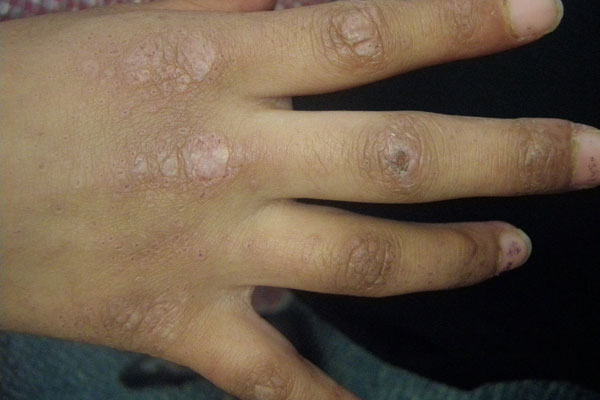
A modified disease activity score (DASmod) can be correlated with the original, validated DAS in patients with juvenile dermatomyositis (JDM), according to study results published in The Journal of Rheumatology. Researchers also noted that the validated and modified DAS scores can be used interchangeably with the help of a regression coefficient.

The 19-item DAS score is a valuable tool that assesses and quantifies the severity of JDM, with scores ranging from 0 to 20 (higher scores indicate greater severity of disease activity). However, some items on the DAS can only be scored contemporaneously, limiting its use in the retrospective analysis of clinical data. As a result, the researchers of this study created the 7-item DASmod (scored 0-12) to assess disease severity of JDM. Of note, items on the DASmod reflect those in the data collection form for the optimal JDM dataset.

The cross-sectional study evaluated data from 51 consecutive patients (31 female) seen at the JDM subspecialty clinic at The Hospital for Sick Children in Toronto, Canada between 2016 and 2018. Validated DAS scores were made by a clinician at the time of patient visits. The DASmod data were also collected from physician/practitioner clinical notes, combined with a global manual muscle testing score (gMMT) completed by a physiotherapist, based on a Kendall score (0-10) for each of the 7 standardized motor movements, including neck flexion, right shoulder abduction, left shoulder abduction, right hip flexion, left hip flexion, right hip abduction, and left hip abduction, to yield a total score of 0 to 70. For patients with skin abnormalities, skin parameters were also scored. In a separate analysis, researchers calculated DASmod using the manual muscle test (MMT8) instead of the gMMT, which they then compared with the validated DAS. To determine correlations between the validated DAS and DASmod, they analyzed data using linear regression and Pearson’s correlation coefficient.

Median DASmod vs validated DAS score was 2.0±2.8 and 3.0±3.9, respectively. Scores on the DASmod and DAS were highly positively correlated (r=0.94; 95% CI [0.89-0.96]; P <.001), and this correlation also held true when MMT8 was used instead of gMMT in the DASmod score (r=0.94; 95% CI [0.89-0.97]; P <.001). Linear regression was also observed to be significant (r2=0.88; F=357.60; P <.001). For this dataset, the researchers used a regression equation to make the 2 assessments interchangeable: DAS score = -0.26 + 1.5*DASmod. Results of the study also showed a high positive correlation between the muscle and skin domains on the DASmod and the validated DAS.

Study limitations included the fact that both DASmod and DAS scores were skewed to low disease activity, indicating that more patients were close to or in remission; data from only 1 clinical center were used; and the easy availability of gMMT and MMT8 scores for this study, which may not be the case for centers with fewer resources.

Researchers concluded, “If the regression equation from this dataset is successfully tested against future datasets, then further research collaborations between centers that collect different data related to disease activity in children with JDM will be facilitated.”

Reference

Clairman H, Dover S, Whitney K, et al. Correlation of a modified disease activity score with the validated original disease activity score in patients with juvenile dermatomyositis [published online March 15, 2020]. J Rheum. doi:10.3899/jrheum.191255


Related Posts

How Machine Learning has impacted Consumer Behaviour and Analysis
Consumer Research

How Machine Learning has impacted Consumer Behaviour and Analysis

January 4, 2024
Market Research The Ultimate Weapon for Business Success
Consumer Research

Market Research: The Ultimate Weapon for Business Success

June 22, 2023
Unveiling the Hidden Power of Market Research A Game Changer
Consumer Research

Unveiling the Hidden Power of Market Research: A Game Changer

June 2, 2023
7 Secrets of Market Research Gurus That Will Blow Your Mind
Consumer Research

7 Secrets of Market Research Gurus That Will Blow Your Mind

May 8, 2023
The Shocking Truth About Market Research Revealed!
Consumer Research

The Shocking Truth About Market Research: Revealed!

April 25, 2023
market research, primary research, secondary research, market research trends, market research news,
Consumer Research

Quantitative vs. Qualitative Research. How to choose the Right Research Method for Your Business Needs

March 14, 2023
Next Post
WSUV faculty pivots to COVID-19 related research

WSUV faculty pivots to COVID-19 related research

Categories

  • Consumer Research
  • Data Analysis
  • Data Collection
  • Industry Research
  • Latest News
  • Market Insights
  • Marketing Research
  • Survey Research
  • Uncategorized

Recent Posts

  • Ipsos Revolutionizes the Global Market Research Landscape
  • How Machine Learning has impacted Consumer Behaviour and Analysis
  • Market Research: The Ultimate Weapon for Business Success
  • Privacy Policy
  • Terms of Use
  • Antispam
  • DMCA

Copyright © 2024 Globalresearchsyndicate.com

Welcome Back!

Login to your account below

Forgotten Password?

Retrieve your password

Please enter your username or email address to reset your password.

Log In
This website uses cookies to improve your experience. We'll assume you're ok with this, but you can opt-out if you wish. Cookie settingsACCEPT
Privacy & Cookies Policy

Privacy Overview

This website uses cookies to improve your experience while you navigate through the website. Out of these cookies, the cookies that are categorized as necessary are stored on your browser as they are essential for the working of basic functionalities of the website. We also use third-party cookies that help us analyze and understand how you use this website. These cookies will be stored in your browser only with your consent. You also have the option to opt-out of these cookies. But opting out of some of these cookies may have an effect on your browsing experience.
Necessary
Always Enabled
Necessary cookies are absolutely essential for the website to function properly. This category only includes cookies that ensures basic functionalities and security features of the website. These cookies do not store any personal information.
Non-necessary
Any cookies that may not be particularly necessary for the website to function and is used specifically to collect user personal data via analytics, ads, other embedded contents are termed as non-necessary cookies. It is mandatory to procure user consent prior to running these cookies on your website.
SAVE & ACCEPT
No Result
View All Result
  • Latest News
  • Consumer Research
  • Survey Research
  • Marketing Research
  • Industry Research
  • Data Collection
  • More
    • Data Analysis
    • Market Insights

Copyright © 2024 Globalresearchsyndicate.com



