

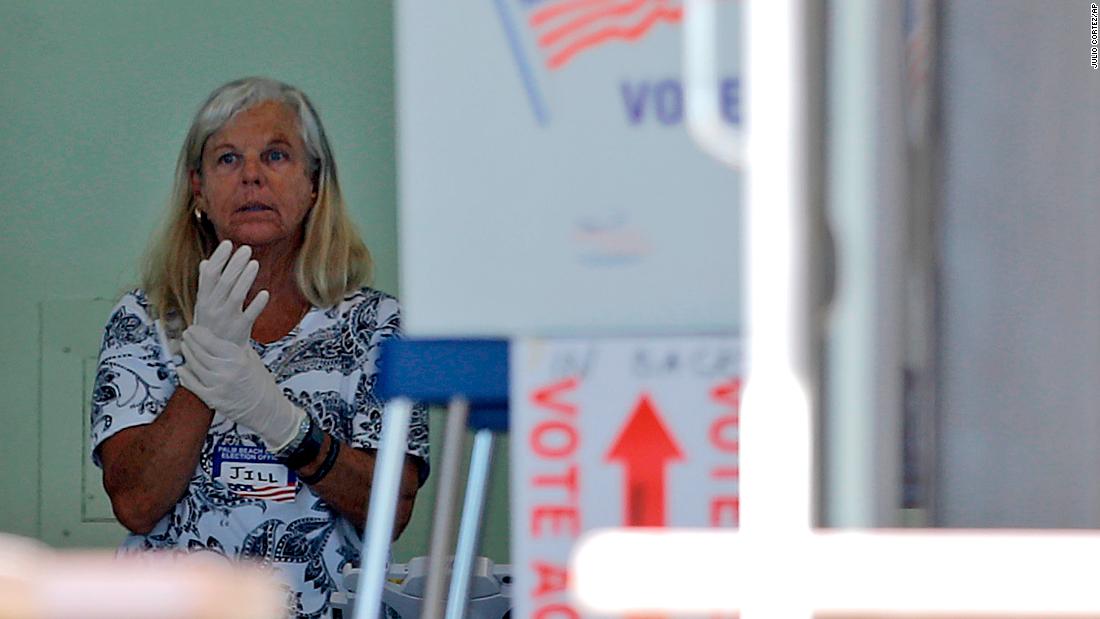
The coronavirus pandemic, which has escalated dramatically in the last month, has upended most of American life and the polling industry is no exception. Social distancing requirements have closed most offices and the exponential growth of cases has meant that a poll can be outdated even just a few days after it’s conducted due to the rapid shifts in public opinion.
Polling is conducted in numerous ways and with an almost infinite number of methodological choices to be made. Surveys can be conducted by phone with live people asking questions, online, by mail, in person, by phone with automated callers and many other options in between, each presenting their own pros and cons in the pandemic.
And now public opinion firms are combating issues such as conducting polls without a room full of people at call centers, an influx of interest in pandemic data and a news cycle that won’t stay still long enough to field a poll.
But with rapidly changing data comes new innovations and strategic changes to the polling industry. In an effort to gauge public opinion, many call centers are working from home, while pollsters who are methodologically diverse are relying more and more on online polling to properly represent the nation, trying to keep their finger on the ever-moving pulse.
How to have a call center at home
“Our work from home infrastructure has been in place for more than a decade, thankfully. We had it all set up,” she said. “So, with the recent coronavirus development, we’ve been transitioning as many of our interviewers as possible using that technology. If we had to build this infrastructure on the spot, I think it would’ve been difficult to do.”
Without that infrastructure in place, companies may have been scrambling to properly equip the thousands of call center employees before sending them off, but Herrmann reports they’ve been prepared.
“A few years ago, we moved our phone operations to where people are able to work remotely and essentially use a virtual console to do dialing from their homes. So, we’re able to have some consistency and some continuity in our phone operations,” Jackson said.
Ipsos conducts polling in multiple ways: over the phone, their online panel, mail, face to face and more. Jackson said the company is “methodologically agnostic” despite being known for their Ipsos KnowledgePanel.
It’s important that Ipsos’ and other pollsters remain relatively consistent with their methodology since many surveys have a trend line dating far back in history, and a change from live phone to online could make surveys not directly comparable.
Those guidelines vary country to country, but in the US, Jackson said Ipsos is pivoting slightly by relying more heavily on their online panel. Herrmann reports SSRS hasn’t changed their methods significantly, but is ensuring all employees are safe.
Increased response rates
Jackson told CNN that, anecdotally, he’s seen an increase in the people responding to surveys.
“We’ve definitely seen a real spike in demand, especially for our online platform,” he said. “We’ve been talking internally, and we think we’ve done — across the entire company, around the world — around over a million interviews over the past couple of weeks. People who are stuck at home have nothing else to do but answer surveys, right?”
While there aren’t any hard figures on response rates over the past few weeks, all pollsters mentioned some preliminary numbers that showed a boost in phone responses, online responses, people ready to discuss the issue.
Herrmann noted how interested Americans are in discussing the constantly changing issue, saying, “People have been really engaged about speaking to us on these salient topics and current events we’re asking about, particularly coronavirus, due to the obvious impact it’s having on everyone’s lives right now.”
How quickly the data is changing
Pollsters already struggle to keep up with the news. Polls with a short fielding period take around three days, depending on what questions the pollsters are asking, and pollsters often run the risk of having their poll completely irrelevant by the time the data is released.
Upwards of 30 polls have been released on coronavirus since February, included a huge number this week alone. Many are repeat polls, trying to get a proper trendline to show how quickly concerns around coronavirus have surged.
Companies like Abt Associates — another major survey outlet contracted by private and public sectors alike, including the CDC — are seeing how far and wide the data can reach.
“Not only do we need to maintain continuity for our current data collection, analytic, and systems support efforts, but we also have to continue providing urgent support to agencies attempting to understand the wide-ranging impacts of the COVID-19 pandemic on public health, homelessness, the education of our children, food security and the like, in addition to efforts to track the prevalence of the virus itself,” writes Link.
Survey demand and employee safety
But increased response rates and a salient topic doesn’t always mean easy going for the pollsters. Media attention spikes around coverage of emerging infectious diseases and pollsters are feeling the heat of a busy news cycle.
Herrmann told CNN that SSRS can anticipate this, but still says they’re working long hours.
“Once you do polling, you’re pretty accustomed to working quickly. Our teams are used to it. But it has been changing so quickly in this case,” she said.
Herrmann specifically discussed concern for her employees at SSRS. After lamenting how much she misses the office — they usually conduct their own daily poll around the coffee machine for questions like “favorite candy type” — she said she’s had to be assertive, making sure they aren’t biting off more than they can chew and are keeping their own well-being at the forefront.
“But in terms of what has changed, it’s mostly been from a personnel perspective, making sure we’re doing things in the best interest of our staff. You have to be forceful about it and we’re trying to keep everyone safe.”
Jackson said he’s been working long days but wants to get his data out there before it goes bad, since the dialogue has changed so quickly.
“It’s a terrifying, yet fascinating time to be doing public opinion research,” he said.







