

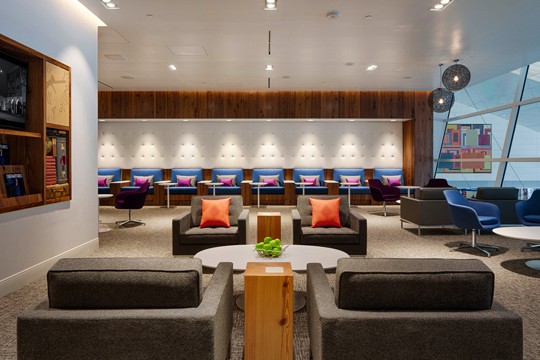
“We believe the purpose of both design and designer is to guide. To provoke, to clarify, to move people emotionally and functionally forward. Whether through big transformations or everyday tasks, design should make people and business work smarter.”
Impressive quote, right? Gets the juices flowing when it comes to realizing the potential that design can play not just on productivity and mood, but also on the core objectives of the company conducting business in its presence. In fact, it sounds like a great motto for a high-end design team or sophisticated architectural firm, doesn’t it?
Does it come as a surprise that this quote is from tech mogul IBM? Truth be told, all brands should have such high expectations for a designer’s role in the expression of its brand through physical space. Design, at its very core, isn’t just a collection of pretty pictures and well-functioning spaces—it’s the physical manifestation of a brand, its culture and its people, pulled together in a curated approach to make space function well.
Yet our landscape is evolving. Demographics are changing, and the very essence of work has shifted from a place we go to a thing we do. As younger generations enter the workforce, expectations of the workplace have changed, including assumptions about remote work, as well as the belief that the workplace should be more than a place to do the physical job. So, with all of these shifting variables, how do designers focus on the elements that matter, and design spaces that not only function for today’s workers, but also are future-proofed? A focus on what’s changing, and what’s staying the same, can help bring clarity.
What’s shifting in the workplace: The demographics
Mathematically speaking, we’re in for a major shift in the workforce. In a recent Cushman & Wakefield report entitled, Demographic Shifts: The World in 2030, the company acknowledges the major shifts we’ll experience due to the simple aging out of one generation and the rise of another. As the report suggests, for the entire decade between 2020 and 2030, millennials, as a sector, will comprise the largest share of the workforce, representing 40 percent of the global working-age population by the end of the period. Meanwhile, Generation Z is currently the largest generation and includes just under two billion people globally, or 26 percent of the world’s population.
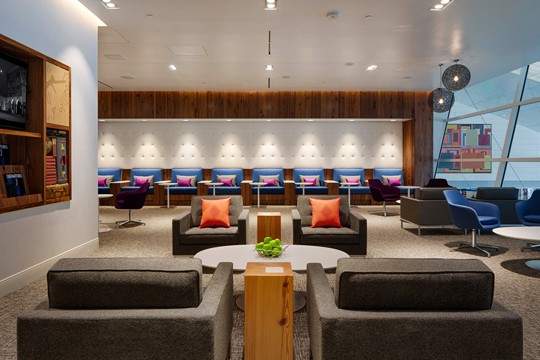
And while generational shifts are natural occurrences, the systematic differences, between baby boomers and the more recent millennials and Gen Z represent arguably the largest gap in history. From the advancements in technology to the shifts in work life balance, there are perhaps no two generations that look more different.
In response to these shifts, Dr. Dominic Brown, head of insight and analysis, Asia Pacific at Cushman & Wakefield suggests, “It is clear that with the growth of millennials (Gen Y) in the labor force, companies need to increase their focus on brand and culture, not only to attract but also to retain the best millennial talent.”
Concurring with this forward-looking approach, Aaron Spiess, EVP, Founder of Big Red Rooster, a JLL company, adds: “A workplace that’s powered by the human experience goes beyond a work-life balance. It drives how people feel about their place of work. How empowered, engaged and fulfilled they are, it’s the purposeful fusion of life and work based on authentic human experiences.”
When asked what this will look like, Brown says: “Companies will need to increase their focus on helping Generation Z develop soft skills amongst this generation of digital natives. More specifically, to build a culture of inclusion, there is a greater focus on collaborative and break out space. However, individuals also need their own space and so focus areas are also part of modern office design. Increasingly, ‘chill-out spaces’ have become part of the modern office design to help improve employee wellness. The ability to feel energized throughout the day has a strong correlation to employee wellness and is a key driver of overall employee experience.”
What’s staying the same: The designer will lead strategy
Amid all of this change, we know that the role of the designer will remain imperative. Merging all of the dynamic needs for strategic design—aesthetics, function, and humanistic needs into a physical space requires a trained creative lens.
Let’s circle back to Big Red Rooster as an example of this creative lens. The company was created to deliver a transformative human experience through design.
As Spiess puts it, “There is an opportunity within our industry to better understand architecture and design from the point of view of a brand’s experience platform. A lot of A&D starts with the context of building. Yet at Big Red Rooster, we believe that business and experience start with the human part and then connects to the brand. Culture is the intersection of those pieces, not the other way around.”
Put another way, Brown suggests, “The future is likely to be an evolution, rather than a revolution, of current trends. Through our research, we know that the ‘softer’ elements of workplace experience, such as cultural appeal, workspace appeal, brand appeal and mental wellbeing have a significant bearing on workplace experience. Design plays an integral role in improving many of these aspects of the employee experience as the workplace is the epitome of the brand.”
Tactically speaking, Spiess likens this process to the process of designing a box store. “When you create a retail space, you design it with purpose—each element of the store serves the ultimate goal of selling product,” he says. “You employ different elements to help the shopper along their buyer journey, from the placement of customer service desks to make the shopping experience seamless, to the colorful use of advertisements and product placement that draw the shopper’s eye to the products you want sold.”
He continues: “In corporate spaces, design must work the same way. Each element of the workplace must serve the ultimate purpose of helping an employee be most productive. And generationally speaking, these needs differ, often dramatically. But by diving into the drivers of the people who fill the space, we can understand how to best design a workplace that is attractive to those humanistic traits. For some cultures, flexibility will be a driver—for others, amenities are king. While many companies can say our brand should portray this, if that brand promise doesn’t align with the actual expectations of its people, and reflect the diversity of its workforce, it will fall flat.”
Looking forward, Spiess concludes with this: “Tomorrow is about creating extraordinary human experiences. Companies must invest in ‘experience’ as it is now a key differentiator. Through our research, we know people crave fresh and unique experiences. It is the personal and the magical experiences that standout and cement the bond between people, companies, and brands.”
This article originally was published in Bellow Press and was reposted here with permissions.
Amanda Schneider is President of ThinkLab, the research division of Interior Design Media. At ThinkLab, we combine Interior Design Media’s incredible reach within the architecture and design community with proven market research techniques to uncover relevant trends and opportunities that connect back to brand and business goals in a thought-provoking, creative, and actionable way. Join in to know what’s next at thinklab.design/join-in.







