

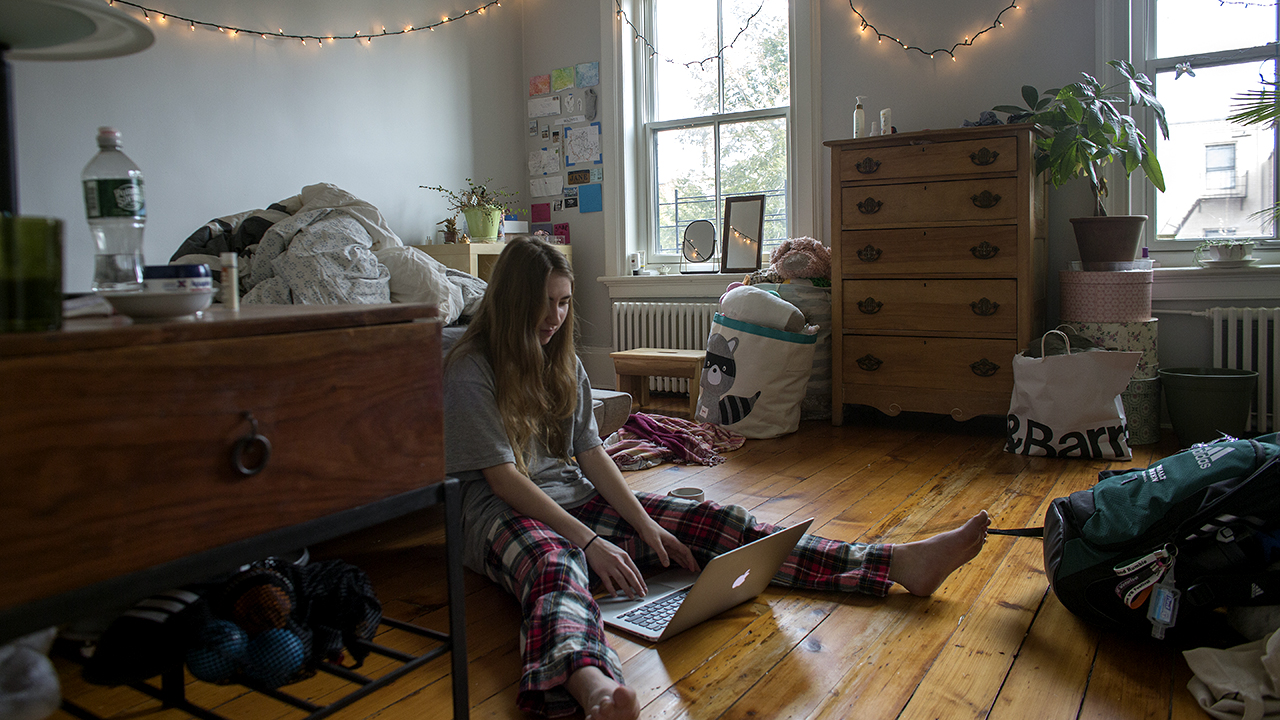
As K-12 officials in many states close schools and shift classes and assignments online due to the spread of the new coronavirus, they confront the reality that some students do not have reliable access to the internet at home – particularly those who are from lower-income households.
Here are key findings about the internet, homework and how the digital divide impacts American youth.
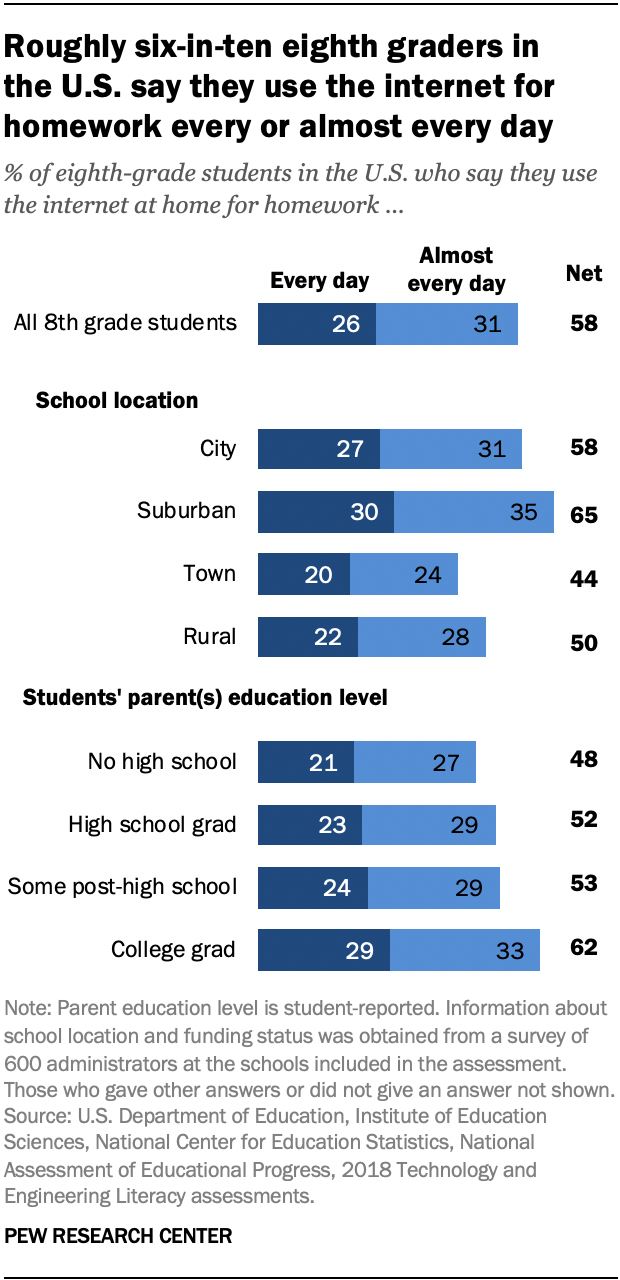 1The majority of eighth-grade students in the United States rely on the internet at home to get their homework done. Roughly six-in-ten students (58%) say they use the internet at their home to do homework every day or almost every day, according to a new Pew Research Center analysis of data from the 2018 National Assessment of Educational Progress (NAEP). Just 6% of students say they never use the internet at home for this purpose.
There are differences in these patterns by community type and parents’ education level. Roughly two-thirds of students attending suburban schools (65%) say they use the internet for homework every day or almost every day, compared with 58% who attend schools in cities, 50% of those who attend in rural areas and 44% of those attending schools in towns. Students whose parents graduated from college are more likely to use the internet for homework at home. Some 62% of these students use the internet at home for homework, compared with smaller shares of students whose parents have some post-high school education (53%), have only a high school education (52%) or have no high school education (48%).
How we did this
2The “homework gap” – which refers to school-age children lacking the connectivity they need to complete schoolwork at home – is more pronounced for black, Hispanic and lower-income households. Some 15% of U.S. households with school-age children do not have a high-speed internet connection at home, according to a previously published Pew Research Center analysis of 2015 U.S. Census Bureau data. School-age children in lower-income households are especially likely to lack broadband access. Roughly one-third (35%) of households with children ages 6 to 17 and an annual income below $30,000 a year do not have a high-speed internet connection at home, compared with just 6% of such households earning $75,000 or more a year. These broadband gaps are particularly pronounced in black and Hispanic households with school-age children – especially those with low incomes.
3Some lower-income teens say they lack resources to complete schoolwork at home. In a 2018 Center survey, about one-in-five teens ages 13 to 17 (17%) said they are often or sometimes unable to complete homework assignments because they do not have reliable access to a computer or internet connection. Black teens and those living in lower-income households were more likely to say they cannot complete homework assignments for this reason.
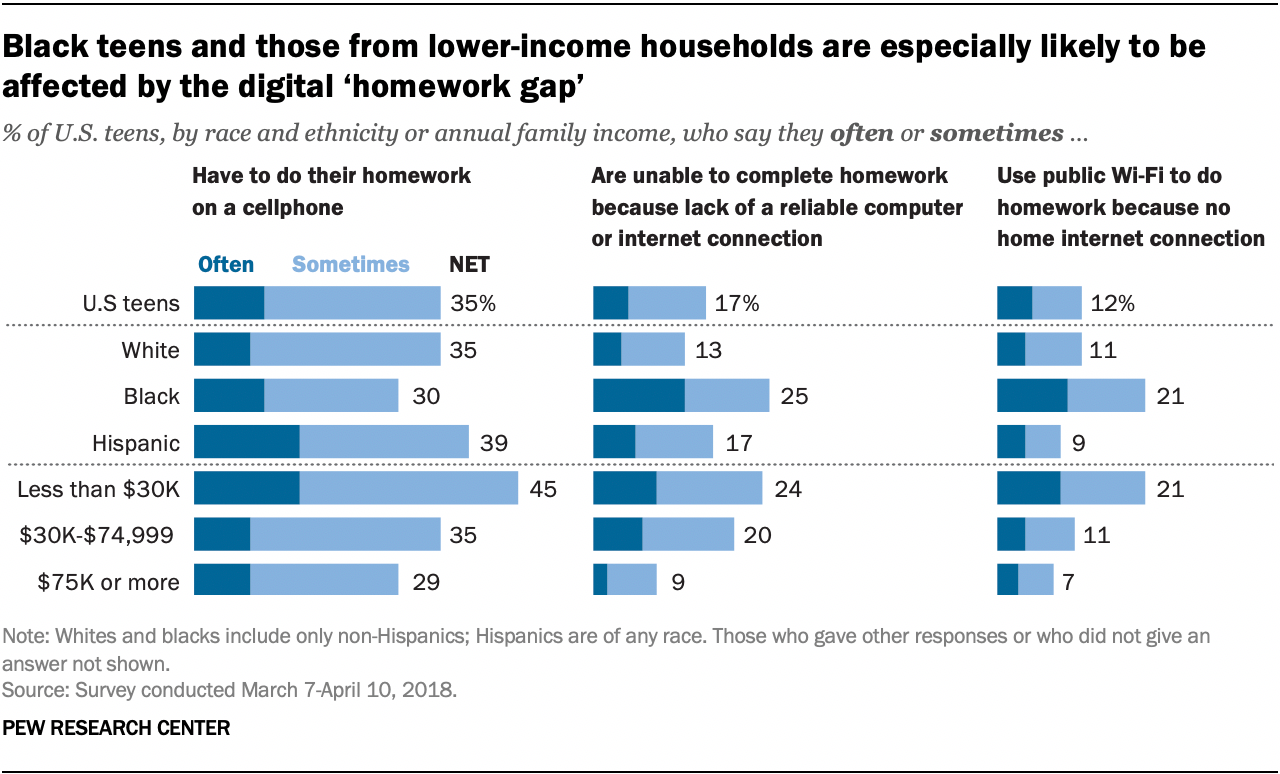
For example, one-quarter of black teens said they often or sometimes cannot do homework assignments due to lack of reliable access to a computer or internet connectivity, compared with 13% of white teens and 17% of Hispanic teens. Teens with an annual family income below $30,000 were also more likely to say this than teens with a family income of at least $75,000 a year (24% vs. 9%).
In the same survey, around one-in-ten teens (12%) said they often or sometimes use public Wi-Fi to do schoolwork because they lack a home internet connection. Again, black and lower-income teens were more likely to do this. 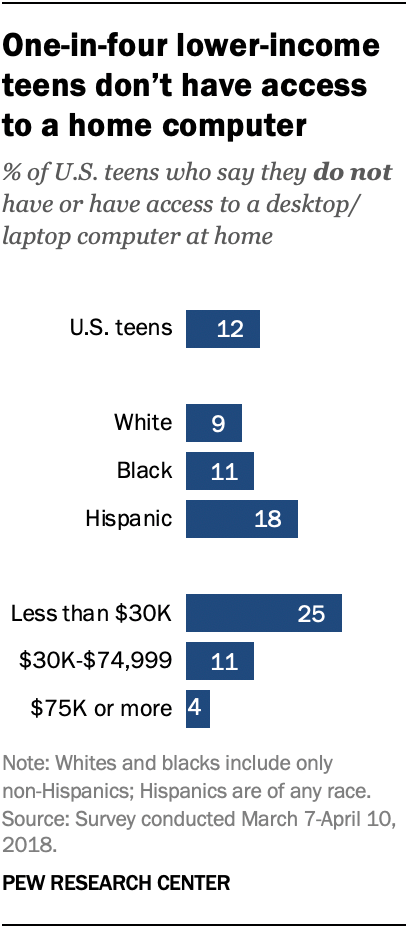 Roughly one-in-five black teens (21%) said they use public Wi-Fi to do schoolwork due to a lack of home internet connection, compared with 11% of white teens and 9% of Hispanic teens. And around a fifth (21%) of teens with an annual family income under $30,000 reported having to use public Wi-Fi to do homework, compared with 11% of teens in families with a household income of $30,000-$74,999 and just 7% of those living in households earning at least $75,000.
4A quarter of lower-income teens do not have access to a home computer. One-in-four teens in households with an annual income under $30,000 lack access to a computer at home, compared with just 4% of those in households earning over $75,000, according to the 2018 survey. There are also differences by race and ethnicity. Hispanic teens were especially likely to say they do not have access to a home computer: 18% said this, compared with 9% of white teens and 11% of black teens.







