

The following is a contributed article by Nathan Shannon, Deputy Director, Smart Energy Consumer Collaborative, and Rob Kelter, Senior Attorney, Environmental Law & Policy Center
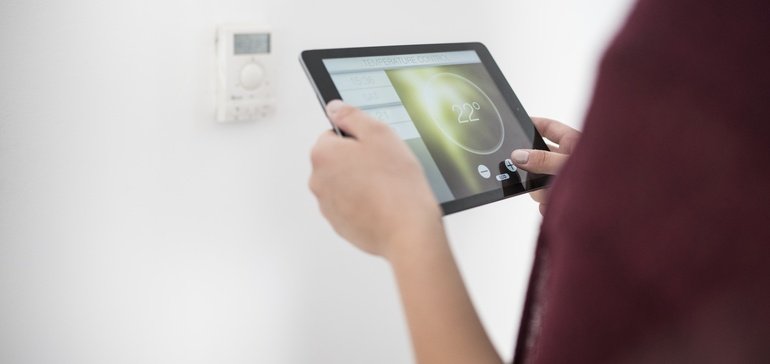
As utilities modernize their grids, most overlook the lowest hanging fruit in terms of customer benefits — smart thermostats.
While smart meters provide customers new information regarding their overall usage, smart thermostats provide actual savings by helping people to stop cooling and heating empty homes. Moreover, as utilities move toward time-of-use (TOU) rates and emphasize demand response programs, smart thermostats do the work for customers to ensure they save money.
In fact, consumer interest in smart thermostats has never been higher. According to a survey from the Smart Energy Consumer Collaborative (SECC), one-third of all respondents indicated they are likely to purchase a smart thermostat within the next 12 months, and this intention is much higher among tech-savvy and eco-conscious consumer segments.
This consumer interest comes as utilities offer new time-varying electric rates. An SECC survey showed considerable customer interest in these rates, especially when utilities make smart thermostats available. Nearly half (44%) of respondents indicated they’d be more willing to participate in a time-based pricing program, such as a TOU rate, real-time pricing or a variable peak pricing, if this technology was available to them.
The major thermostat companies continue to refine their technologies to increase consumer savings. For example, ecobee’s eco+ upgrade is comprised of five smart features, including one called Time of Use, which optimizes energy use for customers on a TOU rate. Demand Side Analytics, a research firm for the utilities industry, conducted the largest research study of its kind to measure the savings from this upgrade.
The results show additional savings for consumers with the eco+ upgrade, which automatically precools around the TOU rates, compared to consumers that did not get the upgrade and manually adjusted for TOU. The study explored five different rate structures across various climate zones, including those in service territories of Hydro One, Florida Power & Light Company, Sacramento Municipal Utility District (SMUD) and Pacific Gas and Electric (PG&E).
The interest is there, and so are the savings
The results show additional savings from automated TOU management, and they also offer critical insights into how rate design can affect the level of savings. Study results show that the time-of-use optimization contributed additional bill savings of 8-19% across various climate zones through its out-of-the-box solution, in addition to on-peak savings and overall energy savings.
This presents an important opportunity for utilities to use smart technology to help inform their variable rate structures and to enable consumers to maximize their savings by shifting load away from high-priced periods. On top of that, utilities beginning their time-of-use rollout can consider smart technology offerings as a tool to help customers through their transitions to TOU rates.
The results show that this type of automated TOU response achieves bill savings not only through load shifting, but also through a decrease in overall cooling energy use.
The savings resulting from the study were as follows:
- Bill savings ($): 8-19% additional savings on monthly cooling expenses related to energy
- Average on-peak savings (kWh): additional 13-36% toward peak energy reduction
- Energy savings (kWh): 3.4-8.8% of additional energy savings
The study revealed two key insights when it comes to the impact of rate design on consumer savings.
First, the bill savings associated with automation technology were larger in regions where participants run their air conditioning for longer periods of time, have larger A/C units, and more expensive peak electricity prices.
In addition, the duration of the peak period impacts the level of savings automation technology can provide. Shorter peak hours yielded larger average demand impacts (kW) but less overall energy savings (kWh).
Learnings from across climate zones
With numerous factors affecting the on-peak, energy and bill savings from the TOU feature, the impact can be seen at a high level in the below table:

Permission granted by Demand Side Analytics
Upon closer examination, we can see the savings impact of on-peak to off-peak ratio and peak duration illustrated in the rate examples below:

SMUD Res TOD Energy Expenditure Impacts
Permission granted by Demand Side Analytics
SMUD: This rate shows the greatest peak demand reduction (0.25 kW per device) because of its shorter peak duration.

FPL RTR-1 Energy Expenditure Impacts
Permission granted by Demand Side Analytics
Florida Power & Light: While this rate had a longer peak duration, the technology was still able to achieve savings because of the significant price differential from on-peak to off-peak (6:1).

Hydro One Res TOU Energy Expenditure Impacts
Permission granted by Demand Side Analytics
Hydro One: In the Canadian climate where air conditioning usage is lower, we see the largest on-peak kWh savings because even a small shift in cooling use reflects a larger percentage impact.

PG&E EV-A Mixed Dry Energy Expenditure Impacts
Permission granted by Demand Side Analytics

PG&E EV-A Marine Energy Expenditure Impacts
Permission granted by Demand Side Analytics
PG&E: The study looked at the same TOU rate in two different PG&E climate zones (marine and dry climates). Because the A/C usage is higher and unit size is larger in the dry climate zone, we see higher bill savings for customers in that region.
No matter the rate design goal, smart technology can play a role
These studies have shown three things to be clear:
- Consumers are interested in time-varying rates and smart thermostats.
- Rate design impacts the amount that consumers can save through time-of-use pricing.
- Automation technology can help consumers optimize around their time of use pricing.
Utilities can use automation technology as a tool to inform rate design decisions based on the goals they want to achieve from rolling out TOU rates, and they can do this while maintaining — and even enhancing — the customer experience.
Whether they want to prioritize customer bill savings, peak demand savings or energy savings, insights from automation technology can help utilities design their rate structure to best address their objectives. Additionally, utilities can ensure an exceptional customer experience by using smart thermostats and automation technologies as recruitment tools to offer consumers a worry-free solution to optimize their energy use and savings.
Now is the time for utilities to tap into the readily available tools — and the consumer interest — and build a time-varying rate structure that meets their overall goals, while helping their customers easily manage these rates and save on their bills.







