

Those funds have been used to cover the costs of feed, vet care, nesting site preparations, equipment and purchasing swans.
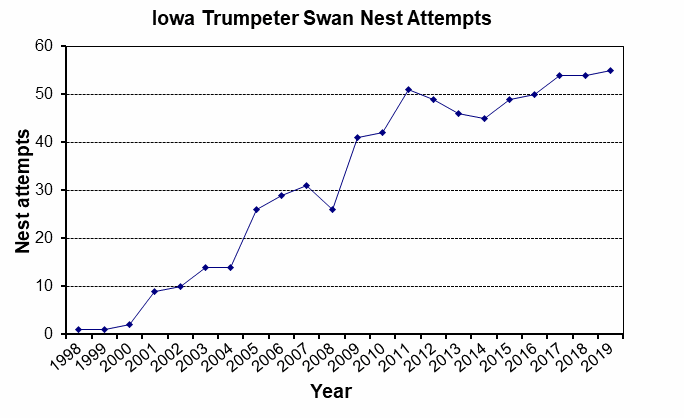
In 1998, 115 years after the last known trumpeter swans had occupied Iowa, three wild trumpeter swan cygnets hatched in Dubuque County.
In 2000, a second pair nested on a Winnebago County Conservation Board wetland (Russ Tract at Thorpe Park), 8 miles west of Forest City.
From that first nest in 1998, trumpeter swans’ numbers have been on a slow and steady incline: Iowa had 55 nesting pairs last year, and there are currently 18 active breeding pair sites around the state. Since that first hatch in 1998, 699 known trumpeter swan nests have occurred in Iowa.
“Here in the 5-county area that surrounds Mason City has the highest nesting density in the state,” Hoffman said.
“We also receive swans in from about 10 zoos around the country that donate their cygnets,” Hoffman said. “So those cygnets that are raised in captivity here in Iowa are from zoos, like Blank Park Zoo, for example, then those cygnets are the ones that get released out in the wild.”
Many of the swans in captivity have been injured in the wild and weren’t able to return, so they’re used for breeding to grow the population. A total of 71 wild, free-flying trumpeter swans have been captured, banded and released in Iowa since 1997.







