


By the late 19th century, the American food supply was rife with frauds, fakes and legions of untested and often deadly chemicals that threatened the health of consumer.
“The Poison Squad,” a documentary based on the acclaimed book by Deborah Blum and debuting on PBS’ American Experience tonight, tells the story of a little-known government chemist named Dr. Harvey Wiley, who, determined to banish these dangerous substances from the American diet, took on the powerful food manufacturers and their allies in government.
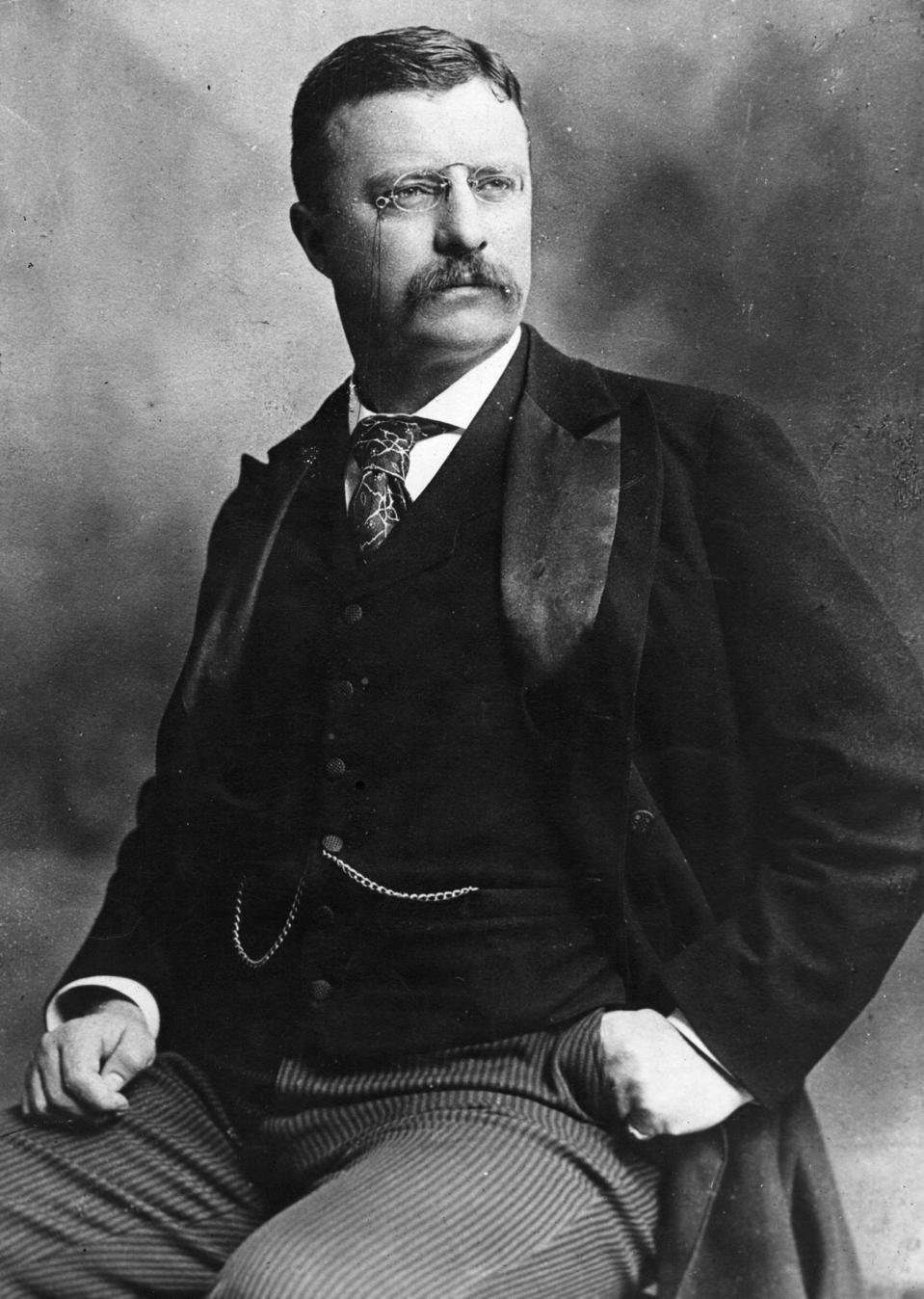
Theodore Roosevelt (1858 – 1919) 26th President of the United States of America. Original … [+]
To demonstrate the peril lurking in these ubiquitous chemicals — from copper sulfate to borax to formaldehyde — Wiley embarked upon a series of bold and controversial trials on human subjects — a dozen brave young men who would become known as the “Poison Squad.” Following Wiley’s unusual experiments and tireless crusade for food safety, the documentary charts the path of the forgotten man whose work would become the basis for our consumer protection laws, and ultimately the creation of the FDA.
At the close of the 19th century, technology and industry were booming. More and more Americans migrated to cities and away from farm life and fresh, homegrown food. Completely unregulated, the burgeoning food manufacturing industry took off as millions of Americans needed access to readily available and affordable food. In this pre-refrigeration world, meatpacking and canning companies sought ways to keep their products fresh at the lowest possible cost, regularly processing products with untested chemical preservatives. Milk was diluted with water and then sometimes whitened with plaster of paris or chalk to get rid of its bluish tint; formaldehyde was often added to sweeten the taste of souring milk, while pureed calf brains could be used to mimic the cream on top. In big cities, tainted milk was a breeding ground for deadly bacteria; outbreaks of scarlet fever, tuberculosis and cholera were common.
Since no ingredient labeling was required, other dairy products like oleomargarine made from scraps from meatpackers were sold as butter, and corn syrup was marketed as honey and maple syrup. And when the rations shipped to U.S. soldiers fighting the Spanish American war in Cuba were so rancid and reeking of toxic chemicals that troops refused to eat them, New York governor Theodore Roosevelt, who had fought alongside them, said he would rather have eaten his hat.
A chemist working at the U.S. Department of Agriculture, Wiley had been trying for years to raise the alarm about the perils lurking on market shelves. Determined to banish dangerous substances from American dinner tables, Wiley faced enormous opposition from big business and their lobbyists and cronies in Congress. He decided that the only way to prove the toxicity of these chemicals would be through a scientific study using human subjects.
In 1902, Wiley recruited 12 robust young men with brave hearts and strong stomachs and fed them meals tainted with increasing amounts of common chemical additives such as borax, salicylic acid, sodium benzoate and formaldehyde. In exchange for free food and five dollars a month, these volunteers, dubbed the “Poison Squad,” agreed to eat only the meals served by Wiley, submit to a battery of physical examinations after each meal; and promise not to sue the federal government if they were injured or sickened in the process.
Soon newspaper reporters were covering the colorful and often stomach-churning exploits of Wiley’s “Poison Squad” and the public was transfixed. Other progressives joined Wiley’s “pure food” movement, including women’s groups and suffragists, the influential cookbook writer Fannie Farmer, and readers of Upton Sinclair’s groundbreaking novel, The Jungle, which was filled with shocking revelations about the conditions in America’s meatpacking plants.
Wiley’s experiments became one of the most influential scientific studies of the 19th century. Finally, in 1906, decades after he first sounded the alarm, Congress passed the Meat Inspection Act and the Pure Food and Drug Act — the first consumer protection laws in the nation’s history.
Experts involved with the making of the documentary include Mark Bittman author of 20 books, including the How to Cook Everything series; Deborah Blum author of The Poison Squad; Kathleen Dalton, author of Theodore Roosevelt: A Strenuous Life; Jack High, co-author of The Politics of Purity: Harvey Washington Wiley and the Origins of Federal Food Policy; Suzanne Junod, former FDA Historian at the US Department of Health and Human Services; Mark Kurlansky, author of MILK!: A Ten Thousand Year Food Fracas; Corby Kummer food writer for The Atlantic; Sarah Lohman, culinary historian and author of Eight Flavors: The Untold Story of American Cuisine; Marion Nestle, author of Food Politics: How the Food Industry Influences Nutrition and Health and Safe Food: The Politics of Food Safety; and Eric Schlosser, author of Fast Food Nation.
“’The Poison Squad’ reminds us that our current concerns about food safety have a long history,” said Susan Bellows, senior producer of American Experience. “Although he remains mostly forgotten, we can thank Wiley and his brave volunteers whenever we see a ‘certified organic’ label on a package of chicken or read an ingredient list on the side of a box at our local supermarket.”







