

We are all accessories in the spread of fake news

When reality, facts or truth are inconvenient, people can now simply pay to change them. Disinformation, which became mainstream during the 2016 US presidential election, has spawned a worldwide black PR industry that manipulates data to sell more products, generate votes and, ultimately, change perceptions.
Numerous companies, brands, political campaigns and even governments are pushing spurious claims, bad science, bad faith and outright lies. These are then dressed up on pseudo news websites, legitimized by stunted polls and spread across various platforms by millions of fake accounts, resulting in an unsettling reality in which “truth” is simply a matter of perspective — up for debate.
Disinformation goes far beyond “fake news,” spam or the obvious products of internet troll farms. It is a deeply insidious operation designed to mimic reality so well that even attuned researchers or investigators can struggle to identify the real amid a torrent of deception. Last year alone, there were 19 major disinformation operations, compared with only eight between 2011 and 2018. Pending US elections, heightened tensions in the Middle East, protests in South America, China’s domestic woes and a looming Brexit will probably generate even more disinformation and influence campaigns this year.
Although the concept itself is not new, Russia, China and Iran’s information operations have supplied a playbook of sorts to groups and individuals who have the financial means and resources to repackage such offensive capabilities around consumer-friendly business models. In addition, the controversial influence operations in Iraq and South Africa run by the now defunct London PR firm Bell Pottinger may also have laid the groundwork for disinformation becoming mainstream. The firm stoked racial divisions in South Africa to divert attention away from a wealthy family’s close ties to former president Jacob Zuma. In Iraq, the Pentagon paid the firm over half a billion dollars to generate media content for Arabic TV stations, much as another defunct PR firm, the Lincoln Group in Washington, placed articles in Iraqi newspapers on behalf of the Pentagon.
Unchecked, nothing is spared. Electronic PR firms can meld harmless, readily available online marketing tools and strategies with web crawlers and deep-learning algorithms to create AI-based deception engines that generate and spread deceptive content far faster than any person can. That is why an Israeli disinformation-for-hire firm could operate Facebook accounts, pages and groups targeting political campaigns in Mali, Nigeria and Tunisia. Similar black PR firms in Puerto Rico, Brazil, Poland, Ukraine, Egypt, Indonesia, the Philippines and Taiwan operate fake social media accounts, chat groups and websites, which are used to manipulate discourse, change perceptions and even launch coordinated harassment campaigns. In cases where automation is not feasible or affordable, some firms resort to manual labor, often targeting the vulnerable (the disabled or unemployed) seeking to make a little extra income, working remotely by posting on pre-made accounts to push content and narratives that favor client goals.
Russia, China and Iran’s information operations have supplied a playbook of sorts to groups and individuals who have the financial means and resources to repackage such offensive capabilities around consumer-friendly business models.
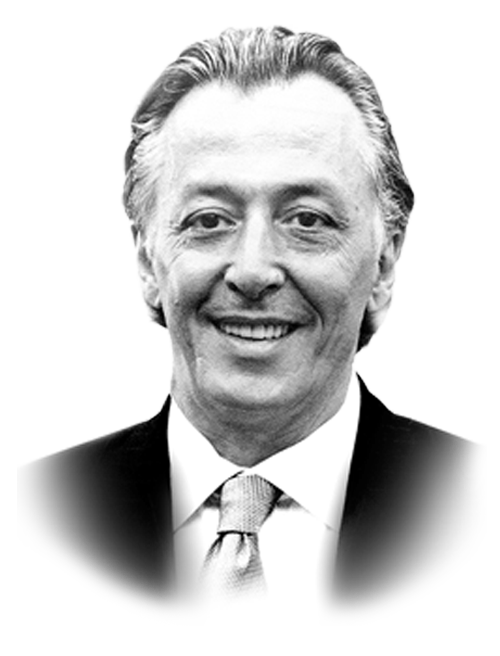
Hafed Al-Ghwell
It is not all doom and gloom, however. Social media platforms and PR industry groups are fighting back. The former have entire teams dedicated to monitoring “coordinated inauthentic activity,” shutting down accounts and blocking anyone seeking to profit from the platform by pushing deceptive content. The latter is relying on more nuanced tactics based on the International Communications Consultancy Organization’s Helsinki Declaration, which cautions PR professionals never to engage in creating or knowingly circulating disinformation. Members of this umbrella organization run the risk of being ostracized should they be found using deceptive tactics or actively seeking work that does not adhere to the declaration’s principles.
Unfortunately, it may all be too late. Electronic PR companies are shifting strategies, running legitimate campaigns while also operating in a grey area because the growing demand creates a substantial financial upside to engage with work that demands little to no manual labor. Sooner or later, deceptive tactics and disinformation will eventually transit from the underground, de-stigmatized by the respectable, professional jargon used by legitimate PR firms, and carve out a permanent seat in corporate boardrooms around the world. Already, LinkedIn, which loathes political content, is seeing a significant increase in inauthentic activity and the manipulative dissemination of deceptive content. As a professional networking platform, content posted and shared widely on LinkedIn has a veneer of credibility and authenticity.
Fake news websites are designed to look like authentic news sources, which PR firms use to publish articles that are picked up by mainstream media outlets and then spread even wider. The result? What we see today — a growing cesspool of deception and misinformation, curated to trigger a reaction from just a cursory glance so we share or retweet in an instant, either to fight back or simply confirm our own biases. Either way, the creators of such content will benefit, whether it is an enterprising individual or a sophisticated state-sponsored operation, because the ultimate goal of disinformation is to change narratives, manipulate perceptions and drive us further and further from the truth. Every like, share or retweet of online content without examining its sources or veracity makes the average internet user an accessory to coordinated efforts that just cripple informed decision-making in everything from what to purchase to how to vote.
- Hafed Al-Ghwell is a non-resident senior fellow with the Foreign Policy Institute at the John Hopkins University School of Advanced International Studies. He is also senior adviser at the international economic consultancy Maxwell Stamp and at the geopolitical risk advisory firm Oxford Analytica, a member of the Strategic Advisory Solutions International Group in Washington DC and a former adviser to the board of the World Bank Group. Twitter: @HafedAlGhwell
Disclaimer: Views expressed by writers in this section are their own and do not necessarily reflect Arab News’ point-of-view







