

As Wes Biggs tells it, a Baltimore oriole flew onto his family’s front porch and landed on his bassinet when he was only six months old. Captivated, he became a lifelong bird-watcher.
Over the 71 years since then, like thousands of other longtime birders across the continent, Biggs has seen and helped document dramatic change.
Bald eagles surged back from the brink of extinction. Many duck species rebounded. But a host of other species — including sparrows, meadowlark and quail — declined at an alarming rate.
“You’re just not seeing thousands and thousands of birds anymore, and certainly not as often as you used to,” said Biggs of Sebring, Florida, owner of Florida Nature Tours.
!function(e,i,n,s){var t=”InfogramEmbeds”,d=e.getElementsByTagName(“script”)[0];if(window[t]&&window[t].initialized)window[t].process&&window[t].process();else if(!e.getElementById(n)){var o=e.createElement(“script”);o.async=1,o.id=n,o.src=”https://e.infogram.com/js/dist/embed-loader-min.js”,d.parentNode.insertBefore(o,d)}}(document,0,”infogram-async”);
Two major research projects released this fall brought into perspective what individual bird-watchers like Biggs have noticed, while raising concerns about the future and the need for additional conservation measures. Additionally, a USA TODAY Network analysis of the studies and their data showed the loss of birds touches every U.S. state in North America.
The first of the studies, dubbed the “Billion Birds” report and published in the journal “Science” in September, concluded 2.9 billion birds have vanished across North America since 1970, a decline of roughly 30%. It added to a growing body of work over the past couple of years documenting those losses.
The results surprised even the study’s lead author, Ken Rosenberg, a Cornell University scientist who also holds a position with the American Bird Conservancy.
Rosenberg used to tell bird-watchers the birds they were no longer seeing had probably moved on “somewhere else.” But the study proved otherwise, he said, showing in many cases bird populations had just plummeted.
While that doesn’t mean a bird “apocalypse” is underway, if conservation measures aren’t taken, Rosenberg said, the situation could “slide toward a bigger crisis, toward ecological unraveling of ecosystems.”
Another major report weeks later delivered a second punch. Using models and much of the same data, the report by the National Audubon Society provided a grim forecast of the potential impacts of warming temperatures on 600 bird species in North America.
“If we don’t take action, nearly two-thirds of North America’s birds face extinction as a result of climate change,” said Julie Wraithmell, president of Audubon Florida. If action is taken, she added, “we can change the fate of three-quarters of those birds.”
The massive losses in bird populations could have far-reaching implications for ecosystems and economies, said Marianne Korosy, Audubon Florida’s director of bird conservation.
Birds are both prey and predator, serve as nature’s pest control, share roles with bees in plant pollination and help to maintain genetic diversity by spreading seeds around, Korosy said. Also, the federal government estimates bird-watchers contribute $41 billion a year to the nation’s economy.
The study by Rosenberg and his co-authors at wildlife agencies and research centers in the United States and Canada didn’t specifically analyze the causes behind the declining bird populations. He said that can be hard to pin down given the array of threats birds face and the vast distances they travel during migration. But previous studies indicate habitat loss is the primary threat.
As a group, grassland birds such as meadowlarks and quail suffered the biggest overall declines, the Billion Birds report showed. In the Midwest, the single biggest factor is habitat loss, said Neal Niemuth, an integrated conservation scientist for the U.S. Fish and Wildlife Service in Bismarck, North Dakota. He points, for example, to the conversion of cattle grazing lands, which protect the birds’ natural habitat, to much more intensively farmed corn fields.
Other factors include feral cats, climate change and pesticides that kill insects birds need to live and raise their young.
“You can’t just pin it on one thing,” said Biggs, but human population growth has its own impacts. While bird populations have dwindled, the nation’s population has doubled over Biggs’ lifetime and Florida’s population is seven times greater.
“I hate having a doomsday attitude,” said Biggs. “But looking at the whole situation, it’s pretty horrific.”
Bird populations have fallen in each of the 49 U.S. states in North America, according to the USA TODAY Network analysis of state data from the North American Breeding Bird Survey.
A joint project with the U.S. Geological Survey and the Canadian Wildlife Service, the Breeding Bird Survey dates back to the 1960s and was the primary source of data for the Billion Birds report. Geological Survey scientists consider the long-term data available in the survey scientifically credible for 334 species, around a third of all the species with documented sightings in the U.S. and Canada.
In 39 states, more than half those species have shown declines.
A list of the five bird populations in each state with the worst declines totals 92 different species. Eastern meadowlark, bobwhite and house sparrow were among those with the greatest population declines in 17 states.
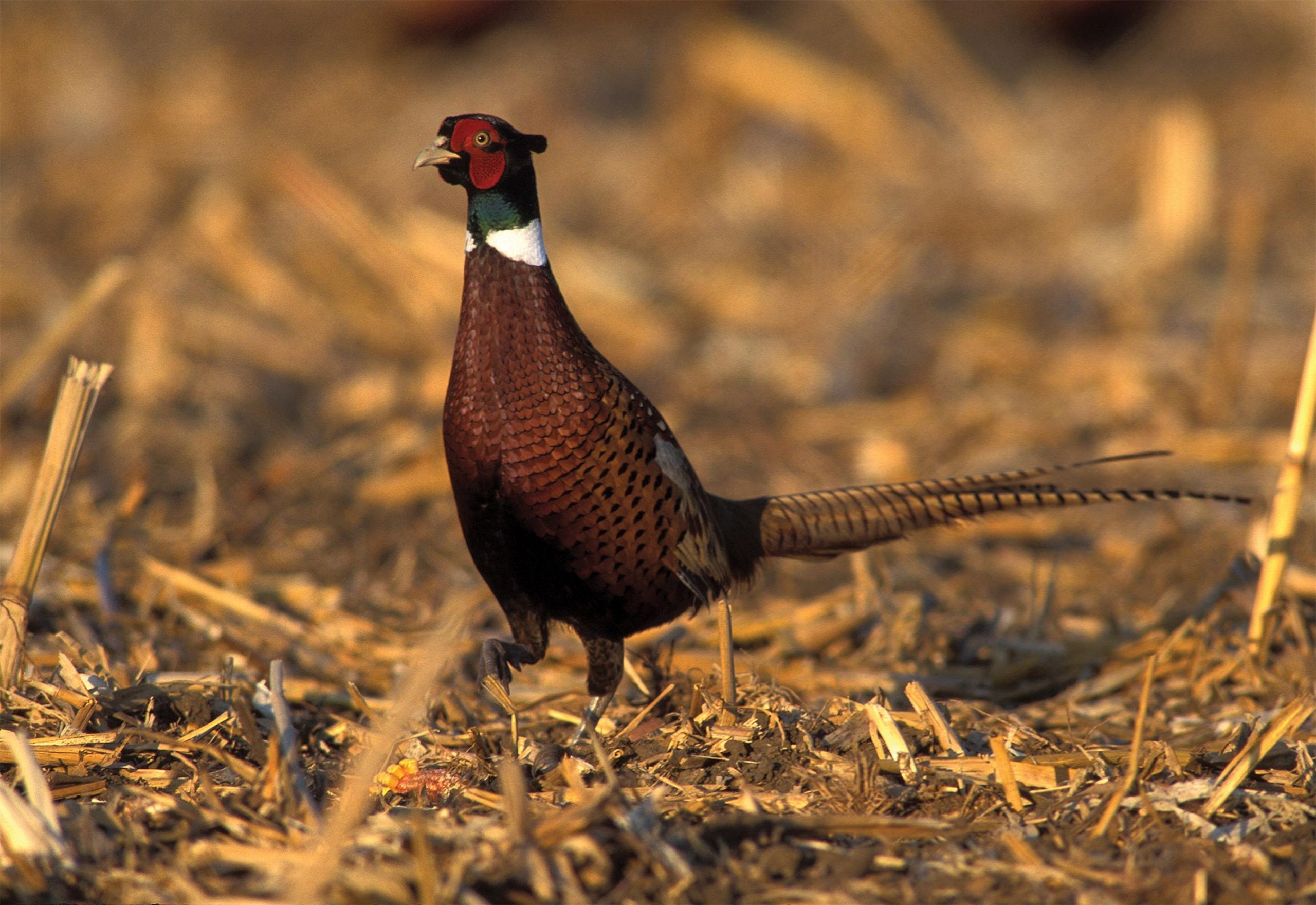
In Massachusetts, the five species that show the greatest declines are the herring gull, ring-necked pheasant, white-throated sparrow, field sparrow and bank swallow.
Audubon examined how birds would fare under three climate change scenarios: one in which temperatures warmed by slightly less than 3 degrees Fahrenheit; another in which they warmed by nearly 4 degrees; and a third where they rose by more than 5 degrees in the coming decades.
Using climate modeling, Audubon studied how the risks birds face — including habitat conversion, extreme weather and sea level rise — could change and how that would affect birds in each state. Under the higher, unmitigated increase in warming over the next 65 years, the study concluded 97% of species could be affected by two or more climate-related threats.
Under the scenario of slightly less than 3 degrees warming within the next 35 years, at least 51 of the 600 species Audubon examined faced a high risk of either being wiped out or seeing a worsening trend.
The studies shocked Father Tom Pincelli, a Catholic priest in Brownsville, Texas, and a bird-watcher for 47 years. The Billion Birds report “kind of took my breath away,” Pincelli said. “The number was larger than I thought.”
Bird-watchers can be a quirky bunch, toting high-end binoculars and telescopes and randomly dropping conversations when distracted by a bird. But the compulsive listing of birds they see has helped amass mountains of data scientists now use to document changing bird populations.
“It’s really amazing we have such a wealth of data,” said Brooke Bateman, an Audubon senior scientist and lead author of the climate report.
Much of the information used in both studies came from data collected by bird-watchers, including the Breeding Bird Survey and Audubon’s Christmas Bird Count. The 120th annual Christmas count began Dec. 14 and runs through Jan. 5. Nearly 80,000 people participated in last year’s count.
“There’s this incredible collaboration between the scientists and the bird-watchers, and it really doesn’t exist with other animals and other sciences,” Rosenberg said. “Birders are the eyes of the world.”
Bill Volkert, a naturalist and wildlife educator, has birded in the same areas around Horicon Marsh in eastern Wisconsin for more than 35 years. He sees wild turkeys and Canada geese more often than he used to, but the song of the whip-poor-will “is gone.”
“A lot of times, we just look at birds in our backyards and as long as birds are showing up, it’s really hard to extrapolate what’s happening to the [overall] population,” he said.
In North America and elsewhere, climate change will be a “threat multiplier,” said Audubon’s Bateman. Some birds already have shifted their ranges northward, she said, while warmer temperatures are forecast to trigger other impacts such as longer droughts and more intense hurricanes.
Birders have documented many changes after the string of hurricane landfalls in recent years. In Ormond Beach, Florida, for example, Meret Wilson, who operates a bird-banding project, said things still haven’t returned to what they were before two major hurricanes — Matthew in 2016 and Irma in 2017 — heavily damaged trees in the region.
Going forward, both bird studies underscore the need to help birds be more resilient, said Nick Wiley, chief operations officer for Ducks Unlimited and former executive director of Florida’s Fish and Wildlife Conservation Commission. He said he was excited about the emphasis the Billion Birds report put on conservation needs and successes.
Conservation measures do work, said Rosenberg. For example, raptors such as bald eagles benefited from the 1972 ban on the use of the insecticide DDT in the U.S. And, he said, a more than 50% increase in the population of 41 species of waterfowl was a result of “a conscientious effort to save habitat.”
Ducks Unlimited grew out of hunters’ recognition of low population levels of waterfowl in the early part of the 20th century, Rosenberg said. To protect those birds, nonprofits and state and federal governments worked to acquire and protect wetland habitats. A federal duck stamp purchased by duck hunters has helped funnel millions into wetland preservation.
Similar efforts are needed to continue protecting ducks and to preserve grassland birds, said Wiley. But, he added, it’s expensive and takes groups working together.
Federal government programs to help landowners keep their land in grass or return it to grass have been “a huge, huge boon to grassland birds,” Niemuth said. But the available money isn’t enough to match landowner interest.
Volkert, the retired wildlife educator, sees the need for conservation as a bipartisan issue.
“For millions of people who love birds and love nature, it’s time for our group to raise our voices for birds,” he said. “The alarm we want to sound is for people to pay attention to the loss of these common birds now before it’s too late, while we can do something.”
<script id=”infogram_0_d70d87e7-c82c-4ad5-8ca9-8df494c407bb” type=”text/javascript” src=”https://e.infogram.com/js/dist/embed.js?gg3″>// <![CDATA]></script>
// ]]>







