
GLOBAL RESEARCH SYNDICATE
No Result
View All Result
  • Login
  • Latest News
  • Consumer Research
  • Survey Research
  • Marketing Research
  • Industry Research
  • Data Collection
  • More
    • Data Analysis
    • Market Insights
  • Latest News
  • Consumer Research
  • Survey Research
  • Marketing Research
  • Industry Research
  • Data Collection
  • More
    • Data Analysis
    • Market Insights
No Result
View All Result
globalresearchsyndicate
No Result
View All Result
Home Data Collection

Research Suggests Solar Energy Production And Agriculture Can Get Along . News

globalresearchsyndicate by globalresearchsyndicate
December 21, 2019
in Data Collection
0
Research Suggests Solar Energy Production And Agriculture Can Get Along . News
0
SHARES
22
VIEWS
Share on FacebookShare on Twitter


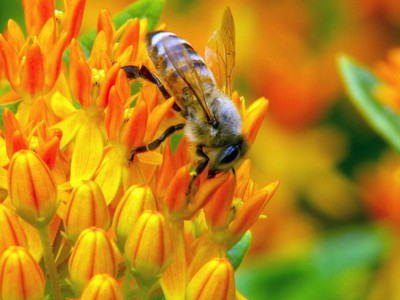
Wild bees are more abundant than cultivated bees. That's one reason they are considered important pollinators.

Wild bees are more abundant than cultivated bees. That’s one reason they are considered important pollinators.

Jim Rivers, College of Forestry/OSU

An Oregon land use commission  moved last May to restrict commercial solar development on prime farmland in the state. The rule takes millions of acres with some of the highest potential for solar energy production off the table.

But research from Oregon State University is showing that agriculture and solar development don’t have to be at odds from a production standpoint.

In fact, solar arrays can work in tandem with and sometimes boost systems that are beneficial for agricultural.

OSU master’s degree student Maggie Graham has been studying the effectiveness of purposefully planting pollinator habitat in and around solar arrays.  

“Pollinator habitat is in decline in the state and nationwide as a result of land use change,” Graham said.

“So in communities that are wanting to install renewable energy and promote pollinating insects [this kind of system] would be a possibility.”

It’s relatively rare that commercial solar arrays take advantage of the land around and between panels. Graham said developers will sometimes pave the ground or put down gravel.

Graham looked at the effectiveness of planting a mix of native plants that attract pollinators – like bees and butterflies – around a commercial solar array near Medford. Most agriculture relies on pollinators in some way for production.  She counted the number of flower blooms and insects in areas under the solar panels, between the solar panels and in areas to the side of the array.

What she saw in her preliminary data collected last summer suggests the solar array did not detract from pollinator use.

“We found that in both flowers and bees, there were more of them in the aisles between the panels than outside,” she said.

The findings suggest that the plants were actually more robust in the areas between the panels than the areas where there were no solar structures at all. More robust plants attracted more beneficial insects.

Graham says, based on previous research at Oregon State, shade could be the difference. One study looked at how livestock pasture forage grew around solar arrays.  

“We found that biomass [the amount of plant material] increased and soil moisture increased under the array. In a water limited environment, that allowed these plants to grow better,” she said.

Chad Higgins, an OSU agriculture professor, says in most of Oregon, farm land had plenty of sun – it’s water that’s the limiting factor in determining where to grow crops. He sees a broader opportunity to specifically design solar arrays on farmland to provide shade and decrease the amount of water needed to grow crops.

“The general idea is to start thinking about light as a farm resource, just as you would think of the soil or the fertilizer of the plants or the water. Why not harvest and manipulate that light for maximum agronomic benefit?” Higgins asked.

Over the next few months Graham will be analyzing her data to determine the diversity of plants and insects that were using the solar array. The answers she finds will begin to answer questions about the opportunities available to make maximum use of the solar arrays already in place.

“If we’ve got unused land,” she says, “why not put habitat for pollinators there?”

Related Posts

How Machine Learning has impacted Consumer Behaviour and Analysis
Consumer Research

How Machine Learning has impacted Consumer Behaviour and Analysis

January 4, 2024
Market Research The Ultimate Weapon for Business Success
Consumer Research

Market Research: The Ultimate Weapon for Business Success

June 22, 2023
Unveiling the Hidden Power of Market Research A Game Changer
Consumer Research

Unveiling the Hidden Power of Market Research: A Game Changer

June 2, 2023
7 Secrets of Market Research Gurus That Will Blow Your Mind
Consumer Research

7 Secrets of Market Research Gurus That Will Blow Your Mind

May 8, 2023
The Shocking Truth About Market Research Revealed!
Consumer Research

The Shocking Truth About Market Research: Revealed!

April 25, 2023
market research, primary research, secondary research, market research trends, market research news,
Consumer Research

Quantitative vs. Qualitative Research. How to choose the Right Research Method for Your Business Needs

March 14, 2023
Next Post
Hong Kong police reputation in tatters, online survey of voters shows – South China Morning Post

Hong Kong police reputation in tatters, online survey of voters shows - South China Morning Post

Categories

  • Consumer Research
  • Data Analysis
  • Data Collection
  • Industry Research
  • Latest News
  • Market Insights
  • Marketing Research
  • Survey Research
  • Uncategorized

Recent Posts

  • Ipsos Revolutionizes the Global Market Research Landscape
  • How Machine Learning has impacted Consumer Behaviour and Analysis
  • Market Research: The Ultimate Weapon for Business Success
  • Privacy Policy
  • Terms of Use
  • Antispam
  • DMCA

Copyright © 2024 Globalresearchsyndicate.com

Welcome Back!

Login to your account below

Forgotten Password?

Retrieve your password

Please enter your username or email address to reset your password.

Log In
This website uses cookies to improve your experience. We'll assume you're ok with this, but you can opt-out if you wish. Cookie settingsACCEPT
Privacy & Cookies Policy

Privacy Overview

This website uses cookies to improve your experience while you navigate through the website. Out of these cookies, the cookies that are categorized as necessary are stored on your browser as they are essential for the working of basic functionalities of the website. We also use third-party cookies that help us analyze and understand how you use this website. These cookies will be stored in your browser only with your consent. You also have the option to opt-out of these cookies. But opting out of some of these cookies may have an effect on your browsing experience.
Necessary
Always Enabled
Necessary cookies are absolutely essential for the website to function properly. This category only includes cookies that ensures basic functionalities and security features of the website. These cookies do not store any personal information.
Non-necessary
Any cookies that may not be particularly necessary for the website to function and is used specifically to collect user personal data via analytics, ads, other embedded contents are termed as non-necessary cookies. It is mandatory to procure user consent prior to running these cookies on your website.
SAVE & ACCEPT
No Result
View All Result
  • Latest News
  • Consumer Research
  • Survey Research
  • Marketing Research
  • Industry Research
  • Data Collection
  • More
    • Data Analysis
    • Market Insights

Copyright © 2024 Globalresearchsyndicate.com




