


This article will give you the answer to the most emotionally charged question of paid search:
Should your business bid on its brand terms?
Few topics are so divisive.
What other issue can infuse a technical, data-driven marketing channel with the emotional sensibilities of an eighth-grade drama club?
Amid the debate, some marketing teams “pick a side” that sabotages their profits without realizing it. Others ignore that there’s a decision to be made and get subpar results.
Take a deep breath, because on the other side of all the controversy is the five-step strategy that will keep your head cool and your marketing profitable.
What You Need to Know About Brand Bidding
Brand bidding is the practice of bidding on one’s own brand terms on the SERPs. (Not to be confused with brand awareness activities that introduce or reinforce your brand.)
According to Google policy, your competitors are free to use your trademarked terms in their own keyword lists.
In most cases, they can’t use your brand name in their ads, but your competitors can run ads that encourage people to click their ads rather than yours:
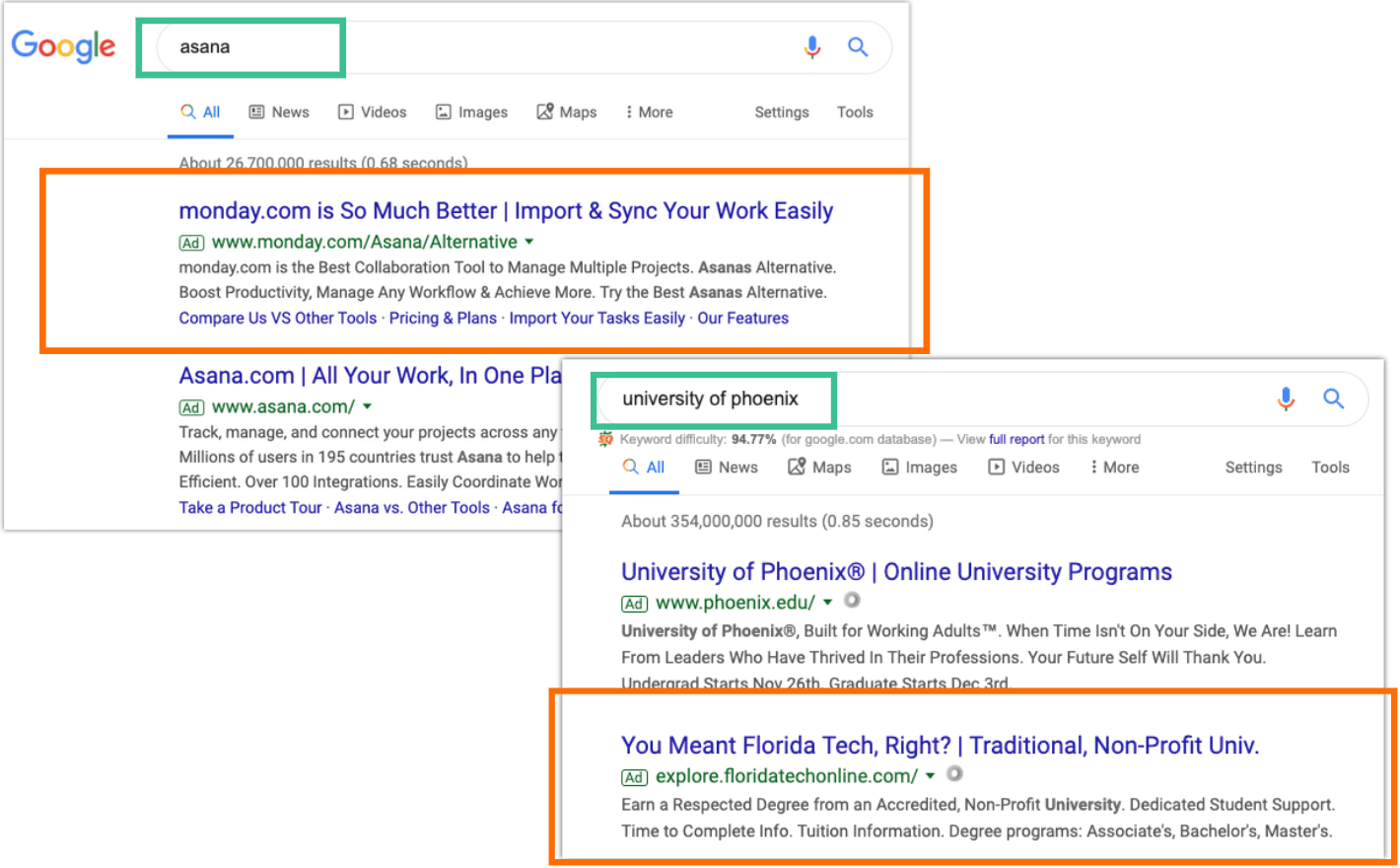
A brand’s site may rank well organically, but competitors have more real estate than ever to promote their offer and crowd out other results.
Today, Google text ads are up to 270 characters – that’s nearly 3x the characters of standard text ads that reigned from 2000 to 2016. That doesn’t even include the multiple ad extension options. Up to four ads can show on top of the search results.
And as Google’s SERP evolves, being the first “blue link” organic listing for your brand doesn’t guarantee that your site will be first, “above the fold,” or anywhere near the fold, as seen here:
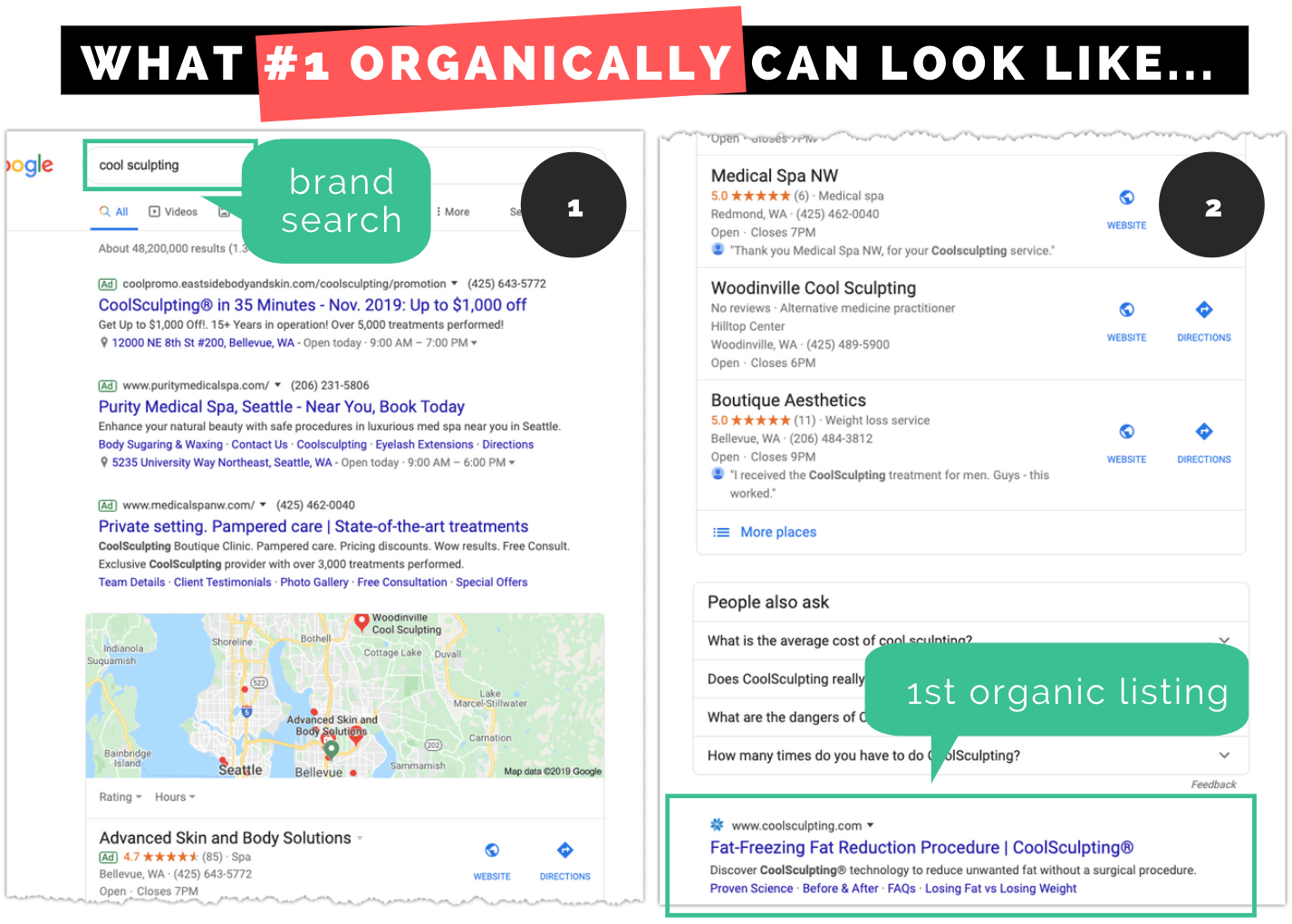
In addition to text and Shopping ads, there are local packs, related questions box, and a dozen other features that can push organic listings further down the page.
Why You Need a Brand Bidding Strategy
How should you respond to competitive ads in the face of the changing SERP landscape? Everyone’s got an opinion.
The pro-brand bidders contend:
- Studies show that as much as 89% of paid traffic is incremental and not replaced by organic traffic when campaigns are paused.
- Competing ads can win 40% of branded search clicks when the brand isn’t running an ad; that number drops to 11% when a branded ad shows.
- Brand keywords tend to have high Quality Scores and low CPCs, driving strong returns.
The anti-brand bidders say:
- Perceived wins from brand campaigns are an illusion due to selection bias. Branded ads aren’t initiating consideration, they’re just taking credit for existing interest.
- Google Ads are a shakedown and companies shouldn’t have to pay to appear above competitors on their own terms.
- Advertisers already invested budget to create brand awareness; paying for brand clicks that could have been won organically is cannibalization (and expensive, since brand CPCs keep rising!)
Brand Bidding Should Be Strategic, Not Theological
Brand bidding isn’t right or wrong, good or evil.
It’s a business decision that should be made objectively.
There’s not a global “yes” or “no” answer to whether you should run paid search on brand terms.
Rather, the right answer for any business depends on a series of conditions.
To avoid the risk of lost revenue caused by someone else’s opinion or anecdotes, here’s how you can build your own strategy and make the right decision for your company.
1. Define Your Brand Bidding Objectives
Your brand bidding strategy for paid search will give you a roadmap to ensure that your plan is right for your business.
The process we’ll use evaluates:
- Brand bidding objectives
- External threats
- Internal value
- Strategic framework
- Implementation

As with any good strategy, we start by defining objectives.
What business goals should your brand bidding strategy achieve?
For most businesses, the goal will be net profit.
- If (branded paid traffic revenue – media spend) + organic revenue > organic revenue with no brand ads, brand bidding makes sense.
- If (branded paid traffic revenue – media spend) + organic revenue < organic revenue with no brand ads, brand bidding does not make sense.
Your organization may have other goals as well.
You may focus on top of funnel activities rather than profit, or look at lifetime value rather than immediate returns.
You may also have a SERP domination strategy, or want to drive up the cost of entry for their competitors to enter their brand auctions.
Write down all your objectives so you can measure and track your success.
2. Conduct Competitive (SERP) Analysis
In this step, you’ll uncover whether you’re losing business to your competition if you don’t bid on your own brand.
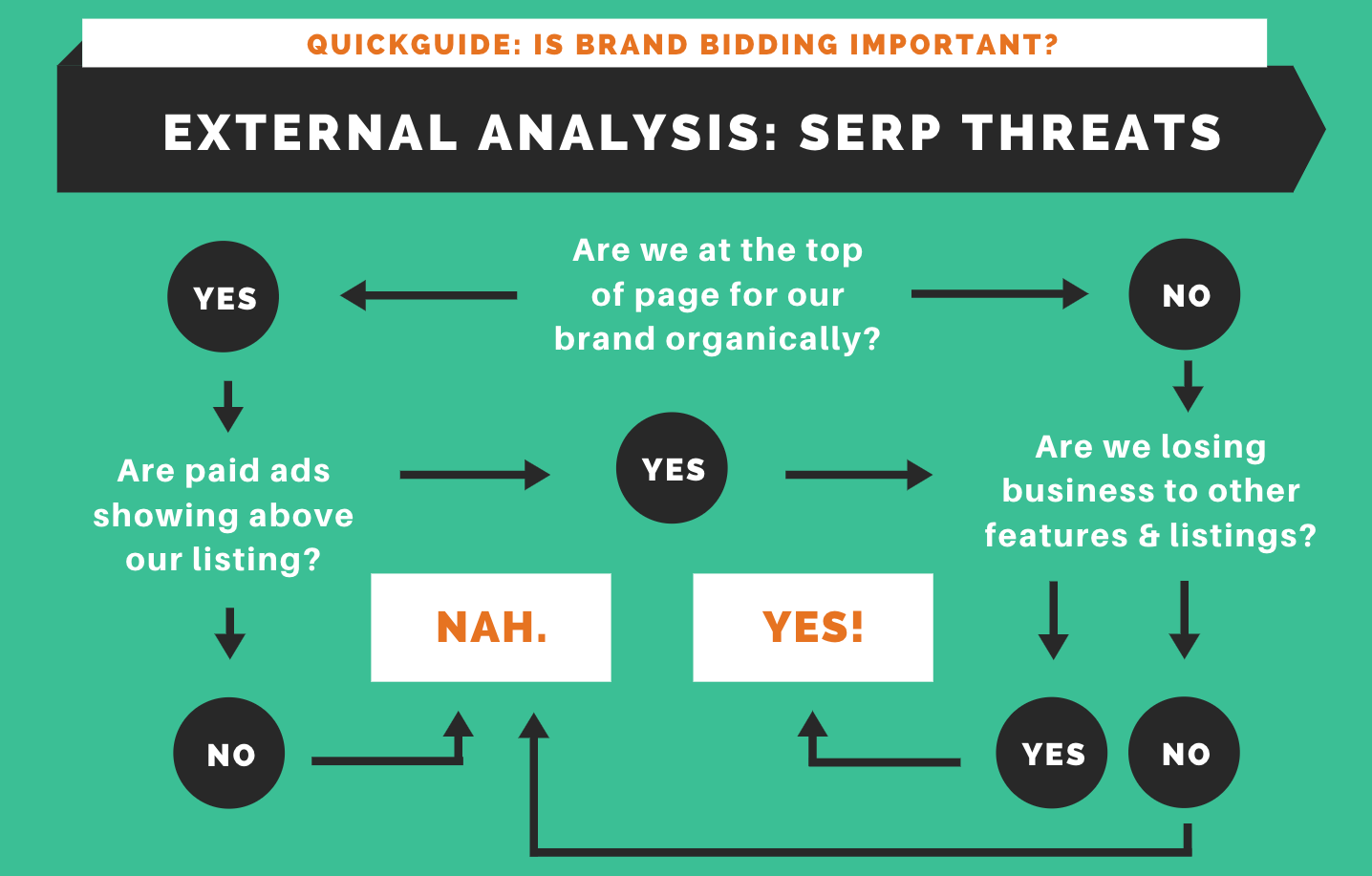
Your goal is to determine the threat of lost clicks and revenue, whether it’s because your competitors’ ads compete with your listings or you aren’t the top result on your brand name.
Use this quick flow chart for an idea of how to approach SERP threats:
How to Tell If Competitors Are Bidding on Your Brand Terms
- If you’re already bidding on your branded keywords, use Google Ads’ Auction Insights data to see who else is showing up on those terms.
- If you don’t have branded keywords to identify auction competition, you can use a competitive research tool like SpyFu or SEMrush.
- You can also simply Google your brand terms, but this will only confirm the presence of competition. Not seeing any paid ads doesn’t mean you have no auction competitors, so beware of false negatives caused by budget exhaustion, low ad rank, location exclusion, and other reasons.
Sometimes ads serve against branded queries even without targeting the brand specifically. But the result – their presence above your listing – is still the same.
It’s possible your business won’t have any true threats, whether it’s because there are no competing ads, or the businesses aren’t actual competitors:
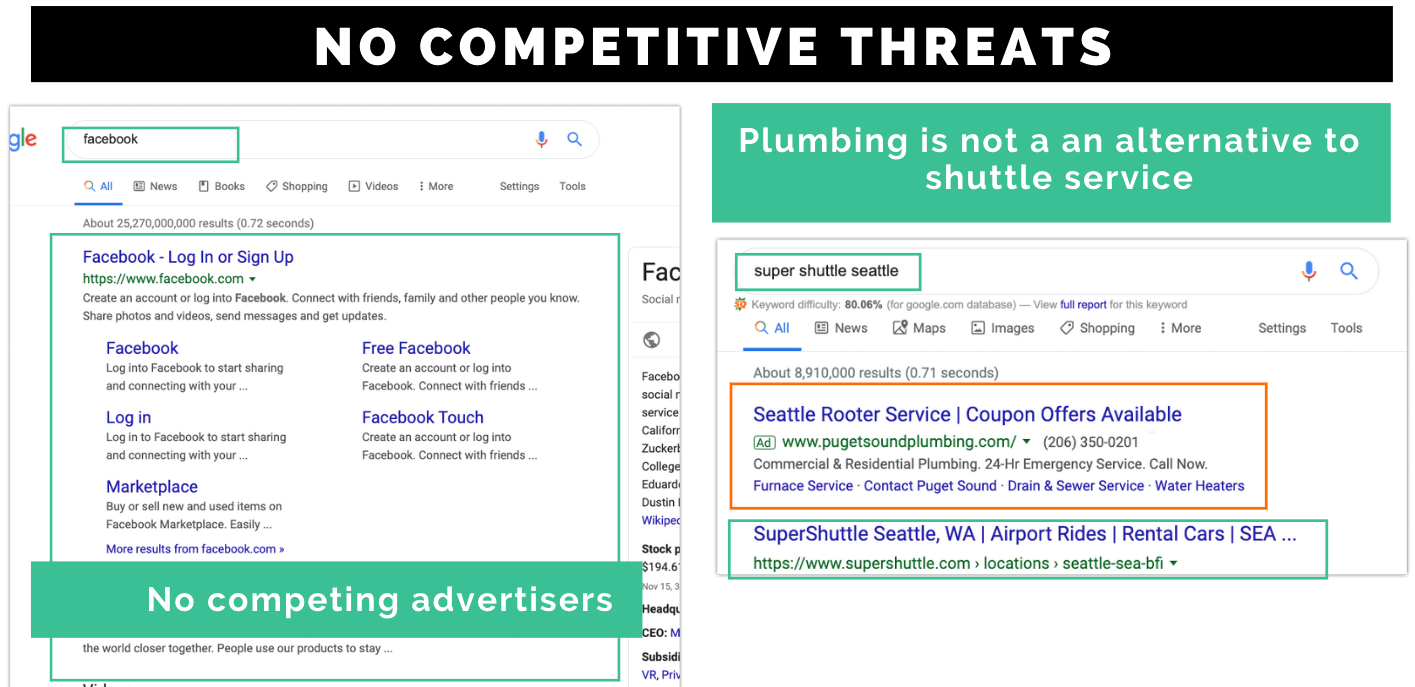
However, if you have direct competition, most ads or competing results represent a legitimate threat to your business. Just because someone typed your brand in the search box doesn’t mean they’re loyal or exclusive.
3. Identify the Value of Your Brand Ads
In addition to knowing whether you have active competition for your brand, you’ll want to know the value of investing in paid traffic.
Brand bidding is defensive in nature, but it’s not limited to that. Other reasons to bid on brand can include mitigating bad P.R., promoting new products, or testing new messaging and assets.
There are also revenue considerations.
In the scenario below, branded ads drove to a dedicated landing page optimized for lead generation, while organic traffic led to a busy corporate home page with competing objectives. The average user value for paid was more than 6x organic:

Another business may not see the same revenue lift from paid traffic:

Here are a few ways you can compare the performance of your paid clicks to organic and identify the true ROAS (return on ad spend):
Knowing the value of paid traffic is a vital step in deciding whether or not to bid on brand, independent of competition.
4. Build Your Strategic Framework
Once you’ve scoped out your objectives and analysis, you should have a clear idea of whether or not branded paid search is valuable for your business.
Now you’re ready to map your objectives to initiatives and measurable results.
As mentioned above, whether to bid on brand is a question of conditions. Under what conditions will you run brand? Under what conditions will you pause it?
Your strategic framework should provide guidance and answer specific questions like:
- What external and internal problems are you solving for?
- How aggressive or conservative will your SERP coverage be?
- What budget will you allocate towards the initiative?
- Which metrics will you use to measure the success of your efforts?
Here’s an example of a strategic framework with assigned targets:
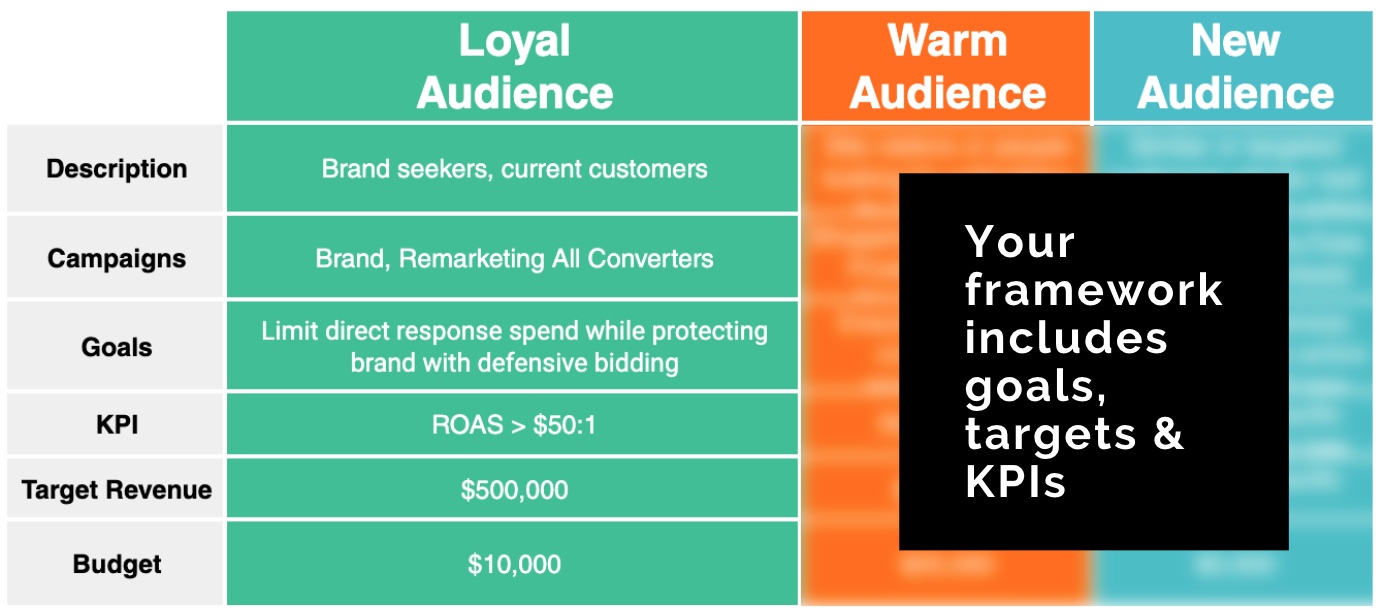
Brand tends to out-perform other keywords. Don’t let brand traffic pick up the slack for under-performing campaigns. Segment your goals and constraints to maximize your investment.
You can consider goals like:
- Volume: Fully fund brand terms to realize net gain.
- Efficiency: Use unit economics with a flexible budget based on returns.
- Conservation: Avoid brand bidding while no active competitors threaten top of page coverage.
- Limited defense: Allocate 15% of budget to direct response and defensive brand bidding initiatives.
At this point, you should have a documented strategy for whether, when, and how to bid on brand to drive business growth.
5. Implementation
Now that you have a strategic framework that includes whether to exclude or bid on brand, your account needs to match. It’s time to implement.
Option 1: Exclude Brand
If you’re going to exclude brand, you should actively exclude your brand as negative keywords throughout your account. If you simply “don’t bid” on brand, you’re still eligible to participate in the auctions on branded terms.
Continue to review your search terms report and add brand misspellings and variants as negatives.
Watch for new competitors or SERP features to see if a new strategy is needed.
Option 2: Bid on Brand
To get the best results from brand bidding, be sure you’ve got the following:
- Dedicated brand campaigns. Segment your keywords so that branded and non-branded terms do not mix within campaigns. Campaign segmentation lets you control spend, measure performance, and optimize for your KPIs.
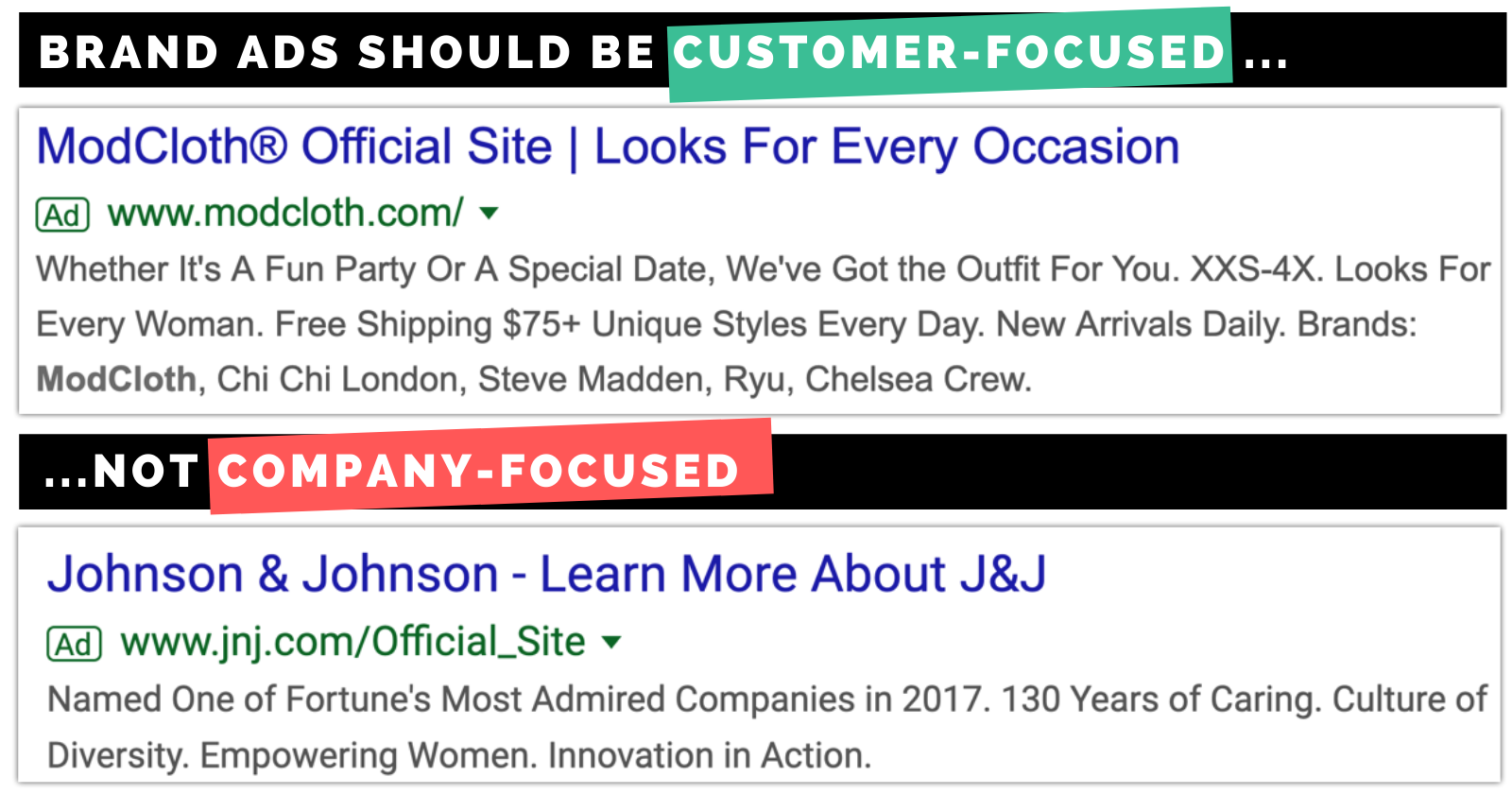
- Optimized ad copy. Sparse text with “official site” in your ad isn’t enough to cut through competitor messaging. Review what your competition is saying in their ads, and write ads that are even stronger.
- High-converting landing pages. Review your final URLs and swap any that don’t support your strategy.
- Segmented reporting. Report on brand performance separately from other campaigns so it stays accountable to the KPIs and objectives you set. Compare attribution models to see the contribution of all campaigns.
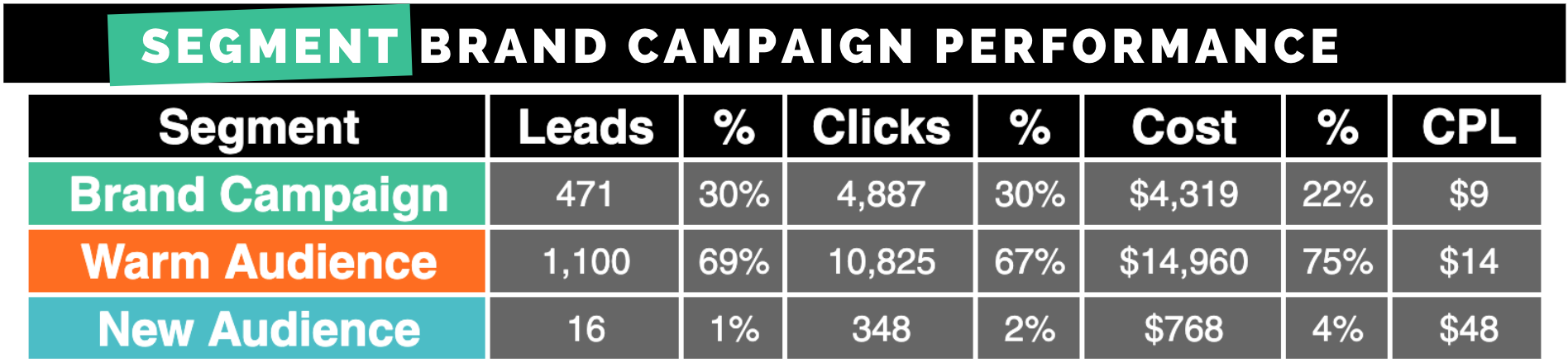
As with Option 1, continue to monitor performance and make adjustments as needed.
Conclusion
Bidding on your brand terms is a business decision that should be driven by strategy, not emotion.
By creating a brand bidding strategy that answers the challenges of your business, you can adapt to the changing landscape and maximize your returns.
Follow these steps to replace guesswork and controversy with objective marketing choices that lead to business growth.
More Resources:
Image Credits
Featured Image: Shutterstock / Modified by author, November 2019
In-Post Images: Created by author, November 2019







