

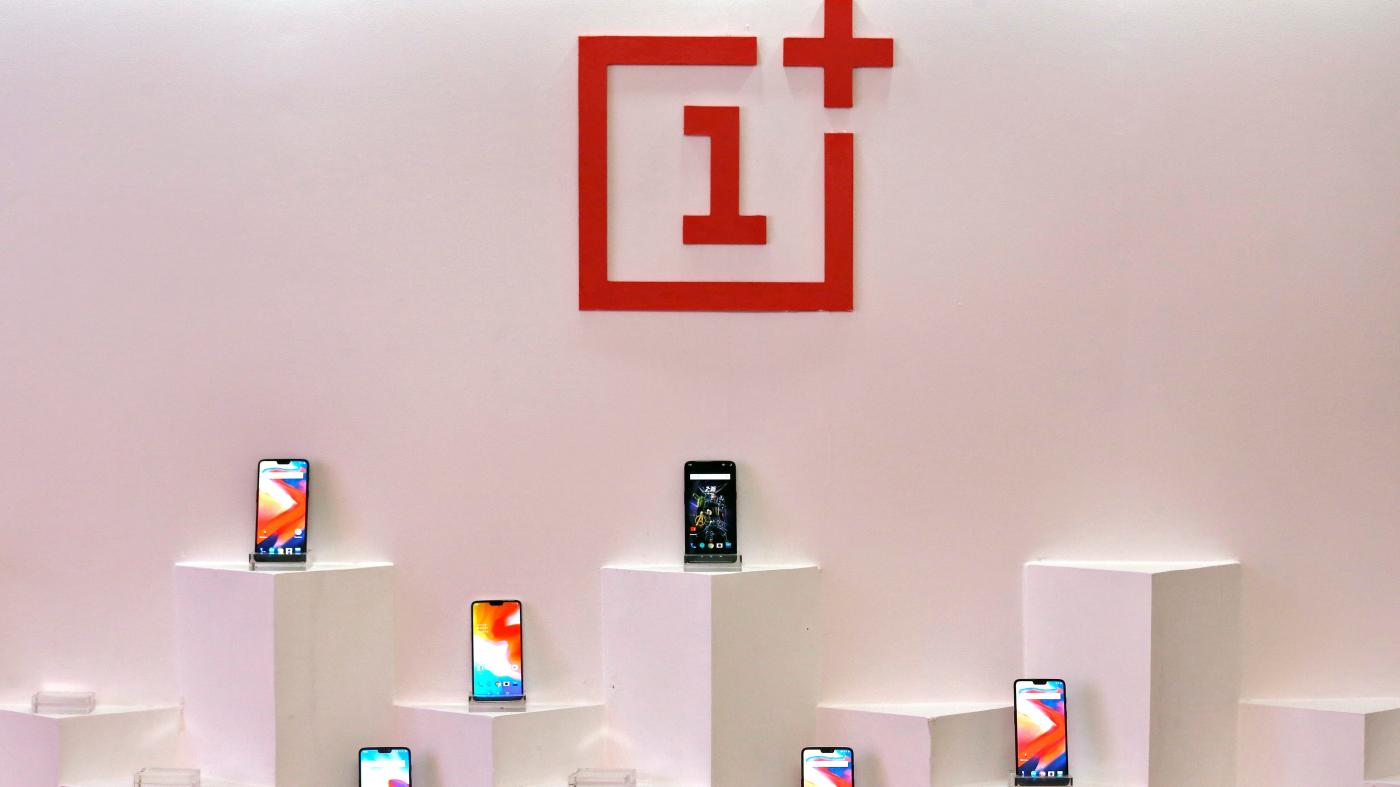
India’s premium smartphone market was mostly a duopoly between Samsung and Apple until around four years ago, when OnePlus entered the scene. For the few years, the Chinese brand has managed to consistently top the charts with its “never settle” motto.
The brand—owned by BBK Electronics, also the parent company of other major smartphone brands Realme and Vivo—has not only grown its own market share in India but also expanded the premium smartphone segment in the price-sensitive market, according to Vikas Agarwal, general manager, OnePlus India.
“In OnePlus’ early days, premium smartphones—priced above $400 or roughly Rs30,000—comprised just 3% of the (Indian) market,” Agarwal told Quartz in an interview. “Even today, it is less than 5% but we had the opportunity to create this new category.”
In the quarter ended September 2019, 35% of all premium smartphones sold in India belonged to OnePlus, according to Hong Kong-based Counterpoint Research. The brand posted a 95% year-over-year growth in sales during this quarter.

OnePlus India
The Shenzhen-based brand’s meteoric rise in India is often cited as a key reason for the erosion of Apple’s market share in the country.
Quartz spoke with Agarwal, who joined OnePlus’ in October 2014 (before the brand’s official launch) as its first employee in India, about the company’s recipe for success and plans for the future. Edited excerpts:
How do you think OnePlus’ journey in India has been so far?
It was sort of a dream opportunity for me because I always wanted to work for a global brand and I got to launch a new brand in India. This month, we completed five years in India. The whole segment is still under-penetrated, so there are huge growth opportunities. Although we were one of the last brands to enter the smartphone industry, we were still early in the premium space. In 2018, the entire growth in the premium segment was driven by OnePlus. We are making premium tech more accessible to users across the world. 2019 has been the defining year for OnePlus in India. It has been our most successful year to date. In terms of sales, we are the biggest in our space.
What do you think is the reason for OnePlus’s success in India so far?
2019 has been the defining year for OnePlus in India. It has been our most successful year to date.
Unlike for other brands, India is our most important market. We are committed to making our Indian operations bigger and successful. The first step is to strengthen our research and development (R&D) capability. We set up our biggest R&D centre in India where we have 250 employees. We’re looking to further scale up to between 1,000 and 1,500 people in the next two to three years. We’ve already committed an additional investment of Rs1,000 crore.
The second area is manufacturing. Since 2016, we’ve been manufacturing locally and today 100% of the phones we sell in India are assembled locally. In fact this year, we’ve also started exporting smartphones from India. The level of localisation is a function of how many of your component suppliers are in India. Currently, that ecosystem is yet to evolve. A large part of components are imported then assembled here but we are working with partners to improve localisation.
What’s the capacity of your plants in India? Are you planning to expand it?
Right now, Oppo has been our manufacturing partner in India and abroad. We focus on the premium segment which itself is very small, so it does not make sense for us to invest in setting up our own facility yet. However, we are looking to improve scale via exports and expanding the local market. Once we reach a critical mass, we will probably look at setting up our own manufacturing unit.
OnePlus started as an online-only brand, but you’ve started selling offline, too, now. What’s your retail strategy going to be like in 2020?
Our core audience is youngsters, people who are tech-savvy and white-collar corporate employees.
OnePlus as a brand started as an online-only brand globally so we have focussed on e-commerce till now. Amazon has been our exclusive partner (in India) since the beginning. On Amazon, we have a dominating share in the premium smartphone segment, probably in excess of 60%. But in 2018, we started selling through offline channels on a pilot basis and this year we have scaled our offline presence. We’re looking to open up to 100 stores in the top 50 cities by the end of 2020, up from 30 stores in the top 15 cities this year. We also partnered with the top 10 leading retail chains in India, so we have a presence in over 2,500 stores in 500 cities.
Other Chinese brands such as Xiaomi, Oppo, and Vivo have been aggressive when it comes to offline sales. Why have you refrained so far?
Different brands have different strategies. Our core audience is youngsters, people who are tech-savvy and white-collar corporate employees because these are the people who want to have a premium smartphone. These people are concentrated in tier 1 cities where online retail is really strong. The market that does not get catered to is tier 2 and tier 3 cities, where online itself has not been able to penetrate.
Also, while most brands focus on pre-sales, not many put emphasis on after-sales. At OnePlus, we have set up our own service centres. Today, we have 28 exclusive owned-and-operated centres where we aim to provide service in up to two hours. They are all conveniently located in malls and high streets. We are now starting home service in select cities and in others, people can courier the device and get it repaired within a few days.
With the offline extension, we’ve seen brand awareness and customer trust has gone up.
Our marketing strategy has always revolved around word-of-mouth. In the first year (2018), our student ambassador programme was in 11 colleges. This year, we expanded it to 25 colleges. Next year, we will probably reach out to up to 50 colleges. We’ve identified that key interest areas for youngsters are music and gaming. For instance, recently, one of the biggest concerts in India, the OnePlus Music Festival with Katy Perry and Dua Lipa, was received well.
What is a key challenge for the brand going forward?
We are largely constrained by our own challenges around distribution, brand awareness, and making our products even better. Accessibility is a big challenge since we focussed only on online. Now, we’ve started investing in traditional media channels like print and even television to reach new audiences.
Are there any particular features that make OnePlus a hit?
One of the most popular features has been the dash charging, which was launched in 2016 with OnePlus 3. Second, the display introduced with the OnePlus 7 has become really popular. The third unique feature or differentiator we have is oxygen OS (operating system) because people like to have a clean smooth and fast experience at the OS level. The entire device experience should feel smooth and fast. We make sure OnePlus devices get software updates faster than anyone else, which is appreciated by users. In addition, of course, we fulfil conventional requirements like battery and camera.
Since it is such a key market, how big are your India operations now?
OnePlus has largely been run as a small startup. In India, our team is roughly 100 people in corporate, sales and marketing roles. In our R&D centre, we have 250 people. It’s still very small. We are expanding our engineering team. This year, we’ve already hired 70 people from different engineering colleges. The emphasis is on hiring youngsters at OnePlus because the idea is to build a strong team for long-term growth. We take the talent from campuses and give them the opportunity to learn on the job; make sure they understand the company culture.
What’s your biggest takeaway from India?
If the product is good, the customer will buy it.







