
GLOBAL RESEARCH SYNDICATE
No Result
View All Result
  • Login
  • Latest News
  • Consumer Research
  • Survey Research
  • Marketing Research
  • Industry Research
  • Data Collection
  • More
    • Data Analysis
    • Market Insights
  • Latest News
  • Consumer Research
  • Survey Research
  • Marketing Research
  • Industry Research
  • Data Collection
  • More
    • Data Analysis
    • Market Insights
No Result
View All Result
globalresearchsyndicate
No Result
View All Result
Home Data Collection

Survey to help assess state’s cattle numbers | Local News

globalresearchsyndicate by globalresearchsyndicate
December 26, 2019
in Data Collection
0
Survey to help assess state’s cattle numbers | Local News
0
SHARES
3
VIEWS
Share on FacebookShare on Twitter

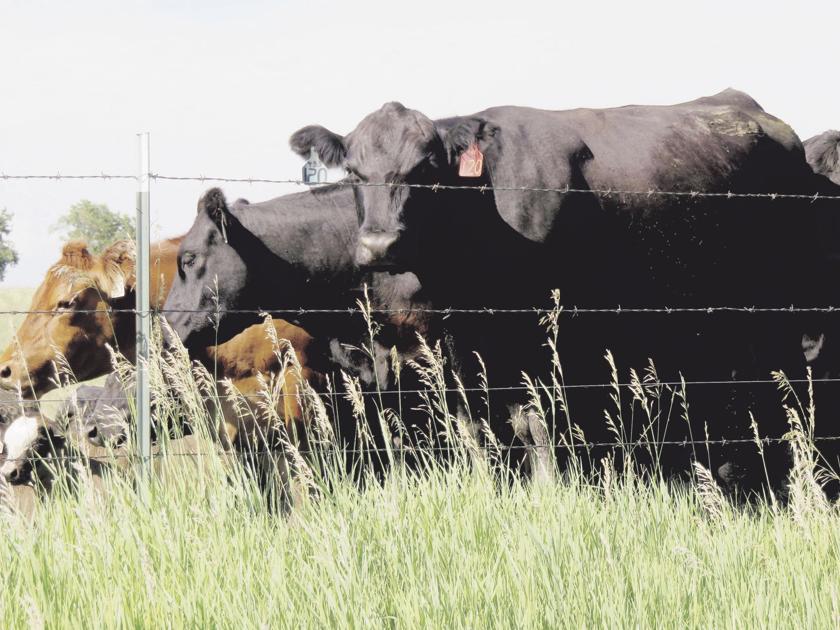
The long-term direction of the beef industry could hang in the balance once Northwest Missouri’s cattle operations are surveyed in January.

The USDA is conducting the beef and dairy census in the state to help the federal government determine an updated inventory of livestock throughout the nation. Observers said the statistics will prove vital in helping the government and associated agencies determine whether the industry will experience expansion or contraction.

“It gives the industry, as well as other entities, a snapshot of projected calf crop” numbers, said Jim Humphrey, field specialist in livestock for University Extension in Andrew County. “There’s always a slight increase or decrease for whatever reason. We know we’ve been killing a lot of culled (removed from the herd) calves.”

Humphrey told News-Press NOW the data also will help in estimating the extent of the stocker cattle and feeder cattle population for the winter of 2020-’21. Stocker cattle are those destined to go for sale that have not yet entered a feedlot. Feeder cattle are heifers or steers that have been placed in a feedlot prior to slaughter. The survey also will detail the potential number of animals to be harvested from mid-2020 and on into 2021. The number of calves to be born also will be included.

But the basic economics of the industry become the most prominent concerns stemming from the questionnaires.

“Are we going to have a huge increase or decrease?” asked Humphrey. “How do you meet demand?”

He said producers have encountered difficulties in the past few years from scarce and expensive forage linked to the drought, along with the rigors of extended inclement weather. Culling is done for various reasons, including poor animal health, and is often done in drought years.

There may not be as much concern for the number of steers with this survey, according to Humphrey, as opposed to the number of heifers in the feed yards.

“That’s probably going to have an impact” over the ensuing 18 months, he added of heifers.

Nationwide, Humphrey said 11 percent more heifers have been harvested this year as fat cattle, which are fed special rations in the lot to allow further growth.

A follow-up survey will be conducted July 1 to help confirm or perhaps reassess the earlier projections.

“It’s actually going to give a more accurate (number) of how many calves are born this spring” that will be traceable to weather and health issues, Humphrey said. “Are we liquidating any of the herd, or are we expanding? While one area (of the nation) may be liquidating, another may be expanding.”

The USDA’s National Agricultural Statistics Service said Missouri has 1,500 cattle operations. Bob Garino, the state’s statistician for NASS, said the survey information also helps packers and the federal government evaluate anticipated future slaughter volume and establish potential export supplies.

Beef and dairy producers may respond to the survey via the internet, telephone or mail, or through an interview with an agency representative. Per law, all of the submitted information is kept confidential. Only state- and national-level data will be published in a forthcoming report, with no individuals or operations to be identified.

Last January, the USDA placed the size of the nation’s herd at 94.8 million head of cattle. The herd numbered 88.2 million for all cattle and calves to start 2014, in what became the smallest size for the U.S. since 1952.The department said last year’s cattle production accounted for $67.1 billion in cash receipts, or 18 percent of the $371 billion in total cash receipts comprising agricultural commodities from 2018.

Later this month, the agriculture department will take inventories of the nation’s sheep and goat producers, including the more than 500 in the state.


Related Posts

How Machine Learning has impacted Consumer Behaviour and Analysis
Consumer Research

How Machine Learning has impacted Consumer Behaviour and Analysis

January 4, 2024
Market Research The Ultimate Weapon for Business Success
Consumer Research

Market Research: The Ultimate Weapon for Business Success

June 22, 2023
Unveiling the Hidden Power of Market Research A Game Changer
Consumer Research

Unveiling the Hidden Power of Market Research: A Game Changer

June 2, 2023
7 Secrets of Market Research Gurus That Will Blow Your Mind
Consumer Research

7 Secrets of Market Research Gurus That Will Blow Your Mind

May 8, 2023
The Shocking Truth About Market Research Revealed!
Consumer Research

The Shocking Truth About Market Research: Revealed!

April 25, 2023
market research, primary research, secondary research, market research trends, market research news,
Consumer Research

Quantitative vs. Qualitative Research. How to choose the Right Research Method for Your Business Needs

March 14, 2023
Next Post
Pain Relieving Patches Market Research Reports Analysis by 2025 – Tech Admirers

Tendon Allograft Market – Functional Survey 2028 – Info Street Wire

Categories

  • Consumer Research
  • Data Analysis
  • Data Collection
  • Industry Research
  • Latest News
  • Market Insights
  • Marketing Research
  • Survey Research
  • Uncategorized

Recent Posts

  • Ipsos Revolutionizes the Global Market Research Landscape
  • How Machine Learning has impacted Consumer Behaviour and Analysis
  • Market Research: The Ultimate Weapon for Business Success
  • Privacy Policy
  • Terms of Use
  • Antispam
  • DMCA

Copyright © 2024 Globalresearchsyndicate.com

Welcome Back!

Login to your account below

Forgotten Password?

Retrieve your password

Please enter your username or email address to reset your password.

Log In
This website uses cookies to improve your experience. We'll assume you're ok with this, but you can opt-out if you wish. Cookie settingsACCEPT
Privacy & Cookies Policy

Privacy Overview

This website uses cookies to improve your experience while you navigate through the website. Out of these cookies, the cookies that are categorized as necessary are stored on your browser as they are essential for the working of basic functionalities of the website. We also use third-party cookies that help us analyze and understand how you use this website. These cookies will be stored in your browser only with your consent. You also have the option to opt-out of these cookies. But opting out of some of these cookies may have an effect on your browsing experience.
Necessary
Always Enabled
Necessary cookies are absolutely essential for the website to function properly. This category only includes cookies that ensures basic functionalities and security features of the website. These cookies do not store any personal information.
Non-necessary
Any cookies that may not be particularly necessary for the website to function and is used specifically to collect user personal data via analytics, ads, other embedded contents are termed as non-necessary cookies. It is mandatory to procure user consent prior to running these cookies on your website.
SAVE & ACCEPT
No Result
View All Result
  • Latest News
  • Consumer Research
  • Survey Research
  • Marketing Research
  • Industry Research
  • Data Collection
  • More
    • Data Analysis
    • Market Insights

Copyright © 2024 Globalresearchsyndicate.com



