

A traffic study that residents said was outdated and faulty proved fatal to a 49-lot housing subdivision planned near downtown Taos as the town’s planning and zoning commission voted 4-1 to deny the developer’s application.
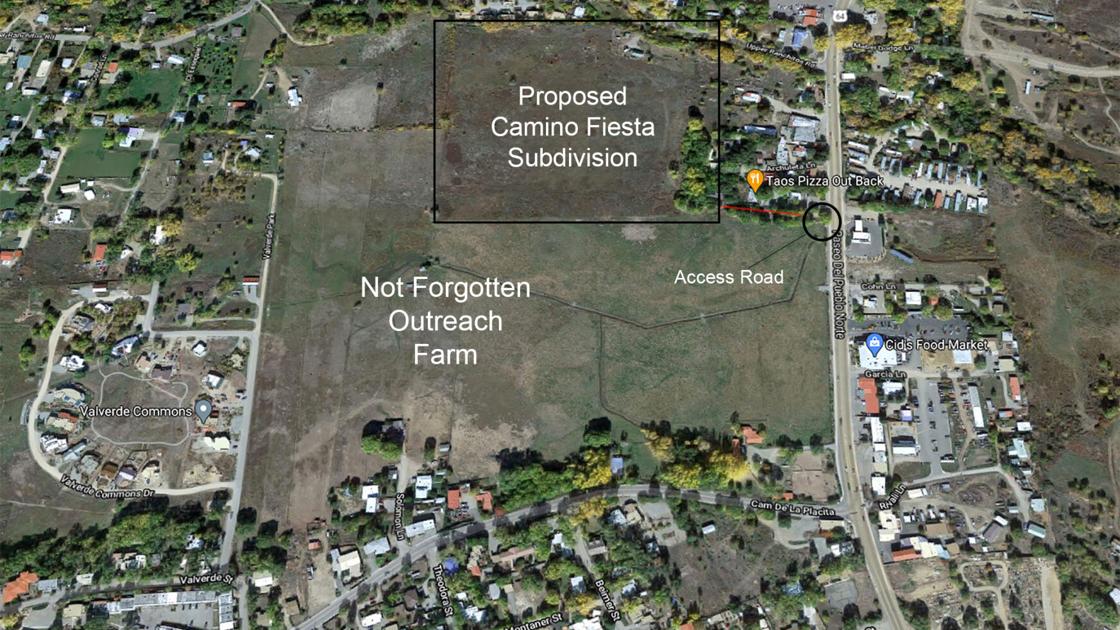
The commission voted Feb. 3 to deny the application from Alex Abeyta of Abeyta Engineering for a 49-lot subdivision set to be located across from Cid’s Food Market on Paseo del Pueblo Norte and next to the Not Forgotten Outreach farm. Abeyta is pursuing the project on behalf of Conroad Associates, LP and land owner Lloyd Abrams.
The ‘Camino Fiesta’ subdivision application had been before the commission for over three years and faced numerous setbacks, but it was finally proved to be the traffic study that was cause for its denial. The study, which was conducted by engineer Tim Simmons, who was unlicensed at the time, faced backlash from concerned citizens in several public hearings since November of last year.
When a vote was called, all but one of the commissioners – Kenneth Martinez – voted to deny the application. Martinez had made a motion at a previous commission meeting to approve the application.
Abeyta declined to comment about issues raised by the public throughout the several month process. He did Monday (Feb. 8) that he will be appealing the decision by the commission. The appeal will go before the town council at a yet to be determined date.
Abeyta started his presentation at the Feb. 3 meeting by saying that regardless of whether or not Simmons was licensed at the time, his study was looked over and approved by several other state Department of Transportation officials, and thus merited approval. “In our eyes, the traffic study is complete,” he said, and therefore was not up for debate. “The study is credible, and it is proper. Camino Fiesta did not ignore the traffic, it was addressed.”
However, the issue did come up, as the commission heard from several local residents who have been continuously outspoken on the traffic study, including Dorothy Romo and her husband Ken Manning, who live close by on Upper Ranchitos Road. Romo and Manning both took issue with the fact that the study did not take into account the traffic turning movements generated by nearby businesses near the proposed entrance to the development, including Cid’s Food Market, Centinel Bank, Taos Pizza Outback and A La Cart.
Romo said she did her own research and found that Cid’s Food Market alone generated an average of 3,000 turning movements generated daily. In comments before the commission, Romo stated that “the traffic study for Camino Fiesta by Mr. Timothy Simmons is not only illegal but poorly conducted… and woefully does not meet or address the traffic issues related to the proposed project.” The traffic study submitted by Abeyta did not take into account turning movements of nearby businesses.
Abeyta and attorney Dennis Romero had said in previous meetings that they felt local concerns over traffic were moot because residents are not traffic experts and they had not brought any other official traffic analysis to the table. However, Manning countered with the point that a previous court case involving another of Abeyta and Simmons’ traffic studies had been rejected in the Eighth Judicial District Court. When attempting to obtain a special use permit for a Family Dollar in Ranchos de Taos, the county commissioners unanimously denied the permit based on the inadequacy of the traffic study.
Abeyta responded by saying that the traffic study for the Family Dollar application had completely different issues, and the Camino Fiesta traffic study had been done properly. Romero also added that the Camino Fiesta traffic study “involves dramatically different circumstances. This is not similar at all [to the Family Dollar in Ranchos].”
Along with the traffic issues, Romo voiced concerns about the wetlands study that was performed in December of 2016. According to the Aquatic Resources Delineation Report conducted by Ecosphere Environmental services for Abeyta Engineering, the study was done when a “thin layer of snow was present during the second day of the survey and the soils were frozen in many of the low lying areas on both days.”
Romo questioned how a wetlands study done in December could be an accurate representation of what she sees as obvious wetland territory many other months of the year.
In the same report, it states that “field surveys and online search results indicate that at least a portion of the project area may have supported wetlands in the past.” However the report also says that “no aquatic resources, including wetlands or other waters of the U.S. were encountered on the 16-acre project site.
Wetland study aside, it was the traffic that eventually tipped the commission towards denying the application.
Commissioner Norbert Mondragon made a motion after the several hourslong hearing to deny the application, saying he felt it was the commission’s duty to take into consideration the local concerns. Commissioner Pavel Lukes seconded the motion, saying that “approval of this application would be contrary to the health, safety and welfare of the community as a whole.” Lukes also said that he felt the traffic study done in 2017 was “severely outdated” and thus found it to be invalid.
“That was the straw that broke the camel’s back,” said Lukes of his reasons for voting to deny the application. “We expressed dissatisfaction with the traffic study probably every meeting, not to mention members of the public that were questioning the traffic study as well.”
Commissioner Mondragon said that his decision to deny was based primarily on the fact that he felt it was the commission’s responsibility to take into account public concern, not just approve projects. “At the end of the day, the land use development code speaks very plainly about public safety and mitigating traffic whenever possible,” he said. “In my opinion, the commission is in place to represent the people of the town. There’s no point in having public hearings at these meetings if you’re not going to listen.”







