

The Mississippi River doesn’t have the cleanest reputation.
Long treated as a drain for Midwest farms, factories and cities, the river has coursed with a nasty mix of bacteria, lead and toxic chemicals.
But a new LSU study shows that the lowest downriver reaches of the river have been getting cleaner since the 1970s, when Congress passed the Clean Water Act, a landmark piece of legislation law considered one of the most powerful environmental laws in U.S. history.

The rising waters of the Mississippi River push plastic bottles and other trash into an estuary frequented by herons and other wildlife. (Photo by Chris Granger, The Times-Picayune)
The proof of the Clean Water Act’s prowess is in the data, said Eugene Turner, an oceanography and coastal sciences professor and the study’s author. Turner collected and analyzed federal, state and city water quality records from four Louisiana locations dating from 1901. His reconstructed record from a century’s worth of river testing at St. Francisville, Plaquemine, New Orleans and Belle Chasse shows a clear and steady decline in bacteria, lead and other pollutants since the Clean Water Act was enacted in 1972.
“My meeker mind thought the Mississippi River couldn’t possibly be influenced by one single single thing,” he said. “But it was.”
Other markers of the river’s health, such as oxygen and pH levels, have improved over the same period, according to Turner’s research.

Construction began on a $30 million sewage treatment plant at the eastern end of Florida Avenue in New Orleans in 1973, just after passage of the Clean Water Act. (Photo by Sam R. Sutton, The Times-Picayune)
The precipitous drop in bacteria – much of which stems from human and animal waste – was stunning, Turner said.
“It’s 1% of what it was before the 1980s,” Turner said.
The reason is simple: “We have sewage treatment plants now,” he said.
Before the Clean Water Act, it was common for cities to pipe sewage into the nearest creek or river. Efforts to build or improve sewage treatment plants were often met with fierce resistance, usually over their high costs. Dumping is, after all, much cheaper than treating, Turner said.
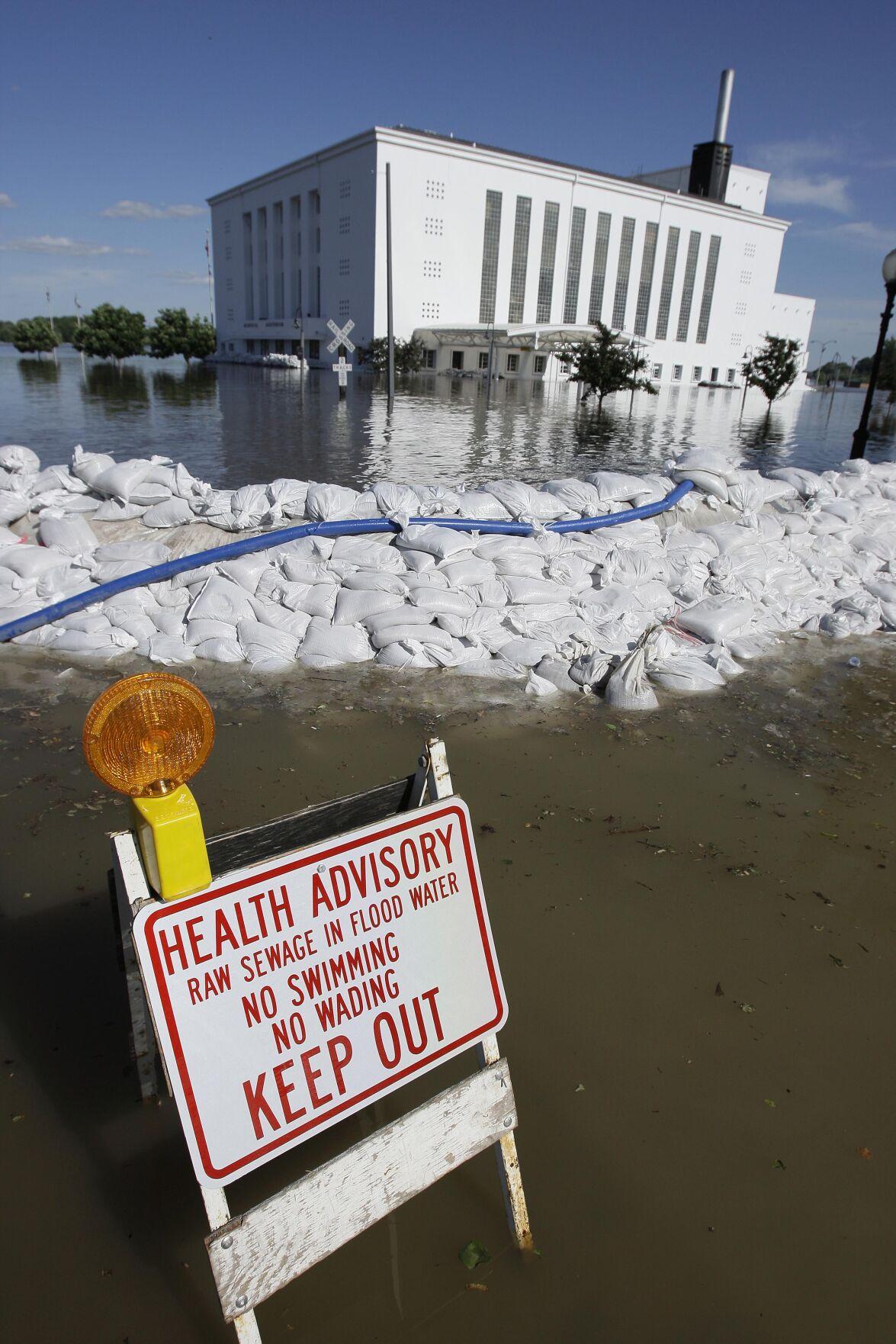
A sign warns of raw sewage in flood waters pouring into the streets of the Burlington, Iowa, business district along the Mississippi River on June 16, 2008. The floodwaters spread a noxious brew of sewage, farm chemicals and fuel. (Photo by Julie Jacobson, The Associate Press)
The Clean Water Act set minimum standards for waste discharges for each industry and municipal waste manager. And it developed regulations for specific problems, including chemical releases and oil spills.
Pollution in the Mississippi from “point sources,” such as a chemical plant outfalls, were greatly reduced, but the law didn’t fix everything. Problems persist from “non-point” sources such as runoff from farm fields and urban streets. These sources contribute to the Gulf of Mexico’s low-oxygen ‘dead zone,’ a Rhode Island-sized area that kills bottom-dwelling organisms and forces fish, crabs and shrimp to flee.
Many of the sewage treatment plants built shortly after the Clean Water Act are aging or now inadequate, and combined sewage and stormwater systems frequently overflow during periods of heavy rain, according to the conservation group American Rivers.
And many other pollutants remain a serious problem in the Mississippi. But the ones targeted by the Clean Water Act and similar laws of the same era, including the Clean Air Act, aren’t as ubiquitous as they were 50 years ago.

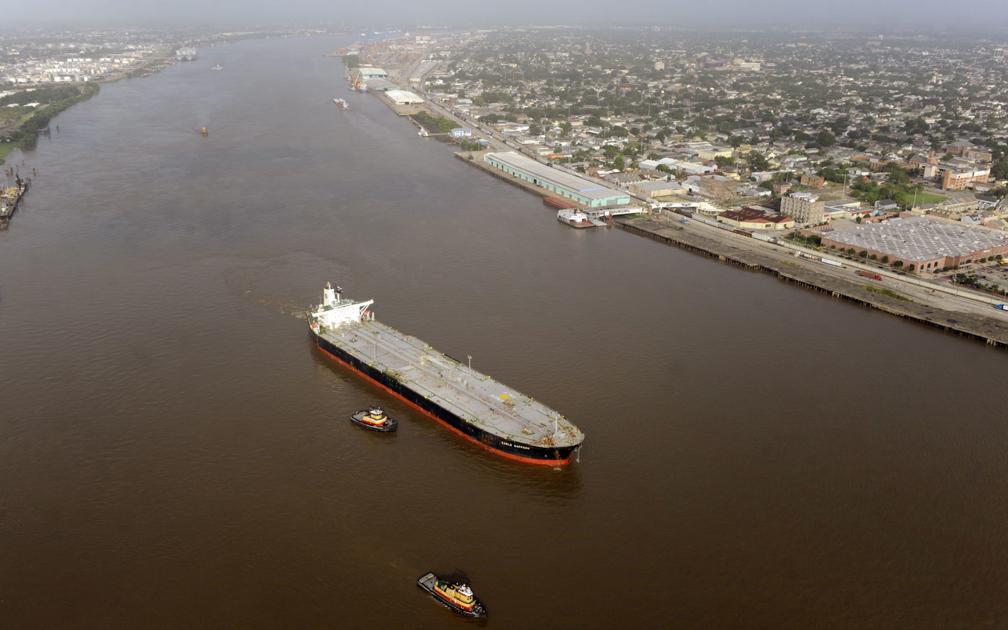
The Mississippi River at Gramercy is shown Jan. 20, 2016. (Photo by Hilary Scheinuk, The Advocate)
Along with bacteria, the law took particular aim at lead, an element that’s especially harmful to the development of children’s brains and was once common in household paints and gasoline. In the lower Mississippi, lead concentrations are about 1,000 times lower than they were in 1979, according to water quality data Turner collected from the state Department of Environmental Quality testing locations in St. Francisville, Plaquemine and Belle Chasse. Turner said the lead data is somewhat incomplete because the agency stopped testing in 2011 after a 10-year period of stabilized lead concentrations.
Turner’s study underlines the importance of preserving the Clean Water Act and expanding its reach, said Olivia Dorothy, a Mississippi River management expert with American Rivers.
“The Clean Water Act has been tremendously effective at decreasing the amount of industrial and urban pollution, as this study shows,” Dorothy said. “We need to protect the act and all of its authorities, [and] we also need to start looking at expanding it to cover the emerging public safety threats as they relate to water.”

Nurdles pile up between rocks along the Mississippi River by the Chalmette Battlefield in Chalmette on Sept. 4, 2020. (Photo by Sophia Germer, The Times-Picayune | The New Orleans Advocate)
Turner agrees. Emerging threats include pharmaceuticals-laced sewage and viruses, including COVID-19, which can spread from partially treated wastewater, overwhelmed treatment systems and aging septic tanks, he said.
Plastic waste is another growing concern. The Gulf has one of the highest concentrations of plastic pollution in the world, and much of it arrives from the Mississippi River, according to other research by LSU. Regulations haven’t caught up with the risk, as was underscored by the slow and indecisive response to the huge spill of plastic pellets, or nurdles, from a cargo ship in New Orleans last year.
“We’re putting plastic in our river in incredible amounts, and not just from that nurdle spill,” Turner said. “That’s what we used to do with sewage and lead. We just threw it in the river until we eventually realized that’s not good and we did something about it.”
LAKE ITASCA, Minn. — America’s greatest river begins here, in the still waters of a lake cradled in the dark woods of Minnesota. If left to it…
At measured intervals along a stretch of sandy riverbank near the Chalmette Battlefield, three Loyola University scientists drop to their knee…
GENOA, Wis. — Sharonne Baylor’s pontoon boat glides through a Mississippi riverscape that’s unraveling.







