

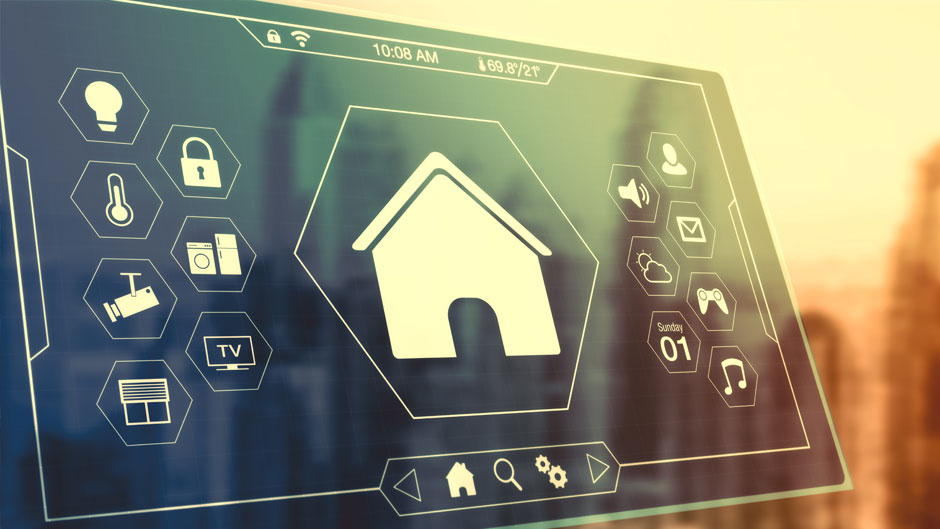
The University’s Institute for Data Science and Computing is partnering with GE Global Research to devise secure, smart technology that could improve patient outcomes.
Picture a future where health sensors would be strategically placed throughout a person’s house to check their vital signs each day and to alert them about potential dangers, like a sudden step down to the living room. Outside of the home, sensors could measure local pollen or pollution levels in the air. And for elderly residents, applications streamed through devices like their phone or a smart speaker could remind them to take medications on time.
These conveniences may allow the aging to stay longer in their own homes, and it could also reduce some of the costs associated with health care today, University of Miami computer science experts say.
But understanding how to connect this data from a person’s home to their physician’s records, all while safeguarding its privacy, is a challenge.
That’s why the University’s technology powerhouse, the Institute for Data Science and Computing (IDSC), has formed a strategic partnership with General Electric Global Research to research various topics at the nexus of health and digital transformation, including smart home technology that can readily interact with digital health platforms.
“We are trying to foster concepts for healthy aging and smart homes that will improve people’s quality of life, while also looking at economics and public safety,” said Yelena Yesha, chief innovation officer at IDSC and a visiting professor of computer science. “The need for these things was obviously accelerated by the pandemic, but it was also driven by the desire of many aging individuals to not move to assisted living facilities or nursing homes, but instead to age gracefully in the comfort of their own homes.”
Nick Tsinoremas, director of IDSC as well as the University’s vice provost of research, computing and data, said allowing doctors to access a patient’s smart home data will help provide a more accurate portrait of an individual’s health. For example, if a person has allergies and a sensor picks up high levels of pollen or mold in or around their home, that warning may help the doctor prescribe a more useful medication or highlight the fact that a home repair is needed.
“We want to create intelligent systems to understand how all of these factors could influence someone’s health,” Tsinoremas added.
As the project progresses, IDSC and GE would also like to expand this research to the population level, so that local public health leaders could learn if a swath of their community is experiencing certain symptoms and then could potentially identify viruses before they spread farther.
“We could integrate this information to identify hot spots for any kind of unusual symptoms or unusual viruses,” Yesha pointed out.
As part of the partnership, IDSC and GE are also working on creating technology that would help reduce congestion in public spaces, like airports and government buildings, where people often need to be present in person. Technology gurus envision an application similar to what some theme parks use to show visitors wait times for rides. But instead it would reveal the density of people in various public locations.
However, new capabilities to connect health technology networks mean more security and privacy challenges. Overcoming these barriers while maintaining patient privacy is a critical part of the effort.
Also, utilizing 5G connectivity to operate these sensors will pave the way for advances in health and safety monitoring, said Michael Mylrea, senior director for cybersecurity research and development for operational technology at GE Global Research, and the co-primary investigator for this initiative.
“For these advances to be sustainable, data will have to be collected, exchanged, and stored in a way that prioritizes security, privacy, and confidentiality of end users,” said Mylrea. “One of the challenges is that as networks in smart cities become increasingly connected to cyberspace, so too does their risk of cyber threats. This effort will help transform these massive data sets into intelligence and unlock the potential of smart infrastructures and systems.”
While an interdisciplinary team of faculty members at the University are working on the concepts and testing some prototypes, GE will be translating these ideas to the commercial market. This University team—led by Tsinoremas, Yesha, and Rodolphe el-Khoury, dean of the School of Architecture—is actively in touch with collaborators at GE, other universities, and government agencies like the U.S. Department of Homeland Security to help bring its ideas to life safely. The team will be using the University’s 5G Edge technology powered by AT&T to create and test the software, so that these new products are primed for the future, Tsinoremas said.
Yesha and Tsinoremas believe the benefits of converging smart home and digital health data securely could be plentiful.
“This will lower costs for health care because it will offer preventative measures and limit situations—like unnecessary falls—that lead to 911 calls,” Yesha said. “If you talk to seniors, they don’t want to move, but they can’t get all the necessary health care services in their homes. So if we can bring all these services to their homes, it could change the dynamic and increase their longevity because of earlier prevention and diagnosis.”







