

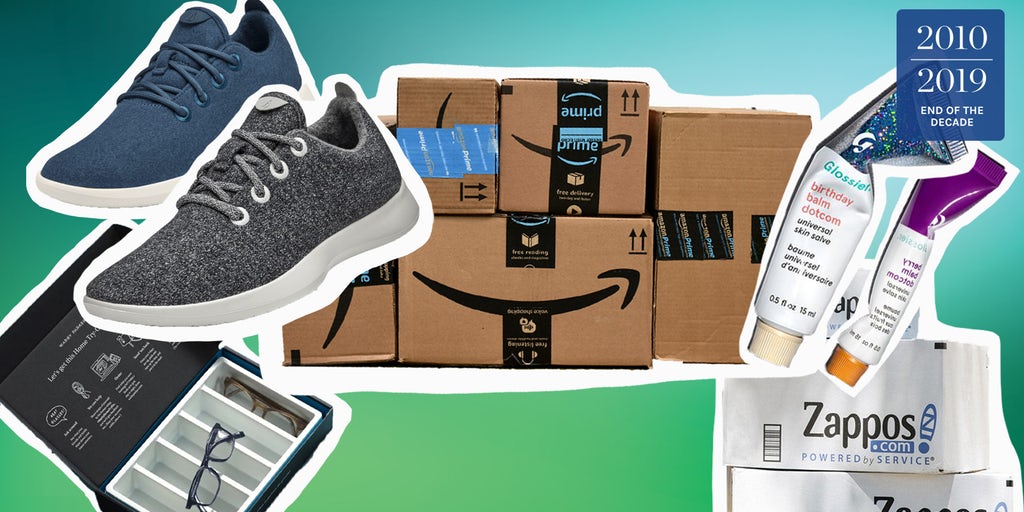
As the 2010s come to a close, BoF reflects on how the past decade transformed the fashion industry — and the culture at large. Explore our insights here.
NEW YORK, United States — When Warby Parker began selling eyewear online at sub-Lenscrafter prices in 2010, it ignited a revolution.
In the space of a few years, brands that kept costs low by cutting out wholesale, selling mostly online and relying on social media for marketing were everywhere. The term “direct-to-consumer,” or “DTC” for short, went from industry jargon to the retail buzzword of the decade.
Brands, to be clear, had been selling direct for decades — the term could be applied to Gap or H&M. But once e-commerce pioneers like Amazon, Net-a-Porter and Zappos had worked out the basics for selling online in the early aughts, it cleared the way for anyone with solid branding and a Shopify account to set up a DTC business.
“We thought it would be challenging… but it was a moment when Zappos was proving you could buy shoes online, and Blue Nile proved you could sell engagement rings online,” said Warby Parker Co-Chief Executive Neil Blumenthal. “Consumer behaviour was changing.”
Digital-first DTC brands pushed incumbents, from mall mainstays to big-box chains, to drastically change the way they operate — or face extinction.
It was a moment when Zappos was proving you could buy shoes online, and Blue Nile proved you could sell engagement rings online.
Early direct-to-consumer brands told consumers they kept prices low by cutting out the “middleman” — marketing code for department stores. The reality was more complicated; bypassing wholesalers was part of it, but so was tolerating years of losses (though some, including Warby Parker, now operate in the black). Selling online, instead of via hundreds of stores, also kept costs down. A company like Everlane, which launched in 2011, said it could charge less for its elevated basics without physical retail outposts to maintain. Warby Parker nabbed better margins on its hipster eyewear by not relying on wholesalers.
Online sales also gave digital brands unprecedented access to information about their customers.
“We got to know customers really well in aggregate, and could get data,” said Warby Parker Co-Founder Jeff Raider, who later started Harry’s, a men’s grooming brand acquired by Edgewell for $1.37 billion in May.
Some early DTC ventures were also mission-based: Warby Parker had its “buy a pair, give a pair” programme and Everlane was dedicated to transparent pricing. These brands gave instant meaning to their products, in a world where values were increasingly important to shoppers.
In some cases, the products from these start-ups weren’t all that different from those of the brands they were disrupting. But a key difference was messaging.
How They Did It
DTC brands identified consumer pain points and spun stories about how they, and only they, could solve them. Whether these stories were true was of secondary importance. Allbirds’ shoes were supposed to be more comfortable — and sustainable — than Nike’s. Glossier’s natural-looking makeup was cooler and more virtuous than MAC Cosmetics’. Away’s luggage could take you on an adventure. Young, hip guys could connect with Harry’s in a way they never would with a drug-store brand.
“Ten years ago was when the Millennial was coming into the spotlight as the core consumer and these companies spoke their language,” said Eurie Kim, a partner at Forerunner Ventures, which has invested in dozens of DTC brands. “The storytelling was aspirational. It was about an experience, a lifestyle.”
The rise of social media and the ubiquity of smartphones also helped spread the word. Raising millions of dollars in funding to pay for social media advertising became the norm. The strategy was an effective way to score huge numbers of customers for previously unknown brands, particularly in the first half of the decade, before Instagram and Facebook were flooded with ads from lookalike fashion start-ups.
The storytelling was aspirational. It was about an experience, a lifestyle.
“With social media, consumers knew more about Warby Parker in 10 minutes than they did about the Gap,” Blumenthal said.
It’s not like legacy retailers didn’t have stories of their own. But most traditional mall brands didn’t put their founders at the centre of their marketing or espouse the disruptiveness of their products. They relied on the sheer ubiquity of their stores.
“Mall brands were predicated on distribution advantage; on more doors and better merchandising,” said Jesse Derris, head of the PR agency that helped grow brands like Warby Parker, Everlane and Glossier. “It was a merchandise-driven business that believed choosing colours and trends was the leading strategy, and brand speak was secondary.”
Lacklustre stores, combined with a pedestrian product assortment, became a liability as retail foot traffic declined in the wake of Amazon’s rise. By 2017, Amazon’s North America revenue hit $106 billion, up from $18 billion in 2010. Amazon’s Prime membership was training subscribers to place endless orders without ever having to leave their couch. In 2018, empty shops inside malls across the US hit a seven-year-high, at 9 percent, according to The Wall Street Journal.
“Shoppers used to go to malls for entertainment, but digital replaced that experience,” said Sarah Willersdorf, a managing director at Boston Consulting Group. “The discovery journey had changed.”
The e-commerce revolution also revealed “retail’s dirty little secret,” as Mark Cohen, director of retail studies at Columbia Business School phrased it: the US had too many stores. The number of malls in the US had increased over 300 percent from 1970 to 2015. Operating thousands of stores, once the path to success for a clothing brand, became a liability as more consumers shopped from home.
With social media, consumers knew more about Warby Parker in 10 minutes then they did about the Gap.
Once-mighty brands like Gap, J.Crew, JCPenney, Macy’s and Sears closed hundreds of stores collectively and had mass layoffs. Payless, Gymboree, Nine West, Claire’s, Wet Seal, BCBG, Aéropostale, Aerosoles and Forever 21 filed for bankruptcy. Some stores like The Limited, Sports Authority and American Apparel disappeared completely.
In 2018, according to retail research firm Coresight Research, 5,500 stores shuttered; in 2019, nearly 10,000 stores have closed.
“In the face of direct-to-consumer, retail became a tragedy,” said Cohen.
Legacy Retail’s Difficult Pivot
Mall brands operated e-commerce operations of their own, but in the early part of the decade, some had a hard time simultaneously growing online operations while tending to vast networks of stores.
“Direct-to-consumer brands were mobile-first and built around data and analytics whereas traditional brands were less agile,” said Willersdorf of BCG. “It’s easier to grow a brand from zero.”
Many legacy brands also didn’t understand how to operate in both worlds simultaneously, said Steve Dennis, a retail analyst and former executive of Sears and Neiman Marcus.
“They saw stores and e-commerce as two different channels and did not understand the cross-shopping integration,” he said. “They were fighting themselves as opposed to getting customers away from competition.”
Direct to consumer brands were mobile-first and built around data and analytics whereas traditional brands were less agile.
Steve Sadove, a former chairman and chief executive of Saks, noted that legacy retailers also struggled because they kept the supply chains of e-commerce and retail separate.
“Companies that didn’t make that investment to make a single view of the inventory and move it across channels had a harder time adapting,” he said. “The success of Walmart, Target and Nordstrom is because of the investments they made in playing in omnichannel.”
Meanwhile, Amazon constantly upped the stakes by expanding its warehouse network. Free shipping and returns became standard in digital shopping too and the heavy costs hit brands hard.
DTC Goes Offline
Toward the end of the decade, digital brands embraced some aspects of the retail model they had spent most of the 2010s disrupting.
Companies like Everlane, Away, Allbirds, Outdoor Voices and Glossier opened dozens of stores and now see retail as a key strategy for growth.
“We found that many customers like the human interaction,” said Warby Parker Co-Chief Executive Dave Gilboa. (The brand has aggressively expanded its retail footprint to 115 stores over the past two years.) “They see shopping as an engaging experience, and bring their family and friends. The store is an important part of the purchase process.”
Many DTC brands also inked partnerships with wholesalers.
“We realised there were many other places customers wanted to learn about us beyond the internet,” said Raider of Harry’s, which is now sold at Walmart and Target, among others.“We saw a better opportunity to serve more people by expanding the channel.”
The success of Walmart, Target and Nordstrom is because of the investments they made in playing in omnichannel.
Big-box stores like Walmart and Target have also seized the e-commerce opportunity by turning stores into mini distribution centres, where they have employees fulfilling online orders.
Even Amazon has opened stores. It believes foot traffic will lead to more online sales. (It is also eager to collect in-store shopping data.)
In many ways, online brands and old-school retailers have met in the middle. Experts who’ve witnessed the changes of the decade agree that to thrive today means embracing a strategy that is both on and offline.
But just like many of their now-shuttered predecessors, not all digital brands are going to survive. “Ninety-five percent are going to fail,” Derris predicted — and a DTC reckoning is already happening. Many brands that have raised millions of dollars in order to help guarantee they are part of the 5 percent are now experimenting with everything from experiential retail to inventory-less stores.
The shakeout is ongoing, and some argue the entire e-commerce revolution was overblown: 81 percent of Gen-Z prefers to shop inside stores, and 73 percent prefer to browse in real life, according to A.T. Kearney. Some 55 percent of Gen-Z cite store associates as sources of inspiration for purchases, according to BCG.
The key is to resist complacency.
“We know that the customer journey is far more complex than people realise,” Blumenthal said.“Most people don’t shop by just visiting a website, or only go to stores, and so it’s about following the customer to create better experiences.”

Related Articles:
The Direct-to-Consumer Reckoning







