
GLOBAL RESEARCH SYNDICATE
No Result
View All Result
  • Login
  • Latest News
  • Consumer Research
  • Survey Research
  • Marketing Research
  • Industry Research
  • Data Collection
  • More
    • Data Analysis
    • Market Insights
  • Latest News
  • Consumer Research
  • Survey Research
  • Marketing Research
  • Industry Research
  • Data Collection
  • More
    • Data Analysis
    • Market Insights
No Result
View All Result
globalresearchsyndicate
No Result
View All Result
Home Data Collection

Covid brain research by Georgia State points to nose as important

globalresearchsyndicate by globalresearchsyndicate
January 22, 2021
in Data Collection
0
Covid brain research by Georgia State points to nose as important
0
SHARES
5
VIEWS
Share on FacebookShare on Twitter

The study, done on mice, could have implications for understanding the instances when humans have shown neurological symptoms with COVID.

ATLANTA — New COVID-19 research by Georgia State University finds the coronavirus may remain in the brain longer than the lungs, and could have a more pronounced impact longer into an infection – even after it’s cleared out of the lungs.

While that’s not necessarily unique to COVID, the study could have implications for how some humans have exhibited neurological symptoms, such as losing taste and smell; lasting longer with so-called “long-haul” cases; and why sometimes an individual’s condition deteriorates even after it seems they’ve begun to improve. 

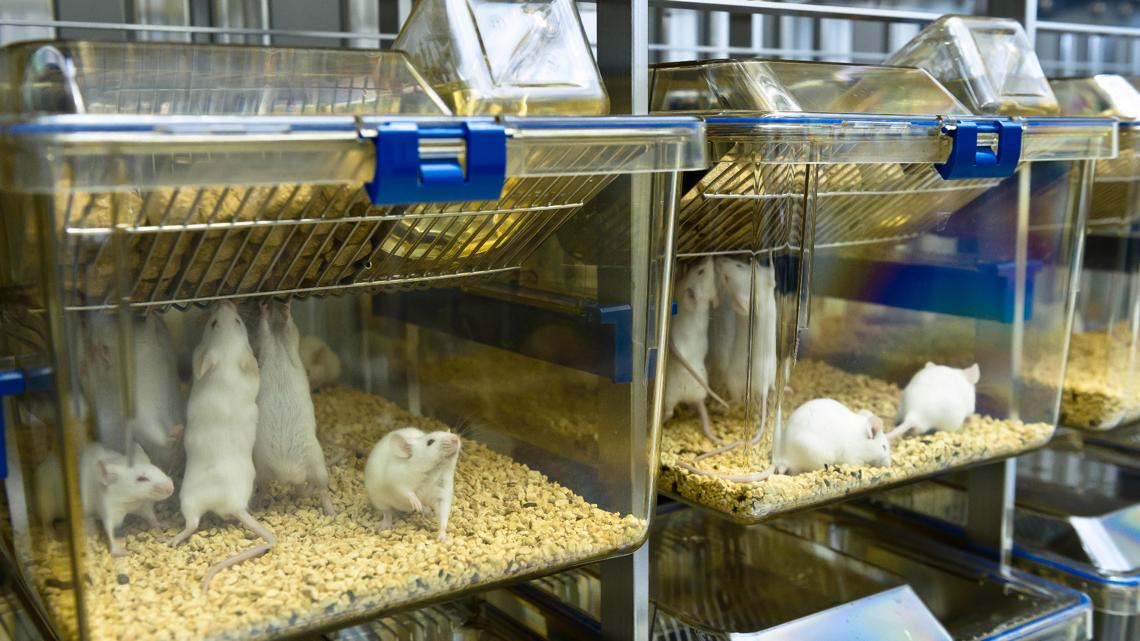
The study was published in the January edition of the journal Viruses, and examined how 20 mice infected with SARS-CoV-2 through their nasal passage were affected. 

RELATED: Coronavirus in Georgia | Latest data for Thursday, Jan. 21

In the lungs of mice, cytokine and chemokine levels started low, rose over the course of three days, and then started to largely clear out. 

Cytokines and chemokines indicate the intensity of the body’s cellular response to the virus. Higher levels indicate the virus is making more of an impact on the system, and thus a more active cellular response.

At the same time, however, in the brain, these cytokine and chemokine levels were pretty much negligible over the first few days, before soaring by day 5 to levels far higher than any ever observed in the lungs. By day 6, all the mice died. 

“These results indicate that the inflammatory response was more pronounced in the brain than in the lungs at the later stage of infection,” the study notes. “The onset of severe disease in SARS-CoV-2-infected mice correlated with peak viral levels in the brain, immune cell infiltration and (central nervous system) cell death.”

RELATED: COVID ‘long-hauler’ shares difficult journey through symptoms

“That’s why we’re seeing severe disease and all these multiple symptoms like heart disease, stroke and all these long-haulers with loss of smell, loss of taste,” Georgia State assistant professor Mukesh Kumar, the lead researcher for the study, told the school’s website. “All of this has to do with the brain rather than with the lungs.”

The rise of of the virus in the brain as it falls in the lungs might explain, in part, why some patients have exhibited improving conditions only to suddenly deteriorate again and die.

The role of the nose as a direct passageway appeared to play a role, as well, suggesting whether an infection is inhaled through a nasal passage or breathed down into the lungs could make a difference.

The study found that SARS-CoV-2 could infect cells within nasal turbinates, passageways in the nose that cleanse the air that comes in, and the olfactory bulb, which is a part of the brain near its front that basically produces the sense of smell. Infection there could lead to a broader brain infection.

“Virus infection of cells in these tissues in humans may explain the loss of smell associated with some COVID-19 cases,” the study said. “The detection of virus replication in these tissues suggests that SARS-CoV-2 can access the brain by first infecting the olfactory bulb and then spreading into the brain by infecting connecting brain neuron axons.”

Kumar said that “our thinking that it’s more of a respiratory disease is not necessarily true.”

“Once it infects the brain it can affect anything, because the brain is controlling your lungs, the heart, everything,” he told Georgia State’s website. “The brain is a very sensitive organ. It’s the central processor for everything.” 


Related Posts

How Machine Learning has impacted Consumer Behaviour and Analysis
Consumer Research

How Machine Learning has impacted Consumer Behaviour and Analysis

January 4, 2024
Market Research The Ultimate Weapon for Business Success
Consumer Research

Market Research: The Ultimate Weapon for Business Success

June 22, 2023
Unveiling the Hidden Power of Market Research A Game Changer
Consumer Research

Unveiling the Hidden Power of Market Research: A Game Changer

June 2, 2023
7 Secrets of Market Research Gurus That Will Blow Your Mind
Consumer Research

7 Secrets of Market Research Gurus That Will Blow Your Mind

May 8, 2023
The Shocking Truth About Market Research Revealed!
Consumer Research

The Shocking Truth About Market Research: Revealed!

April 25, 2023
market research, primary research, secondary research, market research trends, market research news,
Consumer Research

Quantitative vs. Qualitative Research. How to choose the Right Research Method for Your Business Needs

March 14, 2023
Next Post
Survey: Business travelers express confidence in Las Vegas rebound

Survey: Business travelers express confidence in Las Vegas rebound

Categories

  • Consumer Research
  • Data Analysis
  • Data Collection
  • Industry Research
  • Latest News
  • Market Insights
  • Marketing Research
  • Survey Research
  • Uncategorized

Recent Posts

  • Ipsos Revolutionizes the Global Market Research Landscape
  • How Machine Learning has impacted Consumer Behaviour and Analysis
  • Market Research: The Ultimate Weapon for Business Success
  • Privacy Policy
  • Terms of Use
  • Antispam
  • DMCA

Copyright © 2024 Globalresearchsyndicate.com

Welcome Back!

Login to your account below

Forgotten Password?

Retrieve your password

Please enter your username or email address to reset your password.

Log In
This website uses cookies to improve your experience. We'll assume you're ok with this, but you can opt-out if you wish. Cookie settingsACCEPT
Privacy & Cookies Policy

Privacy Overview

This website uses cookies to improve your experience while you navigate through the website. Out of these cookies, the cookies that are categorized as necessary are stored on your browser as they are essential for the working of basic functionalities of the website. We also use third-party cookies that help us analyze and understand how you use this website. These cookies will be stored in your browser only with your consent. You also have the option to opt-out of these cookies. But opting out of some of these cookies may have an effect on your browsing experience.
Necessary
Always Enabled
Necessary cookies are absolutely essential for the website to function properly. This category only includes cookies that ensures basic functionalities and security features of the website. These cookies do not store any personal information.
Non-necessary
Any cookies that may not be particularly necessary for the website to function and is used specifically to collect user personal data via analytics, ads, other embedded contents are termed as non-necessary cookies. It is mandatory to procure user consent prior to running these cookies on your website.
SAVE & ACCEPT
No Result
View All Result
  • Latest News
  • Consumer Research
  • Survey Research
  • Marketing Research
  • Industry Research
  • Data Collection
  • More
    • Data Analysis
    • Market Insights

Copyright © 2024 Globalresearchsyndicate.com




