

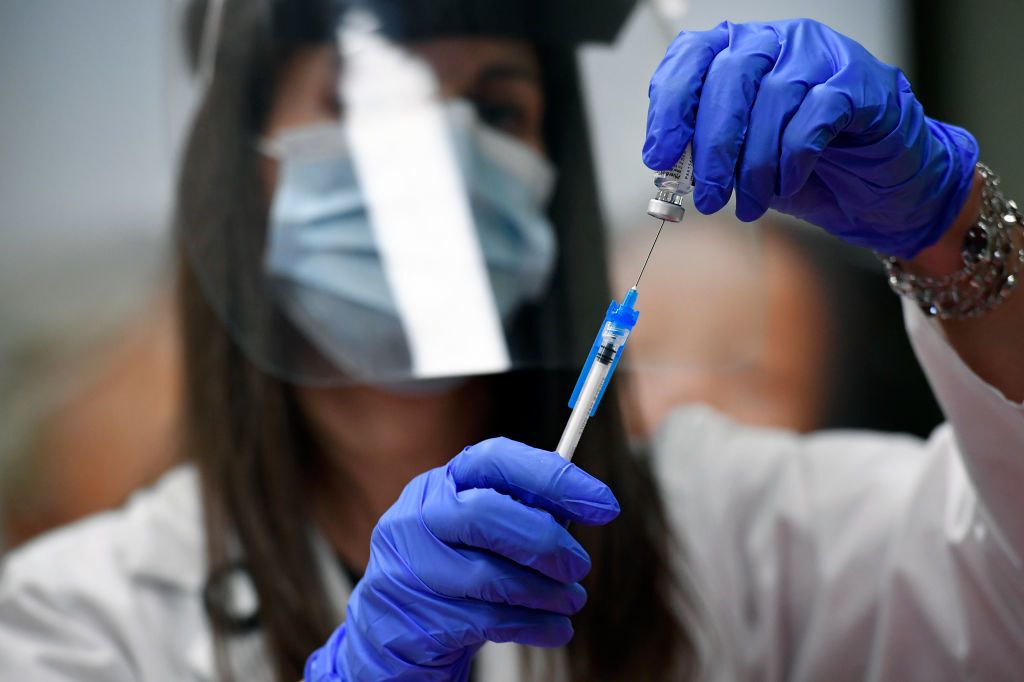
More than a third of rural residents are hesitant to get a COVID-19 vaccine, survey results show, placing them alongside Republicans and Black adults as among the groups most wary of getting vaccinated.
According to the Kaiser Family Foundation’s COVID-19 Vaccine Monitor project, survey results show that 15% of rural residents said they would “probably not get” a safe and free vaccine if available and 20% would “definitely not get it.” Only about 3 in 10 rural residents said they would “definitely get it” compared with about 4 in 10 people in both urban and suburban areas.
By comparison, the survey also reportedly found that 42% of Republicans, 36% of adults ages 30 to 49 and 35% of Black adults said they would probably not or definitely not get the vaccine, compared with 26% of white adults, 15% of those 65 and older, and 12% of Democrats.
Around a quarter of both urban and suburban residents were vaccine hesitant. The survey was conducted Nov. 30 to Dec. 8 among 1,700 adults 18 and over.
While rural areas in the U.S. tend to be more conservative politically, analysts with the Kaiser Family Foundation said vaccine hesitancy among rural populations extends beyond partisanship to their reasons behind getting vaccines and their views on the severity of the pandemic.
World Braces For Another Wave of Coronavirus

When results were controlled for factors such as political affiliation, for example, hesitancy was still higher among rural residents than their urban and suburban counterparts.
“Effective messages need to be delivered by trusted messengers and take into account these strongly held beliefs in order to have successful vaccine uptake in rural America,” KFF researchers wrote in an analysis of the results.
For rural Americans, those trusted messengers include their health care provider. A large majority – 86% – said they trust their own doctors or providers to provide reliable information on the vaccine.
Meanwhile, 68% said they trust the Food and Drug Administration, while 66% said they trust the Centers for Disease Control and Prevention, 64% trust their local health department, 59% trust government expert Dr. Anthony Fauci and 55% said they trust their state government.
According to the KFF analysis, the survey also showed that half of rural residents said the seriousness of the coronavirus has been “generally exaggerated” in the news, compared with 27% of urban residents and 37% of suburbanites.
Additionally, 62% of rural residents said they see getting a vaccine as a personal choice, compared with 36% who said it’s “part of everyone’s responsibility to protect the health of others.” Among urban and suburban residents, 55% and 47% shared the same view of getting a vaccine as a social responsibility, respectively.
And while analysts said rural residents are just as likely as their urban and suburban counterparts to know someone infected or killed by the coronavirus, 39% of rural residents said they were not worried about themselves or family members getting sick, compared with 23% urban residents and 30% of suburban residents.






