

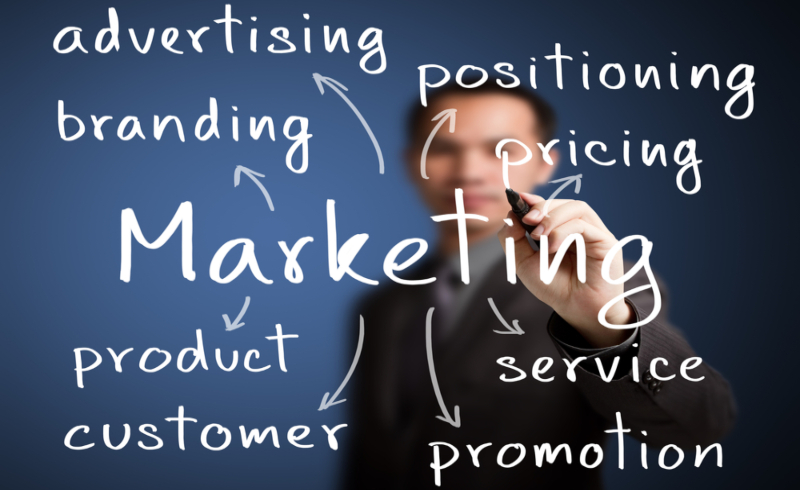

In college, part of my major’s requirements included enrolling in marketing courses to learn about how economic principles apply to real-world situations. As explained by the professor, marketing is the application of economic theory to drive customers toward your brand.
In other words, marketing takes economic principles and operationalizes them with a marketing mix to bring brand awareness, affinity and conversion. With the right marketing mix and expertly-honed application of the 4Ps of marketing, brands can lead customers down the purchase funnel and result in the ultimate goal: a successful transaction.
Through employment of a thought-out marketing mix, you can understand how to position your brand in the world of marketing. This post explores the concept of a marketing mix and the 4Ps of marketing.
What is Marketing?
Marketing in its purest sense is the right product, at the right time, in the right place, at the right price. Let’s unpack this to understand it better.
Brands want to promote their products and services to interested consumers and push them down the purchase funnel from awareness to consideration to conversion. Data suggests how your brand, product or service shows up and how you build a connection with your target audience are levers which can help to optimize your marketing objectives.
For example, introducing your brand or product with a visual or audio cue are positively correlated with Ad Recall, whereas pairing visual and audio cues are positively correlated with Consideration and Purchase Intent.
In our current digital environment, emotional storytelling receives the most limelight with less focus on the efficacy of functional storytelling (i.e., ads which convey a tangible, observable or measurable benefit), but rather how products make people feel and what can be done with them. However, functional messaging also works across the entire marketing funnel from awareness, consideration and conversion.
But despite the method of connecting with your target audience – advertisement recall, consideration or conversion intent – one universal necessity is clear need for an audience call to action (CTA). This reinforces your message and encourages them to act, both of which are key for a successful marketing effort.
Successful marketing inspires your audience to take action across all points of the marketing funnel.
What is a Marketing Mix?
A marketing mix is how a company takes a new product or service to market and presents it to consumers for their awareness, consideration and action. In particular, the most popular example of a marketing mix is the one which helps to define the marketing options available in terms of price, product (or service), promotion and place – also known as the “4Ps of marketing.”
These four items determine how your offering finds a product market fit and addresses a specific customer need or demand.
It’s Not What You Buy, It’s What You Pay
Some products truly sell themselves and need little by way of marketing assistance. They address a key customer pain point and question of sales performance more relates to the classic economic forces of supply and demand. Customers practically throw their money at you, allowing you to generate income on your assets.
In the past, a prime example has been the iPhone, a product which sold at record levels during one of the worst economic recessions in modern history. While their prices have inflated each Christmas, customers have continued forking over their hard-earned money.
Much more common are those products which require careful planning, attention to detail, and a keen understanding of your target audience. Regarding this last point, marketers need a product which a group of consumers want and match the value they receive from the product with the price they pay.
To understand how these elements work in practice, we should now examine what has come to be known as the “4Ps of marketing.”
What are the 4Ps of Marketing?
In today’s complex media landscape, the line between traditional and digital marketing has blurred and the practice of relying on one marketing channel to drive performance is insufficient. Sophisticated marketers have adopted a “multi-channel mindset” and adopted both offline and online practices to deliver their product to customers’ attentions.
They work hard to understand the impact of each marketing investment on the bottom line and have shifted away from channel-by-channel thinking and instead embraced an omni-channel marketing strategy. Marketing mix experts rely on this multi-dimensional thinking when approaching the traditional pillars of marketing, the 4Ps of marketing: product (or service), price, place, and promotion.
Despite changes in our information sourcing and the convergence of offline and online worlds, marketers focus on these same four items to fine tune their marketing mix and deliver performance.
1. Product (or Service)
Finding the product-market fit is difficult. This element usually provides the biggest challenge for a product or service. The best way to uncover customer pain points is to pose a series of questions and then identify potential solutions to those problems. From there, this can guide your actions on defining the appropriate marketing mix.
Such example questions are:
- What experience or satisfaction does the customer want from the product or service?
- What does the product of service need to satisfy to address the pain point?
- How and where will the customer use your product or service?
- How does the product look?
- How will customers experience the product?
- Should there be multiple versions of your product depending on size, color, etc.?
- What will you call your product?
- How will you brand your product?
- Will your product help a customer save money, earn money, invest money or manage their money better?
- What features would a product have to meet this customer want?
- Is there one feature or multiple?
- During your assessment, have you considered all possible features?
- Do the features considered include expensive, cost-prohibitive features unlikely to add value to the customer’s experience with your product or service?
After considering these key questions, you have two additional questions which will be core in thinking about how your product or service will stand out in the market:
- How is the product differentiated from your potential competitors?
- How can you extract the highest price a customer is willing to pay but also still provide them value? Does this result in a net profit to you? (More discussion in the Price section below).
2. Place
You’ve heard the popular phrase in real estate, “Location, location, location.” The same applies beyond just choosing between a condo vs. apartment to the marketing world as well.
Some of the most effective platforms for marketing products have turned out to be in the digital arena with the likes of Google Search’s performance marketing and YouTube’s brand marketing product offerings. For an idea of those differences, see the quick YouTube video below.
.
.
However, following the same tact as the product “P” from above, the below are key questions you should consider for determining elements related to Place.
- Where would buyers look for your product or service (Google, YouTube, online retailers, department stores, Facebook, television, etc.)?
- How can you gain access to the right distribution channels for getting your product to market?
- How do you connect your company’s products to customers?
- A sales team?
- Attending trade shows?
- Online submissions turned into the final product?
- Which outlets would your customers visit to find your product?
And finally, as with all these marketing mix elements, the key question to ask is how your competitors behave in this market. You need to understand their business model and identify where your produce can differentiate itself. Therefore, you need to ask what your competitors do and how you can do it better.
3. Price
One of the most important elements to your marketing mix involves the price you set for your product. Price your offering too high and have few consumers bite. Too low? You’re swamped with demand and unable to maximize your profits.
Multiple elements factor into your price including:
- Cost of substitutes
- Cost of complementary products and services
- Cost of inputs
- Distribution costs
- Sales and Marketing
Because of these numerous considerations of pricing, the best questions to ask before setting the level involve:
- How much value does a consumer get from using your product?
- Is there an established price point in your market, whether geographically, digitally, or otherwise?
- How will your price compare with your competitors?
- Should you consider a free platform with available upgrades to enhance the value proposition
- How sensitive is the customer to price?
- Is the demand inelastic, meaning a change in price results in low change in quantity demanded?
- Or is it elastic because numerous alternatives exist or your product isn’t seen as a necessity?
- When pricing your product, will inducements, discounts, or other offers be necessary to have customers purchase your product?
- Will market segments require different pricing to entice the sale?
4. Promotion
The final component of the 4Ps of marketing is promotion, the element of driving product awareness, consideration and conversion. The numerous outlets available for promoting your product presents either a challenge or an opportunity.
Social media has proven an effective, low-cost tool for bringing awareness to your product. The same is true of Search Engine Marketing (SEM) and search engine optimization (SEO) for organic business growth and video hosting platforms like YouTube. Depending on your product, different marketing outlets will be best for capturing customers in your sales funnel and will need to be accounted for in your marketing mix.
Some important questions to ask for the Promotion element of the 4Ps of marketing include:
- Do environmental issues affect the timing of your market launch or subsequent promotions?
- How do your competitors do their promotions?
- Which outlets are best and when can you get your marketing messages across to your target market?
- Online (e.g., SEO link building, display, video)
- Print (newspapers, magazines, flyers)
- Social Media
- Television
- Radio
- When is the best time to promote?
- Is your product seasonal in nature?
The Marketing Mix Should Meet Your Marketing Objectives
With the right marketing mix, you should:
- grab customers’ attention with product awareness (top of marketing funnel)
- move them along through the consideration phase whereby they feel your product addresses their needs (middle of marketing funnel)
- through the conversion phase where the consumer purchases your product (bottom of marketing funnel)
Marketing mix options do not just rely on the classic 4Ps of marketing model and numerous other examples have developed over the years. What should be understood first and foremost from above are the question examples are key to probing what requirements your product will need to compete in a market.
This will require analytical thinking and should survive as a ready guide for your marketing mix allocations. This marketing mix should align with your overall marketing objectives and provide for further tweaks to improve performance as the product rolls out to market.
Whether you are considering a new or existing product offering, review the steps below to define and improve your marketing mix.
- Identify the product or service for analysis.
- Address the 4Ps of Marketing and associated questions.
- Include “Why” and hypothetical “What if” questions to battle test your offering.
- Ask why your target audience needs a particular feature (or set of features).
- What if you drop your price by 10 percent?
- Add additional functionality or address more tastes and preferences (color, size, shape, etc.).
- Why would it make more sense to sell through wholesalers rather than direct channels?
- What if you improve organic brand awareness rather than paying for online advertising?
4. These should lead you to a marketing mix suitable for your product or service. Test these from the producer (you) and consumer perspectives. Some example customer-focused questions:
-
- Does the product adequately address their pain points? (Product)
- Will it be easy for target customers to find your product? (Place)
- Will the price asked meet their expected value received? (Price)
- How will your marketing mix reach them? (Promotion)
5. Make adjustments where necessary to deliver satisfactory answers to these questions. Change your marketing mix and address the 4Ps of Marketing to hone your offering and position it competitively against your competition.
-
- Make data-driven decisions to guide your actions and make sure any changes can be substantiated with facts to measure how changes affect product performance
—
This post was previously published on Youngandtheinvested.com.
***

If you believe in the work we are doing here at The Good Men Project and want a deeper connection with our community, please join us as a Premium Member today.
Premium Members get to view The Good Men Project with NO ADS. Need more info? A complete list of benefits is here.
—
Photo credit: Shutterstock







