

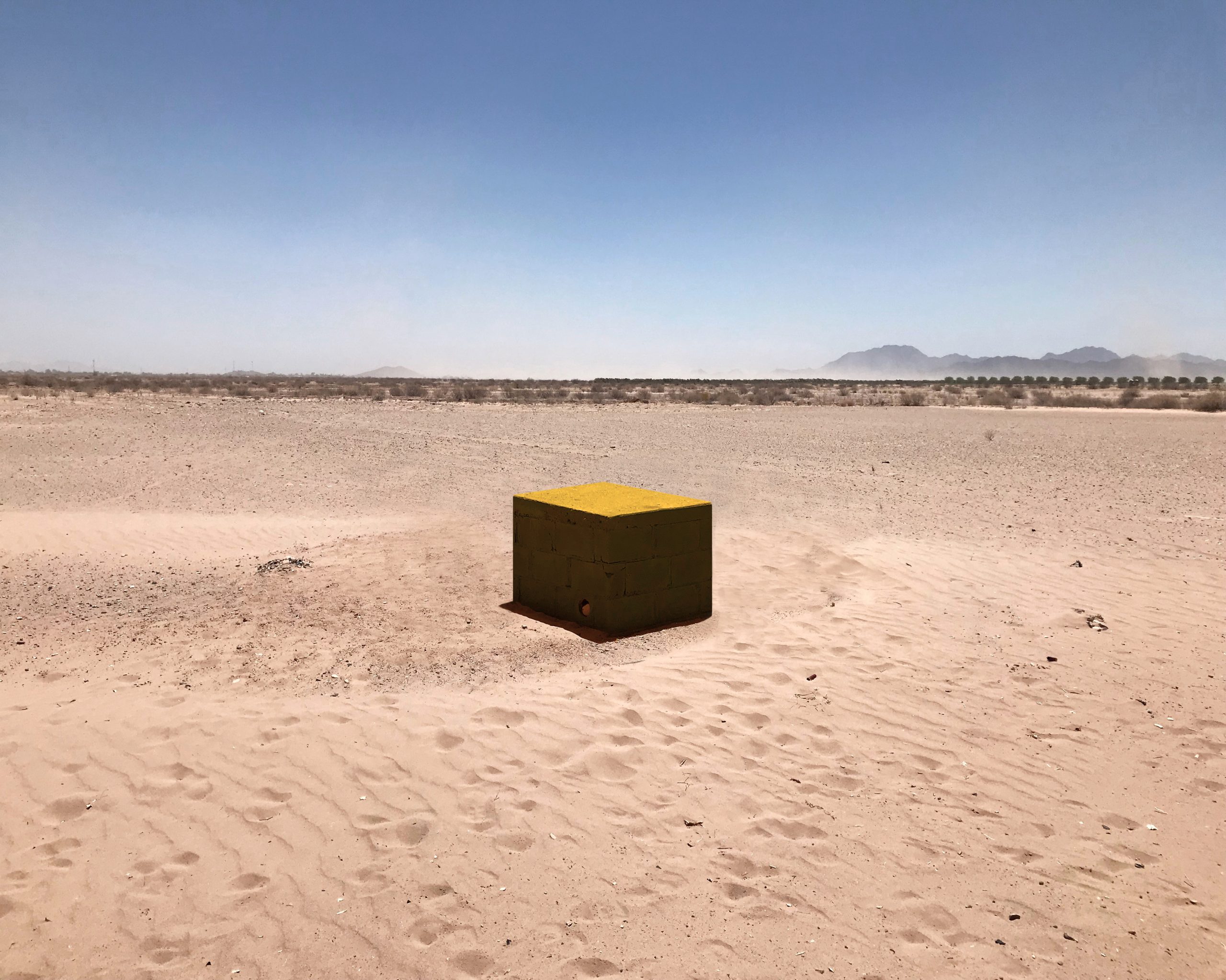

Miguel Fernández de Castro and Natalia Mendoza’s research for “The Absolute Restoration of All Things,” from the 2020 organizational grant to Storefront for Art and Architecture for the exhibition series “Building Cycles 2.”
Over the past 64 years, the Chicago-based Graham Foundation has awarded more than $40.3 million in grants to arts and architecture projects around the world. This year, the Graham Foundation issued $480,000 in grants to 36 organizations that “respond to today’s challenges, foster new connections across disciplines, and expand the field of architecture,” according to its press release.
Based in locations as varied as San Francisco, Mexico, Singapore, and Prague, this year’s slate of projects includes exhibitions, editorial projects. upcoming publications, student-led journals, critic residencies, and city-focused global correspondents.
A selection of grantees can be found below. A full list of the 36 projects can be found on the Graham Foundation website.

Soraia Teixeira’s “Public Devices for Therapy,” Besiktas Peer in Istanbul, 2020, from the 2020 organizational grant to Istanbul Foundation for Culture and Arts for the exhibition “Empathy Revisited: designs for more than one, 5th Istanbul Design Biennial.”
Project: Empathy Revisited: designs for more than one, 5th Istanbul Design Biennial
Grantee: Istanbul Foundation for Culture and Arts
Graham Foundation description: Designers adopt sensitive, diplomatic, sometimes therapeutic functions, with the aim of connecting us with one another—but also with the world around us: with other species, with microorganisms, soil, water, and even the universe. Aspiring to carve out a space of responsibility and nourish a culture of attachment towards the more-than-human, this biennial explores designs for multiple bodies, dimensions, and perspectives. The projects on display encourage us to rethink practices of care and civility at this critical moment in time and to collectively build new systems and structures for reconnecting. The biennial offers critical tools and alternative pathways in face of urgent climate and economic crises, a general state of social deprivation, and an exhausted global industrial model. Successful designs take into consideration not just their immediate user or client, but the many constituents and complex entanglements inherent to any design process.
Miguel Fernández de Castro and Natalia Mendoza’s research for “The Absolute Restoration of All Things,” from the 2020 organizational grant to Storefront for Art and Architecture for the exhibition series “Building Cycles 2.”
Project: Building Cycles 2
Grantee: Storefront for Art and Architecture
Graham Foundation description: Storefront for Art and Architecture continues its new curatorial framework, Building Cycles. Building upon the successful model developed during the first year of Building Cycles, the second year of the project begins in 2021. As part of this iteration, Storefront focuses on issues of landscape and territory, presenting four exhibitions along with accompanying events (in partnership with local and international groups and organizations). The program starts with an exhibition by Miguel Fernández de Castro and Natalia Mendoza called The Absolute Restoration of All Things, which focuses on the regeneration of a former mining community in Sonora, Mexico, following a legal mandate to return the land to its original form and to return all the gold extracted from it. Over the course of the year, the program unfolds to explore a diverse set of approaches to the use of land and the negotiation of borders and entities in physical space.

The Serpentine Pavilion 2020–21 designed by Counterspace, from the 2020 organizational grant to Serpentine Galleries for the exhibition “Serpentine Pavilion 2020–21 designed by Counterspace.”
Project: Serpentine Pavilion 2020–21, designed by Counterspace
Grantee: Serpentine Galleries
Graham Foundation description: Counterspace, directed by Sumayya Vally, Sarah de Villiers, and Amina Kaskar collaborates with the Serpentine on a series of off-site and online research projects, culminating in the opening of the Serpentine Pavilion in summer 2021. Using both innovative and traditional building techniques, Counterspace’s design is based on gathering spaces and community places around the city, folding London into the Pavilion structure in Kensington Gardens and extending a public program across London. The shapes of the Pavilion are created from a process of addition, superimposition, subtraction, and splicing of architectural forms, directly transcribed from existing spaces with particular relevance to migrant and other peripheral communities in London. On its 20th anniversary, more than ever, the Serpentine Pavilion is a place for debate and new ideas. Connecting to the Serpentine’s ambitious multi-platform project Back to Earth, the Pavilion and sets out to explore questions such as: How can architecture create a space where we are all linked, not ranked? How can architecture promote well-being? Can a structure evolve and change together with the environment? The Pavilion includes movable small parts that will be displaced to neighborhoods across London. Following community events at these locations, the parts return to the structure, completing it over the summer. Employing a mix of low-tech and high-tech approaches to sustainability, the Pavilion is constructed from a variety of materials, including custom K-Briq-modules and cork provided by Amorim. K-Briqs are made from 90% recycled construction and demolition waste and are manufactured without firing, with a tenth of the carbon emissions of normal bricks.

“Exodusters,” by Nicodemus Historic District, Nicodemus, Graham County, KS. Kansas Nicodemus Graham County, 1933. From the 2020 organizational grant to Black Reconstruction Collective for the exhibition of “Black Reconstruction Collective Manifesting Textile.”
Project: Black Reconstruction Collective Manifesting Textile
Grantee: Black Reconstruction Collective
Graham Foundation description: A multi-layered textile installation with the Black Reconstruction Collective’s Manifesting Statement and QR code created for exhibition at The Museum of Modern Art, as part of Reconstructions: Architecture and Blackness in America. The QR code links to a tab on the BRC’s website and includes the work of various design practices and collectives around the world who are also working on the ongoing and incomplete project of emancipation for the African Diaspora. The web platform serves as a living document that is continually updated.

Andi Schmied, Central Park view from the 100th floor Private Ballroom of Central Park Club, designed by Adrian Smith and Gordon Gill Architecture, 2020. From the 2020 organizational grant to Fenester for the publication “Private Views: A High-Rise Panorama of Manhattan.”
Project: Private Views: A High-Rise Panorama of Manhattan
Grantee: Fenester
Graham Foundation description: Despite the iconic nature of the Manhattan skyline, there are only a few places the public can see it from easily in its entirety, even if paying: the Empire State Building, the Rockefeller Center, One World Trade Center, and the Edge at Hudson Yards. All other elevated views are a private privilege, only available to owners of luxury penthouses. Posing as an apartment-hunting Hungarian billionaire, artist Andi Schmied accessed and documented the views of 25 of the city’s most exclusive high-rise properties. Showcasing the surreal strategies of persuasion used by real estate agents, and complemented by the essays of 12 authors, the book allows readers to bypass the gatekeepers of luxury real estate, guiding them through the sunset from Trump Tower, the private club of the tallest residential tower on the planet, and showing samples of the most luxurious materials, such as the Siberian marble used in soaking tubs overlooking the Statue of Liberty.







