

This blog is part of our series on the Future of Open Science. Read previous posts here.
In our last post, we talked about how preregistration can help facilitate a more objective and transparent assessment of science before authors even begin their investigation. In this piece, we explore the components of that investigation that can support reproducibility by making research more easily verifiable: data, code, and protocols.
Easily reproducible science removes barriers to advancement
Science is said to be facing a replication crisis, but increased openness of data, code, and protocols may help turn the tide.
Replication studies like this one have found that articles which made data, code, and protocols appropriately accessible, led to reproducible results. The availability of open data is also important to researchers when preparing their own work. More than 70% of respondents to the 2019 State of Open Data researcher survey reported that they are likely to reuse open datasets in their future research, and some rely on them to validate their own findings, increase collaboration, and avoid duplication.
Openly sharing data, protocols and code eliminates barriers for future researchers to replicate and build upon a previous study’s findings. Shared research outputs can stimulate new fields of enquiry, and even lead to an increase in the number of papers that research projects produce and are even associated with higher citation rates for the articles they describe.
However, while many studies confirm the efficacy of sharing practices, they also demonstrate large gaps in the accessibility of these outputs, even in journals with strong data sharing policies.
Promoting increased transparency
The good news is, favorable attitudes toward greater transparency appear to be on the rise. More and more researchers willing to curate and/or share their data while many publishers, like PLOS, have committed to data availability policies that require authors to make their data, code, and protocols accessible for their published research and promote more open culture.
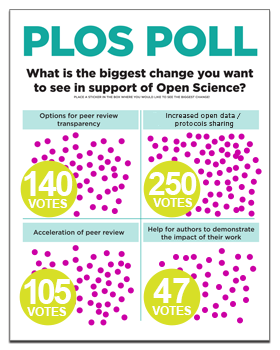
We’ve heard from our own community that they are ready and willing to participate in increased transparency. Researchers who met with us at conferences from Neuroscience to ASM Microbe have told us more options for open data and protocols sharing is the biggest change they want to see in Open Science.
 |
 |
 |
| SFN 2019 | ASM Microbe 2019 | ASHG 2019 |
So why isn’t sharing already the norm?
Some data sharing concerns are inherent to the research itself: patient records or data affecting vulnerable populations that cannot be shared publicly, privately funded research may encounter intellectual property issues. But researchers indicated that major barriers to sharing data and code are lack of resources (including time, funding, and organization skills) to do so, as well as uncertainty around receiving credit for their work.
Reproducibility is all of our responsibility
… And that includes institutions and publishers who play a major role in the creation of incentives for researchers to share more of their work. A significant amount of work has gone into obtaining and analyzing the data, designing the study protocol, and testing new code. Not to mention curating and storing each of these pieces for sharing. Researchers should be recognized for the time and energy they’ve put into this work.
External tools like protocols.io, Code Ocean, figshare and other enable researchers to document, collaborate, and share products of their research – with unique DOIs – as their work progresses. Publishers also play a key role in promoting these tools alongside developing consistent approaches to reporting transparency and providing resources and guidelines that make it easier for authors to share and get credit for their work. But there’s more we can do.
We’re asking ourselves how we can empower researchers to make their work more open, receive recognition for their contributions, and increase the discoverability of knowledge that we can all benefit from.
Researchers are telling us they want to see a change in how we share science. We’ll keep looking for ways to make that possible. Check back in with our Future of Open Science series next month where we’ll look at new outputs that increase the transparency of the research process.







