

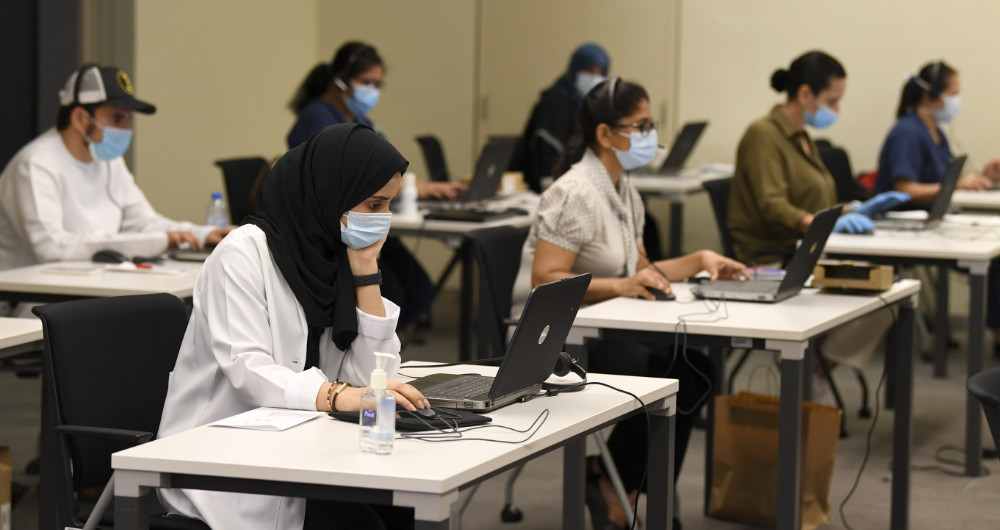
DUBAI: Conflict and turmoil may be the defining features of the past decade in the Middle East and North Africa, yet polling data suggests that those among the Arab region’s largest demographic — the youth — who are getting a college education are optimistic about the future.
Such a conclusion can be drawn from a research project entitled “What about youth?” that surveyed the opinions of students in Arab countries where people under the age of 25 account for more than 35 percent of the population.
The study, conducted by Dubai International Academic City, KPMG and The Talent Enterprise, was carried out over a period of 24 months, concluding in March 2020 at the onset of the coronavirus pandemic. The findings represent the views of more than 153,000 students from countries such as Saudi Arabia and the UAE, with Emiratis accounting for more than half of all regional nationals surveyed.

The findings show that almost eight out of 10 students are excited about what the future holds, while 88 percent believe the best is yet to come. A follow-up study is underway to examine whether the COVID-19 crisis, which has devastated the job market and wage growth across the Arab region, has dampened the optimism reflected in the survey.
Those who took part in the survey are keenly aware of the challenges they face when they enter the global job market. The majority of students (72 percent) are confident the skills they are learning at university, together with their personal attributes, will enable them to get a job anywhere in the world.
Their main concern, however, is that universities do not provide sufficient career guidance and professional support.
Marketa Simkova, director of KPMG’s People and Change practice, said that although students are more aware of what kinds of careers are open to them in the age of information, they still want personal guidance.
“A missing piece is an awareness of their personal aptitude and preferences, and an understanding of which careers will be most meaningful and gratifying for them,” Simkova told Arab News.

Radhika Punshi, an organizational psychologist, human capital expert and managing director of Dubai-based The Talent Enterprise, said the survey shows students feel “personally confident about their own capabilities and skills,” but lack formal and informed guidance.
“This is evident from the finding that only 48 percent of students would study the same course again, and only 49 percent would study in the same university again, if given a choice,” she said.
Putting this trend into even sharper relief, a majority of students in the survey (over 60 percent) said they depend on family and friends for career advice, while just 3 percent said they rely on a career-guidance counsellor.
“Even with the best intentions, family or friends are not going to be fully aware of all the various career possibilities and future jobs that exist,” Punshi said. “There is also familial pressure, where kids of doctors are expected to be doctors, kids of engineers expected to be engineers and so on.”
In her line of work, Punshi often meets students who are scared to have “courageous career conversations” with their families.
“One thing that would help is for youth to have an objective assessment of their strengths, skills and interests, both towards the end of their school years, and mid-way through university to steer their future career decisions,” she said.
Only then will students feel prepared to have career-focused discussions at home.
Simkova said one way to remedy this is for universities to partner up with employers to immerse students in their preferred career paths through access to internships and alumni mentorship programs.

“This will help provide them with a comprehensive view of the kinds of careers they can craft for themselves,” she said.
Additionally, universities could hire career counselors and employer engagement teams with extensive networks of potential employers, Simkova suggested. Through these channels, students could be given access to corporate presentations that allow employers to explain what they have to offer and what they are looking for in future hires.
Not only could this facilitate the hiring process — it could also provide job seekers with reliable options that offer career assessments based on their personality, skills and preferences, she said.
For her part, Punshi said the Gulf Cooperation Council (GCC) countries and other Arab governments could share more locally relevant labor market intelligence about future jobs and skill demands to help to better align talent supply and demand.
“There is a huge need for a regionally relevant career guidance qualification program to train career guidance counsellors through a curriculum that addresses local socio-cultural issues and the labor-market landscape,” she said.

At the same time, employers must be incentivized to engage more with education and to offer internships and work study programs.
Another interesting finding in the survey was that women (14 percent) are more likely than men (12 percent) to hold out for their dream job.
“The data indicates that women tend to be more selective in their choice of a dream job and are willing to wait longer to shape a career that fits their aspirations,” Simkova said.
While more data is needed to explore the reason for this gap, she felt this could be bridged by building a gender-inclusive culture and allowing a conversation about diversity to influence how organizations recruit and develop their staff.
Separate research indicates women and girls in the Arab region on average tend to underestimate their abilities and performance.
“There is a significant confidence gap,” said Punshi. “For example, women are more likely to apply for a promotion only if they believe they meet 100 percent of the criteria, where men will apply even if they meet 50 percent of the requirements.”
Research conducted by Carnegie Mellon University found that men initiate salary negotiations four times as often as women, and that when women do negotiate, they ask for just 30 percent of the money that men request.
The “What about youth?” survey echoes these findings — that girls are more likely to compromise on salary than boys.
“There are many reasons for this — societal, socio-cultural, familial — with deep-rooted beliefs and stereotypes all over the world, and a lot more needs to be done, right from the early years, into higher education, into employment, to really shift the game around gender inclusion,” said Punshi.
Like many experts in her field, she believes that although the region continues to make significant strides in gender equality in the workplace, especially with growing labor force participation among women in Saudi Arabia and equal pay regulations in UAE, “we can always do more.”
Twitter: @jumana_khamis







