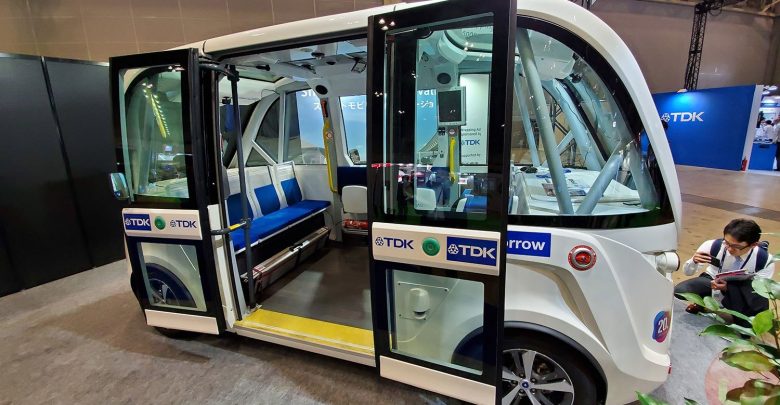
Allied Analytics: The key players analyzed in this self-driving bus market report are AV Volvo, Continental AG, Volkswagen AG, Tesla, Scania AB, Daimler AG, Proterra, Hyundai Motor Company, Hino Motors, Ltd., and Navya.
According to a recent report published by Allied Market Research, titled, Self-Driving Bus Market by Level of Automation and Component: Global Opportunity Analysis and Industry Forecast, 2020-2026,the global self-driving bus market size is anticipated to value at $6.81 billion in 2019, and is projected to reach $74.52 billion by 2026, registering a CAGR of 40.5% from 2020 to 2026.
self-driving bus market based on level of automation, the Level 3 segment is anticipated to dominate the global self-driving bus market in 2019, in terms of revenue. In addition, based on component, the hardware segment is expected to lead the market throughout the forecast period. Presently, North America is the highest revenue contributor, followed by Europe, LAMEA, and Asia-Pacific.
Download Report Sample at https://www.alliedmarketresearch.com/request-sample/6215
Presently, North America dominates the market, followed by Europe, LAMEA, and Asia-Pacific. U.S. dominated the North America self-driving bus market share in 2019 and is anticipated to exhibit a remarkable growth during the forecast period.
Self-driving buses require high amount of computational power as the amount of data generated is enormous. Autonomous vehicles interact with other intelligent transportation systems, which generate large amount of data, therefore, need a proper data storage and processing system. Furthermore, they require a large set of datasets for training. Neural networks of autonomous vehicles need to be trained on representative datasets, which include examples of all possible conditions including driving, weather, roads, and other situational conditions.
Interested to Procure The Data? Inquire here at https://www.alliedmarketresearch.com/purchase-enquiry/6215
Level 3 autonomous vehicles are capable of environment detection and can make informed decisions such as accelerating and decelerating past a moving vehicle based on the data collected by sensors from the environment. However, vehicles with level 3 automation still require human override and must remain alert and ready to take control. The major difference between level 3 and level 4 autonomous driving is that level 4 vehicles can take control in case there is a system failure or if things go wrong while driving. In addition, there is no need of human override to control these vehicles. However, driver can take up the option to manually override. Level 5 automation eliminates the need for a steering wheel and gas and brake pedals. Humans role shifts from being a driver to just a passenger, where they need to tell the vehicle about destination and it can drive them anytime, anywhere, under any conditions. Humans have no other involvement in driving the vehicle, they only control the destination.
All the hardware components which are used for the functioning of self-driving buses are studied under the hardware segment. Hardware is divided into three categoriessensors, processors, and actuators. The sensors used in driverless cars consist of ultrasonic sensors, cameras, LiDAR, and RADAR. Software for self-driving buses consist of artificial intelligence (AI), image processing, face recognition, threat detection, and scattered laser beam detection. Services include training to operate these vehicles in a proper way, maintenance of vehicles to function well after using, and compliance with testing and design criteria required to launch a self-driving bus. These services also cover full vehicle homologation and testing, cellular regulatory carrier approvals, and FCC compliance.
Schedule a Call with Our Analysts/Industry Experts to Find Solution for Your Business at https://www.alliedmarketresearch.com/connect-to-analyst/6215
Factors such as reduction in traffic congestion due as it is capable of controlling pace of a vehicle on its own and growth in connected infrastructure are anticipated to drive the growth of the global self-driving bus market. However, high manufacturing cost and data management challenges are the factors hindering the growth of self-driving bus market. Further, development of smart cities is anticipated to provide remarkable growth opportunities for the players operating in the self-driving bus market.
Similar Reports on Self-Driving Technology We Have:
Self-Driving Truck Market by Level of Autonomy (Level One, Level Two, Level Three, and Level Four) and Industry Vertical (Logistics, Construction Manufacturing, Mining, and Port) Global Opportunity Analysis and Industry Forecast, 2020-2025
World Driverless Car Market Opportunities and Forecasts, 2014 2022
Autonomous Vehicle Market by Level of Automation (Level 3, Level 4, and Level 5) and Component (Hardware, Software, and Service) and Application (Civil, Robo Taxi, Self-driving Bus, Ride Share, Self-driving Truck, and Ride Hail) Global Opportunity Analysis and Industry Forecast, 2019-2026
Autonomous Ships Market by Level of Autonomy (Semi-autonomous and Fully-autonomous), Ship Type (Commercial, Passenger, and Defense), and Fuel Type (Carbon Neutral Fuels, LNG, Electric, and Heavy Fuel Oil/Marine Engine Fuel): Global Opportunity Analysis and Industry Forecast, 20202030
Autonomous Train Market by Grade of Automation (GOA 1, GOA 2, GOA 3, and GOA 4), Train Type (Passenger Train and Freight Train), Technology (CBTC, ETRMS, ATC, and PTC), and Component (Camera, Accelerometer, Odometer, Tachometer, Radio Set, and Others): Global Opportunity Analysis and Industry Forecast, 20192026
About Allied Market Research
Allied Market Research (AMR) is a full-service market research and business-consulting wing of Allied Analytics LLP, based in Portland, Oregon. AMR provides global enterprises as well as medium and small businesses with unmatched quality of Market Research Reports and Business Intelligence Solutions. AMR has a targeted view to provide business insights and consulting to assist its clients to make strategic business decisions and achieve sustainable growth in their respective market domain.
AMR introduces its online premium subscription-based library Avenue, designed specifically to offer cost-effective, one-stop solution for enterprises, investors, and universities. With Avenue, subscribers can avail an entire repository of reports on more than 2,000 niche industries and more than 12,000 company profiles. Moreover, users can get an online access to quantitative and qualitative data in PDF and Excel formats along with analyst support, customization, and updated versions of reports.