
GLOBAL RESEARCH SYNDICATE
No Result
View All Result
  • Login
  • Latest News
  • Consumer Research
  • Survey Research
  • Marketing Research
  • Industry Research
  • Data Collection
  • More
    • Data Analysis
    • Market Insights
  • Latest News
  • Consumer Research
  • Survey Research
  • Marketing Research
  • Industry Research
  • Data Collection
  • More
    • Data Analysis
    • Market Insights
No Result
View All Result
globalresearchsyndicate
No Result
View All Result
Home Data Collection

Securing an Agile and Hybrid Workforce

globalresearchsyndicate by globalresearchsyndicate
October 9, 2020
in Data Collection
0
Securing an Agile and Hybrid Workforce
0
SHARES
5
VIEWS
Share on FacebookShare on Twitter

Guest article by Andrea Babbs, UK General Manager, VIPRE

2020 has forced businesses to revise many of their operations. One significant transition being the shift to a remote working model, for which many were unprepared in terms of equipment, infrastructure and security. As the government now urges people to return to work, we’re already seeing a shift towards a hybrid workforce, with many employees splitting their time between the office and working from home.

As organisations are now reassessing their long-term office strategies, front and centre to that shift needs to be their IT security underpinned by a dependable and flexible cloud infrastructure. Andrea Babbs, UK General Manager, VIPRE, discusses what this new way of working means long-term for an organisation’s IT security infrastructure and how businesses can successfully move from remote working to a secure and agile workforce.

Power of the Cloud

In light of the uncertainty that has plagued most organisations, many are looking to options that can future-proof their business and enable as much continuity as possible in the event of another unforeseen event. The migration of physical servers to the Cloud is therefore a priority, not only to facilitate agile working, but to provide businesses with greater flexibility, scalability and more efficient resources. 

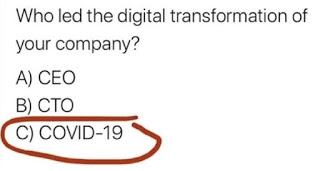
COVID-19 accelerated the shift towards Cloud-based services, with more data than ever before now being stored in the Cloud. For those organisations working on Cloud-based applications and drives, the challenges of the daily commute, relocations for jobs and not being able to ‘access the drive’ are in the past for many. Cloud services are moving with the user – every employee can benefit from the same level of security no matter where they are working or which device they are using. However, it’s important to ensure businesses are taking advantage of all the features included in their Cloud subscriptions, and that they’re configured securely for hybrid working. 

Layered Security Defence

Cloud-powered email, web and network security will always underline IT security defences, but these are only the first line of defence. Additional layers of security are also required to help the user understand the threat landscape, both external and internal. Particularly when working remotely with limited access to IT support teams, employees must be ready to question, verify the authenticity and interrogate the risk level of potential phishing emails or malicious links. 

With increased pressure placed on users to perform their roles faster and achieve greater results than ever before, employees will do what it takes to power through and access the information they need in the easiest and quickest way possible. This is where the cloud has an essential role to play in making this happen, not just for convenience and agility but also to allow users to stay secure – enabling secure access to applications for all devices from any location and the detection and deletion of viruses – before they reach the network. 

Email remains the most-used communication tool, even more so when remote working, but it also remains the weakest link in IT security, with 91%of cybercrimes beginning with an email. By implementing innovative tools that prompt employees to double-check emails before they send them, it can help reduce the risk of sharing the wrong information with the wrong individual. 

Additional layers of defence such as email checking tools, are removing the barriers which slow the transition to agile working and are helping to secure our new hybrid workforce, regardless of the location they’re working in, or what their job entails. 

Educating the User

The risk an individual poses to an organisation can often be the main source of vulnerability in a company’s IT infrastructure. When remote working became essential overnight, businesses faced the challenges of malware spreading from personal devices, employees being distracted and exposing incorrect information and an increase in COVID-related cyber-attacks. 

For organisations wanting to evolve into a hybrid work environment, their IT security policies need to reflect the new reality. By re-educating employees about existing products and how to leverage any additional functionality to support their decision making, users can be updated on these cyber risks and understand their responsibilities.

Security awareness training programmes teach users to be alert and more security conscious as part of the overall IT security strategy. In order to fully mitigate IT security risks and for the business to benefit from an educated workforce, both in the short and long term, employees need to change their outdated mindset. 

Changing the Approach
The evolution of IT and security over the past 20 years means that working from home is now easily achievable with cloud-based setups, whereas in the not too distant past, it would have been impossible. But the key to a successful and safe agile workforce is to shift the approach of full reliance on IT, to a mindset where everyone is alert, responsible, empowered and educated with regular training, backed up by tools that reinforce a ‘security first’ approach. 

IT departments cannot be expected to stay one step ahead of cybercriminals and adapt to new threats on their own. They need their colleagues to work mindfully and responsibly on the front lines of cyber defence, comfortable in the knowledge that everything they do is underpinned by a robust and secure IT security infrastructure, but that the final decision to click the link, send the sensitive information or download the file, lies with them. 

Conclusion

As employees prove they can work from home productively, the role of the physical office is no longer necessary. For many companies, it is a sink or swim approach when implementing a hybrid and agile workforce. Introducing and retaining flexibility in operations now will help organisations cope better with any future unprecedented events or crises.

By focusing on getting the basics right and powered by the capabilities of the Cloud, highlighting the importance of layered security and challenging existing mindsets, businesses will be able to shift away from remote workers being the ‘exception,’ to a secure and agile workforce as a whole.

*** This is a Security Bloggers Network syndicated blog from IT Security Expert Blog authored by SecurityExpert. Read the original post at: http://feedproxy.google.com/~r/securityexpert/~3/BGpvjmwj0D0/securing-agile-and-hybrid-workforce.html


Related Posts

How Machine Learning has impacted Consumer Behaviour and Analysis
Consumer Research

How Machine Learning has impacted Consumer Behaviour and Analysis

January 4, 2024
Market Research The Ultimate Weapon for Business Success
Consumer Research

Market Research: The Ultimate Weapon for Business Success

June 22, 2023
Unveiling the Hidden Power of Market Research A Game Changer
Consumer Research

Unveiling the Hidden Power of Market Research: A Game Changer

June 2, 2023
7 Secrets of Market Research Gurus That Will Blow Your Mind
Consumer Research

7 Secrets of Market Research Gurus That Will Blow Your Mind

May 8, 2023
The Shocking Truth About Market Research Revealed!
Consumer Research

The Shocking Truth About Market Research: Revealed!

April 25, 2023
market research, primary research, secondary research, market research trends, market research news,
Consumer Research

Quantitative vs. Qualitative Research. How to choose the Right Research Method for Your Business Needs

March 14, 2023
Next Post
Logistics Services Software Market Will Showcase Positive Impact During 2020-2024 | Growing E-commerce Industry to Boost the Market Growth | Technavio | Business

Logistics Services Software Market Will Showcase Positive Impact During 2020-2024 | Growing E-commerce Industry to Boost the Market Growth | Technavio | Business

Categories

  • Consumer Research
  • Data Analysis
  • Data Collection
  • Industry Research
  • Latest News
  • Market Insights
  • Marketing Research
  • Survey Research
  • Uncategorized

Recent Posts

  • Ipsos Revolutionizes the Global Market Research Landscape
  • How Machine Learning has impacted Consumer Behaviour and Analysis
  • Market Research: The Ultimate Weapon for Business Success
  • Privacy Policy
  • Terms of Use
  • Antispam
  • DMCA

Copyright © 2024 Globalresearchsyndicate.com

Welcome Back!

Login to your account below

Forgotten Password?

Retrieve your password

Please enter your username or email address to reset your password.

Log In
This website uses cookies to improve your experience. We'll assume you're ok with this, but you can opt-out if you wish. Cookie settingsACCEPT
Privacy & Cookies Policy

Privacy Overview

This website uses cookies to improve your experience while you navigate through the website. Out of these cookies, the cookies that are categorized as necessary are stored on your browser as they are essential for the working of basic functionalities of the website. We also use third-party cookies that help us analyze and understand how you use this website. These cookies will be stored in your browser only with your consent. You also have the option to opt-out of these cookies. But opting out of some of these cookies may have an effect on your browsing experience.
Necessary
Always Enabled
Necessary cookies are absolutely essential for the website to function properly. This category only includes cookies that ensures basic functionalities and security features of the website. These cookies do not store any personal information.
Non-necessary
Any cookies that may not be particularly necessary for the website to function and is used specifically to collect user personal data via analytics, ads, other embedded contents are termed as non-necessary cookies. It is mandatory to procure user consent prior to running these cookies on your website.
SAVE & ACCEPT
No Result
View All Result
  • Latest News
  • Consumer Research
  • Survey Research
  • Marketing Research
  • Industry Research
  • Data Collection
  • More
    • Data Analysis
    • Market Insights

Copyright © 2024 Globalresearchsyndicate.com



