

As the Nelson-Atkins Museum of Art reopens to the public this season, the city’s predominant cultural institution is experiencing a generational transformation in its curatorial ranks. This is not totally a result of the economic chaos caused by the COVID-19 pandemic, as vacancies and change had been occurring before the crisis settled in on us. But the shutdown and continuing uncertainty have turned budget-tightening and mission-gazing into urgent priorities. As a result, leadership vacancies and organizational rearrangement become a necessary part of those discussions.
What the curatorial turnover will mean for the museum’s exhibit program, philosophy or visitors remains to be seen. But it does present a moment to reflect.
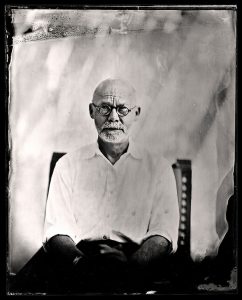
One of the most recent departures from the museum was that of Gaylord Torrence, curator of Native American art, who retired this summer from the Nelson with plans to remain very much active in the field. Torrence, whom I count as a good friend, arrived in Kansas City in 2002. His mission was to build and reimagine the museum’s Native American collection, imbuing what had been a traditional, easy-to-overlook corner of interest with a new sense of meaning and a new level of respect.
Supported by such dedicated donors as the late Morton Sosland and his wife, Estelle, Torrence was able to go on an acquisition spree. This was not a shop-till-you-drop affair, but an effort intensely focused on quality, rarity, connoisseurship and cultural distinction. The Soslands’ gift of 32 pieces of Northwest Coast art anchored the new effort. Torrence is credited with bringing more than 200 new objects into the department, from carved-stone tools thousands of years old to up-to-the-minute creative expressions by Native American artists.
In 2009, the Nelson-Atkins heralded Torrence’s efforts by opening a startlingly elegant and immensely rewarding sequence of rooms devoted to the traditions and art of Native peoples across the continent. This was no musty cabinet of distant curiosities, but a vibrant and elegantly designed space filled with figurative voices speaking with one another and with us across time and cultures.
Torrence’s survey exhibition of Plains Indian art in 2014, in partnership with museums in Paris and New York, presented a landmark showcase for the collection and gave the museum’s efforts international exposure.
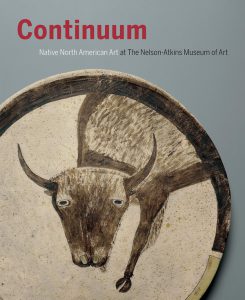
Now Torrence and colleagues have gathered all those voices, all that artwork and cultural legacy, in a knockout book that celebrates the collection. It’s titled “Continuum: Native North American Art at The Nelson-Atkins Museum of Art” (University of Washington Press; $46).
Torrence enlisted Richard West Jr., founding director of the National Museum of the American Indian in Washington, D.C., and currently president and CEO of the Autry Museum of the American West in Los Angeles, to contribute an essay. West sets the stage by considering how the field has transformed from predominantly anthropological views of Indigenous object-making to understanding these cultural activities in terms of art: “Native art,” West writes, “is finally reaching the point where it is respected and valued on Western terms, and it has achieved this by not letting go of its own integrity.”
To admire the silvery sheen of Lonnie Virgil’s ceramic jars or the Arikara bison shield from 1850 or Wendy Red Star’s theatrical “Four Seasons” self-portrait photos is to be invited into an infinitely diverse world of cultural engagement and understanding.
The Nelson’s collection, says David Penney, associate director for museum research and scholarship at the National Museum of the American Indian, reflects a “combination of history, age, formal characteristics that play to modernist connoisseurship, and a notion of spirituality. Those are the kinds of things that Gaylord values.”
Torrence, soft-spoken and good-humored, credits the generosity of donors and a fruitful collaboration with Indigenous artists and scholars for the success of the Nelson’s program.
In our city, the Nelson’s Native American collection provides a counterweight to the odious display of cultural misappropriation that has occurred under the influence of the world-champion football team. The debate returned this summer over the Chiefs’ inability to discourage its fans from the face-painting, headdress-wearing and tomahawk-chopping, which Torrence called “unsupportable.”
The team has vowed to work on it.
That’s all of a piece for Native Americans, whose identity within American culture remains complicated and, despite ubiquitous imagery, mostly out of view.
If Torrence can be said to have left a legacy at the Nelson-Atkins, it’s the vision to present those cultural complexities within the timeless practice of making art. With his departure, along with the impending retirement of Bruce Hartman at the Nerman Museum of Contemporary Art, the city is losing two important and transformational champions of Native American art. Now what?







