

The ongoing COVID-19 pandemic, while causing much tragedy and distress, has, at the same time, spawned a lot of research in diverse areas. In fact, apart from research in epidemiology the WHO (2020) lists a staggering number of research papers on COVID-19 in a variety of disciplines in the last few months. Much of the research in the Indian context has focused on the devastating effects of the lockdown imposed by the Government of India from 24 March 2020 onwards (Kannan 2020; A Kumar 2020; Roy 2020). Another line of enquiry has focused on the spread of COVID-19 across the country. Almost all of these papers are still in a pre-publication form given the limited time available, and very few papers, if at all, have gone through any refereeing process (Singh and Adhikari 2020; Simha et al 2020; S Kumar 2020 and Pujari and Shekatkar 2020).
The characteristics of the COVID-19 pandemic suggest that there is much that one can draw from the literature in the theory of public goods. The classic reference here is, of course, Samuelson (1954) but the main results are well discussed in Atkinson and Stiglitz (1980) and also in Gruber (2013). The typical characteristics of a pure public good are (i) non-rivalry in consumption or equal consumption for all, and (ii) inability to exclude non-paying individuals from the benefits of the good. Since we are dealing with a pandemic that delivers negative benefits, its characteristics have to be carefully understood. Hence, what we are dealing with is not a public good but a public bad. However, the first characteristic of a public good still applies: one person suffering from the disease does not prevent other persons from “consuming” the disease at the same point of time. The COVID-19 is not used up when it afflicts one person and an additional person can be infected without reducing the opportunity for anyone else to be infected. In the public goods literature this is called additional provision at zero marginal cost (Oakland 1987). The second characteristics of non-exclusion has to be understood differently in the case of a public bad. An individual can exclude themselves from the negative benefits of a public bad only at a great cost like by installing air purifiers to improve the air quality at home. In the case of a pandemic, such measures include social distancing and lockdowns that are being currently enforced in many countries.
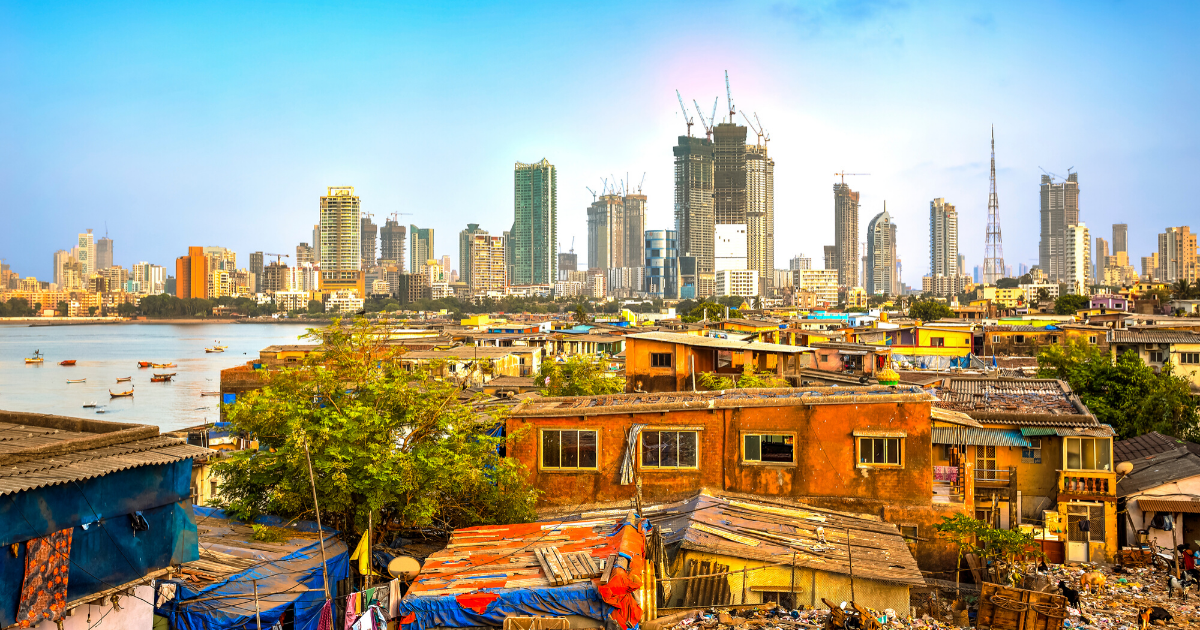
At one level one can think of the spillovers of the public bad of the COVID-19 pandemic to be universal and this is certainly true given the spread of the disease across almost all countries of the world. However, in this article, I am concerned with a more limited concept of a public bad. I am going to consider the COVID-19 pandemic as a local public bad, which is the analogue of a local public good with limited spillovers (Tiebout 1956; Howell-Moroney 2008; Oates 2006). The focus of this article is the spread of the COVID-19 in the city of Mumbai and we consider spillover of this public bad across geographical areas of the city. Given that the transmission of the disease is from person to person, the spread of the disease is likely to be very rapid within the city wherein a lot of movement takes place across geographical areas or wards as they are called in Mumbai.
The 2011 Census gives details on how much the individuals travel for work on a daily basis in Mumbai Suburban and Mumbai City (Office of the Registrar General and Census Commissioner 2011). I have computed the weighted average of the distance travelled in the two broad divisions of Mumbai with the weights depending on the number of persons travelling over specified distances. In the Mumbai Suburban areas, the average distance travelled is about 17 kilometres (km), while in the Mumbai City area, the average distance travelled is about 13 km. Of course, spread of the infection is not just related to the distance travelled but also to the number of persons travelling. The study of travel habits in Mumbai Suburban shows that out of the 3.5 million persons covered in the 2011 Census about 20% either did not travel at all for work or did not report the distance they had travelled. That would mean the remaining 2.8 million persons from Mumbai Suburban areas travelled 17 km on an average on a daily basis. In Mumbai City area, about 0.9 million persons travelled an average distance of 13 km each day. Given that this data is from the 2011 Census we can safely assume that the numbers could have increased substantially during the last nine years.
So, the important point to note is that, till the lockdown was imposed there was a significant movement of people across the wards in the city of Mumbai and it most certainly lead to widespread infection across geographical areas within the city. This is not to deny that some of the infection must have been exported from Mumbai to other of parts of India as well leading to spillovers over a much wider geographical area. However, given the large number of persons using Mumbai’s train, bus and other public transport services, the spillover effects are likely to be large within the city. Since proximity is an important factor in the transmission of COVID-19, this article focuses on ward-level infections in the city of Mumbai.
In this article, I seek to examine the spatial effects of COVID-19 using techniques developed in spatial econometrics. I have come across just a couple of papers which have employed these techniques like Guliyev (2020) for China and Su et al (2020) which is a cross-country study. I propose to employ spatial econometric techniques to examine the spread of COVID-19 in the wards of Mumbai City. The entire district of Greater Mumbai has been divided into wards for administrative convenience and this is the focus of the exercises in this article (Directorate of Census Operations 2011; Municipal Corporation of Greater Mumbai no date).
The plan of this article is as follows. First, we proceed to discuss the data I have used and the spatial econometrics methodology applied for this analysis. Then I proceed to report the empirical exercises using both cross-section as well as panel data and finally I sum up the conclusions of the study.
Data
The Municipal Corporation of Greater Mumbai (MCGM) has been publishing ward-wise data of COVID-19 cases on its Twitter handle (@mybmc) from 4 April 2020. And @mybmc published such data on a daily basis till 17 April 2020, after which publication became irregular. Data then became again available from 21 April to 23 April and the last date for which data is available was 25 April. On 1 May @mybmc informed that it was suspending publication of ward-level data and such data which would now be available only after being vetted by Indian Council of Medical Research (see Appendix A [p 20] for the announcement by @mybmc). Thus, we are left with only 18 days of data at the ward level and since there are 24 wards in Mumbai we have 24 data points for each of the 18 days.
Modelling Spatial Interdependence
Standard models for estimating the effect of a set of regressors on an outcome variable are given as follows:
y = Xβ + ε … (1)
where
y = (n × 1) vector of the outcome variable
X = (n × k) matrix containing the vectors of regressors
β = (k × 1) vector of coefficients
ε = (n × 1) vector of the disturbance term that is assumed to be identically and independently distributed across the observations.
The usual approach for estimating equation (1) has been to ignore spatial effects. However, ignoring spatial effects when they are in fact present leads to econometric problems. LeSage (2008) points out that the usual regression methods do not account for dependence between observations, which often arises when observations are collected from points or regions located in space. In time series models, time dependence is an accepted way to model persistence in the dependent variable but cross-section data, generally, do not take into consideration the effect of neighbouring units. Spatial econometrics employs techniques that explicitly allow for interdependence among cross-section units that share
geographic proximity (LeSage 2008).
The exact nature of the problem depends on the form of spatial autocorrelation that is present. Anselin and Rey (1991) have pointed out two kinds of spatial effects: substantive spatial dependence and nuisance dependence. The substantive form of dependence results from economic variables that involve spatial interaction, while nuisance dependence results from ignoring relevant explanatory variables while modelling the outcome variable, thus leading to spatially autocorrelated residuals. Using ordinary least squares (OLS) estimation in the presence of spatial dependence will lead to biased or inefficient parameter estimates depending on the form of spatial autocorrelation.
The most general form of the spatial autoregressive model (called the SAC model) is given by LeSage (1999) and also Elhorst (2010):
y = ρW1y + Xβ + ε … (2a)
ε = λW2ε + u … (2b)
u ~ N(0, σ2In) … (2c)
W1 and W2 are (n × n) known spatial weights matrices. These matrices define the nature of spatial relations that may exist between the cross-section units. Even though such matrices are often based on notions of contiguity or distance between the cross-section units, they can be set up in a variety of ways. In general, the element
wij = 1, if some condition relating cross-section unit i with cross-section unit j is satisfied
= 0, otherwise
The W matrix is symmetric and, by convention, has zeros on the main diagonal. Usually, a transformation applied to wij ensures that W has row-sums of unity. The parameter ρ (in equation 2a) indicates spatial lag dependence and λ (in equation 2b) is the spatial error autocorrelation coefficient. Setting W2 = 0 in (2b) leads to the spatial autoregressive model (SAR). This model is analogous to a lagged dependent variable model for time series data. On the other hand, setting W1 = 0 in (2a) leads to a spatial autoregressive error model (SEM).
The SAR model exhibits endogeneity that can be taken into account by instrumental variable techniques, but, as detailed in Anselin (1988), should preferably be solved using an appropriate maximum likelihood estimator. On the other hand, the nuisance dependence in the SEM model is less serious because OLS estimators remain unbiased; nonetheless, the estimators are inefficient. This paper has employed maximum likelihood estimation (MLE) for estimating the SAR, SEM and SAC models.
Empirical Exercises
Preliminary examination of the data: The data that we use are collected at the ward level in the city of Mumbai. The geographical location of the wards in Mumbai is given in Figure 1. The characteristics of the wards are summarised in Table 1.


There is a huge variation in the land area of Mumbai wards. The smallest is ward C while the largest is ward S. The minimum number of cases on 4 April were in ward B while the maximum number were in ward GS. For 25 April, the last date for which data is available, the minimum number of cases were in ward RN while the maximum number were in ward GS.
In Figure 2 and Figures 3 to 5 (pp 18–19) we show the path of the number of COVID-19 cases over the time period for which data is available. The data is presented after transforming the number of cases to logarithms. We can see that, except for wards A, B, FS and ME none of the other wards show a flattening of the curve.


Spatial Cross-section Analysis
I begin my analysis of the spillover effect of COVID-19 across the wards of Mumbai by looking at a series of cross-section regressions. The W matrix is easily constructed for the wards of Mumbai:
wij = 1 if ward i and ward j share a common boundary
= 0 otherwise.
I have used the concept of Queen contiguity rather than the more stringent Rook contiguity to prepare my W matrix (INSEE 2018). Spatial regressions were estimated for each of the dates for which data was available for Mumbai. Even though we had data for 18 days, Table 2 (p 19) reports results for eight days.1 For each day, we estimate three regression equations, namely SAC, SAR and SEM.

Rho is the coefficient of spatial autoregression in the SAC and SAR models and measures the interaction across wards. Lambda is a measure of the spatial dependence in the disturbance terms in the SAC and SEM models. For the SAC models, rho is significant for all the days reported in Table 2. Lambda is significant only for 8 April. The SAR models show that the strength of the spatial interaction increased from 17 April onward as the disease progressed in the city. A similar result is visible for the SEM models from 21 April onward.
It may be mentioned that the above models were also estimated in the presence of two alternative explanatory variables. One was the daily growth rate and the corresponding doubling period. The first such growth rate that we have is dated 9 April and has been computed over the number of cases on 5 April, that is, after a gap of four days. Taking a longer time span would have left us with fewer observations. It may be mentioned that both these variables were introduced only in the regressions computed from 9 April onwards. The introduction of either of the explanatory variables, that is, growth rate or doubling rate, had no effect on the significance of the spatial effects.
Spatial Panel Analysis
The spatial data that we have used ranges from 9 April to 17 April which was the longest continuous time period available considering the fact that we have also used growth rate of COVID-19 cases as a response variable as explained earlier. Table 3 presents results of our panel estimation exercises. All the models reported are fixed effects models and we have estimated the spatial effects without any explanatory variables present.

In all the models reported in Table 3, we have strong evidence of spatial effects. Rho, the coefficient of spatial autoregression is significant in the SAC and the SAR models while lambda the measure of spatial dependence in the error terms is significant in the SAC and the SEM models. This suggests that there is strong spillover effect of COVID-19 cases and growth rates across the wards of Mumbai.
Conclusions
This article has examined the spillover effect of the COVID-19 epidemic as a local public bad. The evidence from the estimated spatial models is that there are strong spillover effects of COVID-19 cases in both panel and cross-section data. It is important to note that even though the countrywide lockdown and social distancing began in India on 24 March, the results of Table 2 show that the spillover effects became more pronounced after 21 April, that is, almost a month after the lockdown. Does this mean that lockdown was not effectively imposed in Mumbai or that given the density of its population it is almost impossible to maintain social distancing in Mumbai? These are profoundly important questions that must be answered since at some point Mumbai’s stringent lockdown will be lifted. If the COVID-19 has not been effectively controlled by then, the results of our exercises indicate that, given how strong the spatial effects are, a second round of transmission remains a distinct possibility.
Note
1 The results for the other days are available with the author.
References
Anselin, L (1988): “Spatial Econometrics: Methods and Models,” Netherlands: Springer Science and Business Media.
Anselin, L and S Rey (1991): “Properties of Tests for Spatial Dependence in Linear Regression Models,” Geographical Analysis, Vol 23, pp 112–31.
Atkinson, A B and J E Stiglitz (1980): “Lectures in Public Economics,” New York: McGraw-Hill.
Auerbach, A J and M Feldstein (eds) (1987): Handbook of Public Economics, Amsterdam: Elsevier.
Directorate of Census Operations (2011): “District Census Handbook: Mumbai Suburban,” viewed on 8 May 2020, http://censusindia.gov.in/2011census/dchb/2722_PART_B_DCHB_%20MUMBAI%20(SUBURBAN).pdf.
Elhorst, J P (2010): “Applied Spatial Econometrics: Raising the Bar,” Spatial Economic Analysis, Vol 5, No 1, pp 9–28.
Fischel, W A (ed) (2006): The Tiebout Model at Fifty: Essays in Public Economics in Honor of Wallace Oates, Cambridge MA: Lincoln Institute of Land Policy.
Gruber, J (2013): Public Finance and Public Policy, 4th ed, New York: Worth Publishers.
Guliyev, H (2020): “Determining the Spatial Effects of COVID-19 Using the Spatial Panel Data Model,” viewed on 8 May 2020, https://www.ncbi.nlm.nih.gov/pmc/articles/PMC7139267/.
Howell-Moroney, M (2008): “The Tiebout Hypothesis 50 Years Later: Lessons and Lingering Challenges for Metropolitan Governance in the 21st Century,” Public Administration Review, January–February, pp 97–109.
INSEE (2018): “Handbook of Spatial Analysis: Theory and Practical Application with R,” Paris: Institut National De La Statistique Et Des Études Économiques.
Kannan, K P (2020): “COVID-19 Lockdown: Protecting the Poor Means Keeping the Indian Economy Afloat,” Economic & Political Weekly, 3 April, viewed on 8 May 2020, https://www.epw.in/engage/article/covid-19-lockdown-protecting-poor-mean….
Kumar, A (2020): “Impact of Covid-19 and What Needs to Be Done,” Economic & Political Weekly, 4 April, Vol 55, No 14, pp 10–12.
Kumar, S (2020): “Predication of Pandemic COVID-19 Situation in Maharashtra, India,” viewed on 8 May 2020, https://www.medrxiv.org/content/10.1101/2020.04.10.20056697v1.
LeSage, J P (1999): “The Theory and Practice of Spatial Econometrics,” http://www.spatial-econometrics.com/html/sbook.pdf.
— (2008): “An Introduction to Spatial Econometrics,” Revue D’Economie Industrielle, Vol 167, 3rd Quarter, pp 19–44.
Municipal Corporation of Greater Mumbai (nd): “Ward List,” viewed on 9 May 2020, https://portal.mcgm.gov.in/irj/portal/anonymous?NavigationTarget=navurl:….
Oakland, W H (1987): “Theory of Public Goods,” Handbook of Public Economics, Auerbach A J and M Feldstein (eds), pp 485–535.
Oates, W (2006): “The Many Faces of Tiebout Model,” W A Fischel (ed), pp 21–45.
Office of the Registrar General and Census Commissioner, India (2011): “Other Workers’ By Distance from Residence to Place of Work and Mode of Travel to Place of Work,” viewed on 9 May 2020, http://censusindia.gov.in/2011census/B-series/B_28.html.
Pujari, B S and S M Shekatkar (2020): “Multi-City Modeling of Epidemics Using Spatial Networks: Application to 2019-nCovid (COVID-19) Coronavirus in India,” viewed on 8 May 2020, https://www.medrxiv.org/content/10.1101/2020.03.13.20035386v1.
Roy, N S (2020): “A Nation on Pause: Coronavirus in India,” Economist, viewed on 8 May 2020, https://www.1843magazine.com/dispatches/a-nation-on-pause-coronavirus-in….
Samuelson, P A (1954): “The Pure Theory of Public Expenditure,” Review of Economics and Statistics, Vol 36, No 4, pp 387–89.
Simha, A, R V Prasad and S Narayana (2020): “A Simple Stochastic SIR Model for COVID 19 Infection Dynamics for Karnataka: Learning from Europe,” viewed on 8 May 2020, https://arxiv.org/abs/2003.11920.
Singh, R and R Adhikari (2020): “Age-structured Impact of Social Distancing on the COVID-19 Epidemic in India,” viewed on 8 May 2020, https://arxiv.org/abs/2003.12055.
Su, D, Y Chen, K De, T Zhang, M Tan, Y Zhang and X Zhang (2020): “Influence of Socio-ecological Factors on COVID-19 Risk: A Cross-Sectional Study Based on 178 Countries/Regions Worldwide,” viewed on 8 May 2020, https://www.medrxiv.org/content/10.1101/2020.04.23.20077545v1.
Tiebout, C M (1956): “A Pure Theory of Local Expenditures,” Journal of Political Economy, Vol 64, No 5, pp 416–24.
WHO (2020): “Global Research on COVID-19,” viewed on 8 May 2020, https://www.who.int/emergencies/diseases/novel-coronavirus-2019/global-r….








