
GLOBAL RESEARCH SYNDICATE
No Result
View All Result
  • Login
  • Latest News
  • Consumer Research
  • Survey Research
  • Marketing Research
  • Industry Research
  • Data Collection
  • More
    • Data Analysis
    • Market Insights
  • Latest News
  • Consumer Research
  • Survey Research
  • Marketing Research
  • Industry Research
  • Data Collection
  • More
    • Data Analysis
    • Market Insights
No Result
View All Result
globalresearchsyndicate
No Result
View All Result
Home Data Analysis

People with complex-PTSD report less social support than those with PTSD – Sciworthy

globalresearchsyndicate by globalresearchsyndicate
September 3, 2020
in Data Analysis
0
People with complex-PTSD report less social support than those with PTSD – Sciworthy
0
SHARES
2
VIEWS
Share on FacebookShare on Twitter

You may have heard that post-traumatic stress disorder (PTSD) is a psychological condition that war veterans or victims of violence may develop. But have you heard of Complex PTSD? Both PTSD and CPTSD can arise after traumatic events in a person’s life, such as abuse, the death of a loved one, violence, witnessing violence or abuse, having a serious medical condition, and more. Researchers have been examining the difference between the two diagnoses in recent decades.

Authors of a 2019 study published in the European Journal of Psychotraumatology explain one difference. People with CPTSD have difficulty regulating their emotions and struggle with their identity and relationships due to trauma, while PTSD is a “fear-based disorder” caused by trauma. People with PTSD may have worse symptoms if they do not believe they have support from friends, family, or a significant other in their lives. However, psychologists do not know if this is also the case with CPTSD.

To learn more, the researchers designed a study to understand the relationship between perceived social support and a diagnosis of either CPTSD or PTSD. For this study, they analyzed previously-collected data from 246 individuals in the Netherlands who had been diagnosed with either CPTSD or PTSD. The study population was 96% white, 50% male and female, half were married or living with a partner, and 58% had college degrees. 69.5% were also unemployed, which the researchers explain is common among those with trauma disorders.

There are two sets of diagnostic criteria for identifying CPTSD and PTSD– the American Psychiatric Association’s Diagnostic and Statistical Manual of Mental Disorders (DSM-5) and the World Health Organization’s International Classification of Diseases (ICD-11). The DSM-5 accounts for PTSD and CPTSD in one set of criteria, while the ICD-11 separates the two. Of the 246 individuals in this study, 187 had taken questionnaires based on both sets of criteria. The rest had only used the DSM-5’s questionnaire. All patients had taken a third questionnaire called the “Multidimensional Scale of Perceived Social Support” to learn how they described the support systems in their lives, such as friends, family, or a significant other.
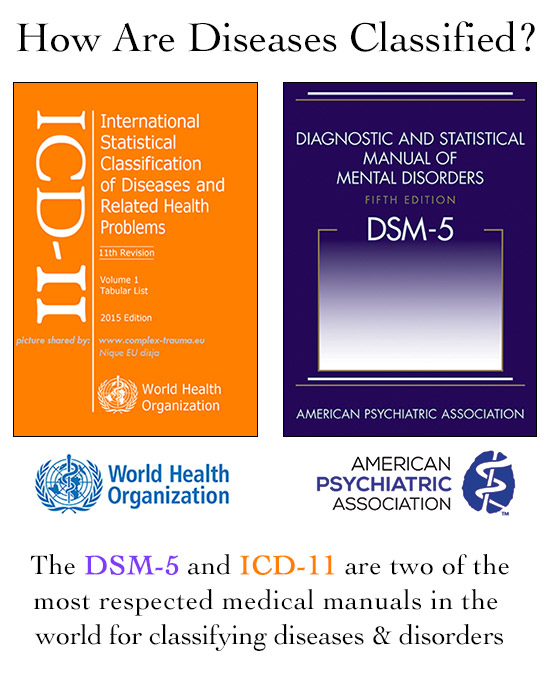
Source: Inspire Malibu Treatment Center

The researchers used a technique called a linear regression to show how much variation in the questionnaire results (having CPTSD or PTSD) was due to perceived social support. When based on the DSM-5 criteria, the regression model explained 19.5% of the variation in diagnosis. When using the ICD-11, it was 19.4%. This means both models were about equally useful in telling the researchers if any given patient’s sense of support can predict if they’ll be diagnosed with CPTSD.

If the patients were married or had a job, they were more likely to feel supported by their social circle. If they had what the DSM-5 calls “negative alterations in cognition and mood” they were more likely to perceive less social support. In the ICD-11 questionnaire, patients with “disturbances in relationships” and who felt “emotionally numb” were more likely to perceive less social support. Taking a long time to calm down after being upset was linked to greater social support, which surprised the researchers. However, they explained this may have been due to chance or some other factor that was not measured by the testing method.

Next, the scientists compared the two conditions. They found that people diagnosed with CPTSD were only three-fourths as likely to feel socially supported in their lives, compared to those with PTSD. However, this does not mean that less social support worsens CPTSD, or that CPTSD causes the patient to have less social support. These things can’t be determined from this study — correlation does not imply causation.

The study design was “cross-sectional” – it used previously collected data from patients. It was not a controlled experiment. Therefore, it cannot predict things like the severity of CPTSD based on perceived social support. These questions require different types of studies to understand. The researchers also pointed out that the study was predominantly college-educated white people, so these results may not be generalizable to all CPTSD sufferers. However, the authors emphasize the importance of having a support system when suffering from a trauma-related disorder. This study also provides evidence for ways that CPTSD and PTSD may be different.


Related Posts

How Machine Learning has impacted Consumer Behaviour and Analysis
Consumer Research

How Machine Learning has impacted Consumer Behaviour and Analysis

January 4, 2024
Market Research The Ultimate Weapon for Business Success
Consumer Research

Market Research: The Ultimate Weapon for Business Success

June 22, 2023
Unveiling the Hidden Power of Market Research A Game Changer
Consumer Research

Unveiling the Hidden Power of Market Research: A Game Changer

June 2, 2023
7 Secrets of Market Research Gurus That Will Blow Your Mind
Consumer Research

7 Secrets of Market Research Gurus That Will Blow Your Mind

May 8, 2023
The Shocking Truth About Market Research Revealed!
Consumer Research

The Shocking Truth About Market Research: Revealed!

April 25, 2023
market research, primary research, secondary research, market research trends, market research news,
Consumer Research

Quantitative vs. Qualitative Research. How to choose the Right Research Method for Your Business Needs

March 14, 2023
Next Post
Analysis on Impact of COVID-19: Vanadium Redox Battery Market 2020-2024| Environmental Impact of Battery Disposal to Boost the Market Growth | Technavio | Business

Analysis on Impact of COVID-19: Vanadium Redox Battery Market 2020-2024| Environmental Impact of Battery Disposal to Boost the Market Growth | Technavio | Business

Categories

  • Consumer Research
  • Data Analysis
  • Data Collection
  • Industry Research
  • Latest News
  • Market Insights
  • Marketing Research
  • Survey Research
  • Uncategorized

Recent Posts

  • Ipsos Revolutionizes the Global Market Research Landscape
  • How Machine Learning has impacted Consumer Behaviour and Analysis
  • Market Research: The Ultimate Weapon for Business Success
  • Privacy Policy
  • Terms of Use
  • Antispam
  • DMCA

Copyright © 2024 Globalresearchsyndicate.com

Welcome Back!

Login to your account below

Forgotten Password?

Retrieve your password

Please enter your username or email address to reset your password.

Log In
This website uses cookies to improve your experience. We'll assume you're ok with this, but you can opt-out if you wish. Cookie settingsACCEPT
Privacy & Cookies Policy

Privacy Overview

This website uses cookies to improve your experience while you navigate through the website. Out of these cookies, the cookies that are categorized as necessary are stored on your browser as they are essential for the working of basic functionalities of the website. We also use third-party cookies that help us analyze and understand how you use this website. These cookies will be stored in your browser only with your consent. You also have the option to opt-out of these cookies. But opting out of some of these cookies may have an effect on your browsing experience.
Necessary
Always Enabled
Necessary cookies are absolutely essential for the website to function properly. This category only includes cookies that ensures basic functionalities and security features of the website. These cookies do not store any personal information.
Non-necessary
Any cookies that may not be particularly necessary for the website to function and is used specifically to collect user personal data via analytics, ads, other embedded contents are termed as non-necessary cookies. It is mandatory to procure user consent prior to running these cookies on your website.
SAVE & ACCEPT
No Result
View All Result
  • Latest News
  • Consumer Research
  • Survey Research
  • Marketing Research
  • Industry Research
  • Data Collection
  • More
    • Data Analysis
    • Market Insights

Copyright © 2024 Globalresearchsyndicate.com



