


Almost half of all marine angelfishes surveyed so far hybridize frequently, both with close relatives and with distant relations, highlighting the question: what is a species?
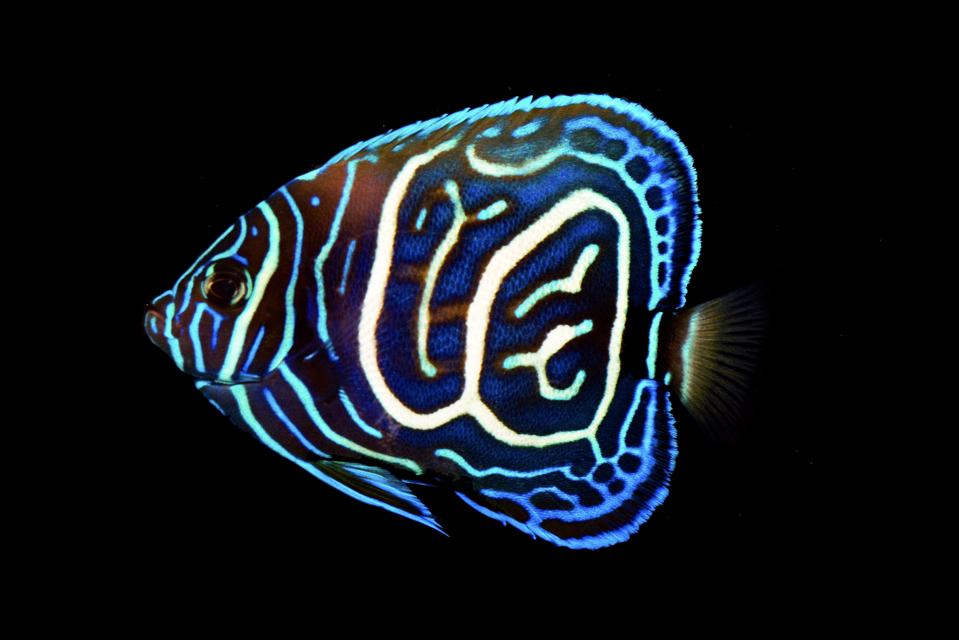
A juvenile marine angelfish hybrid (Pomacanthus imperator x P. annularis) shows striking … [+]
Yi-Kai Tea
I’ve always been intrigued by what a variety of animals tell us about the species concept. Most contemporary biologists and students of biology are familiar with the statement that “species are groups of actually or potentially interbreeding natural populations, which are reproductively isolated from other such groups” — a proposal that is commonly known as the “biological species definition” or the “biological species concept” (i.e.; ref). But if you read a recent study about two species of crows that are genetically identical except for a tiny region of their DNA that controls plumage color — a single trait that makes them look different enough to prevent them from breeding with each other (more here) — you may be pondering what exactly is a species.
Hybridization — the production of living offspring by two different parental species — also informs our ideas about species concepts. We know, for example, that hybridization is most frequently seen between closely related species that have not had sufficient time to fully speciate; that have very similar behaviors or a large ecological overlap; or are rare at the edges of their ranges. Hybridization is particularly common in coral reefs that are home to animals and plants that evolved in one geographic region and are now in contact with those that originated in another geographic region. These ‘hotbeds of hybridization’ are biogeographically important areas known as ‘hybrid zones’ or ‘biogeographic suture zones’.
Most studies of hybridization have been conducted in coral reefs because they are crowded and species-rich marine metropolises that allow for no real spatial separation between their many diverse citizens. For example, hybrids have been identified for more than 173 species of coral reef fishes (ref). And yet, despite all this hybridizing, coral reefs remain one of the most diverse ecosystems on Earth (ref). This raises a fundamental question: why do some coral reef fishes hybridize, whilst others don’t?
Investigating one hybrid fish’s ancestry inspired a survey of its entire family
“This project started as a small case study trying to identify the ancestry of one particular hybrid (between Paracentropyge venusta and P. multifasciata — the one used as a case study in our paper), but it eventually grew into a survey of the whole family”, said the lead author of the study, ichthyologist Yi-Kai Tea, a PhD Candidate who is studying marine fishes at the University of Sydney’s School of Life and Environmental Sciences.
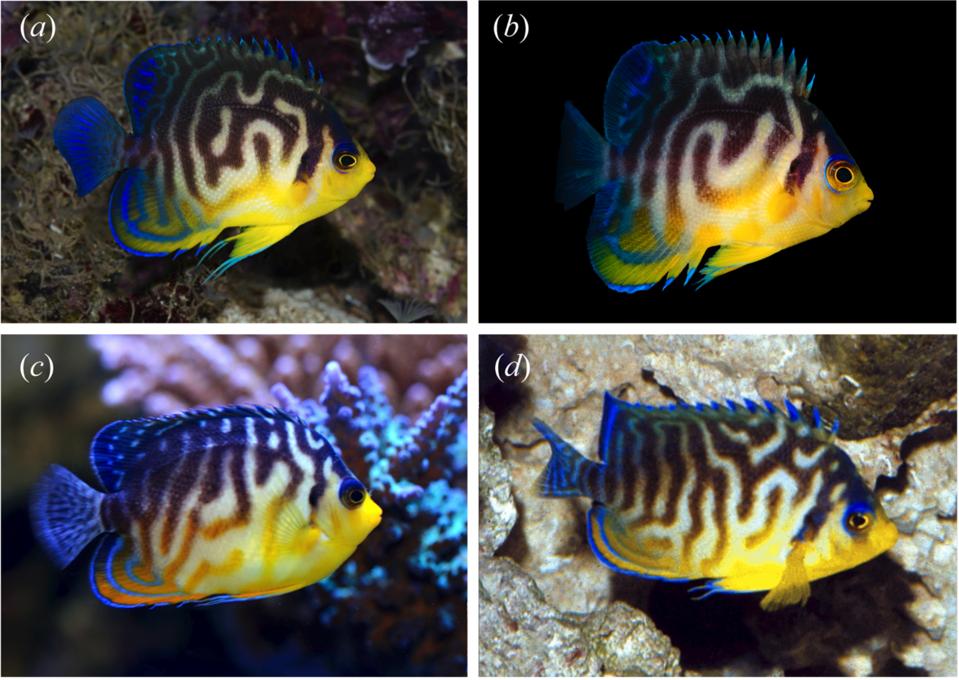
Figure 1. Paracentropyge multifasciata X Paracentropyge venusta hybrids. (a) and (b): specimens … [+]
doi:10.1098/RSPB.2020.1459
The marine angelfishes, Pomacanthidae, contain seven genera and about 86 species. These brightly colored fishes are roughly the size and shape of a person’s hand and are common on shallow tropical coral reefs throughout the Atlantic, Indian and western Pacific Oceans. Marine angelfishes, which are “one of the most charismatic and iconic groups of coral reef fishes” according to Mr Tea, are familiar to many people because quite a few species are popular subjects in both public and private marine aquaria.
“[O]ver the last decade or so (before I started my PhD) I’ve worked in the marine fish industry as a writer, editor, and photographer, and over the years have amassed thousands of fish photographs”, Mr Tea said in email.
“This project was a really great opportunity to re-examine my existing photographs, and compare them to ones taken by my colleagues who have extensive experience doing underwater field surveys.”
These photographs featured wild fishes as well as those living in aquaria.
“Many of these include hybrids of angelfishes that are rarely seen”, Mr Tea added in email.
Mr Tea and his co-authors, Professors Nathan Lo and Simon Ho, and Dr Joseph DiBattista from the Australian Museum, Jean-Paul Hobbs from the University of Queensland, and Federico Vitelli from Edith Cowan University, began their survey by identifying 87 species of angelfishes as being valid species.
Mr Tea and his collaborators then identified hybrid angelfishes from photographs by their intermediate colors and patterns between two formally recognized species (Figure 2), an approach that has been validated in previous studies of other species (i. e.; ref).
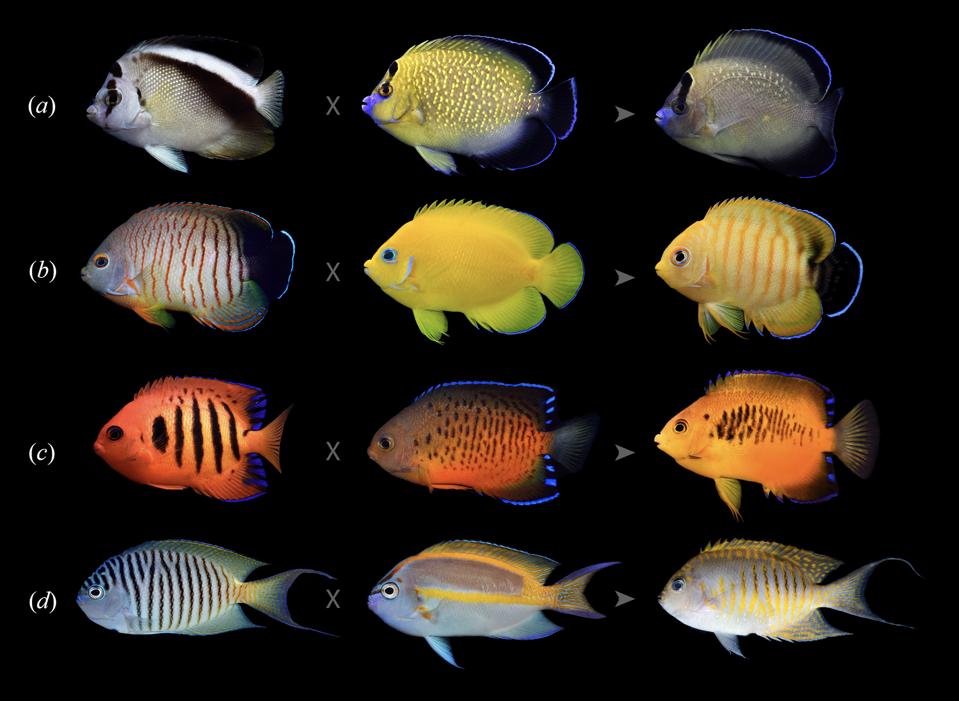
Figure 2. Putative hybrids are identified on the basis of intermediate coloration between … [+]
Yi-Kai Tea (doi:10.1098/rspb.2020.1459)
Using this simple methodology, Mr Tea and his collaborators report that at least 42 species — nearly half of all known species of marine angelfishes — create hybrids. Even amongst coral reef fishes, this tendency for hybridization is exceptionally high.
“This is among the highest incidences of hybridisation in coral reef fishes”, Mr Tea remarked.
How reliable is visual identification of hybrid angelfishes?
Because Mr Tea was identifying hybrids from photographs amassed over the years, it was impossible to travel back in space and time to get a small sample from them for genetic studies to validate this method. However, Mr Tea did have access to several individual Paracentropyge hybrids (Figure 1, also Figure 3, upper right panel) that he could get samples from so he could genetically test whether visual identification of hybrid angelfishes is a valid approach.
The genus Paracentropyge contains three species distributed across the Pacific Ocean and eastern Indian Ocean: the purple mask angelfish, Pa. venusta, whose range is restricted to shallow coral reefs in southern Japan, extending south to Taiwan and to the northern Philippines; the multibarred angelfish, Pa. multifasciata, which is distributed throughout shallow coral reefs in the Pacific Ocean and eastern Indian Ocean; and the recently discovered peppermint angelfish, Pa. boylei, a small elusive fish that is restricted to very deep reefs in the French Polynesian Islands.

Figure 3. Upper left: purple mask angelfish (Paracentropyge venusta). Lower left: multibarred … [+]
doi:10.1098/rspb.2020.1459
Previous studies of marine angelfishes suggested that the multibarred and the purple mask angelfishes are genetically well separated into distinct species (ref).
Mr Tea and his collaborators genetically tested the reliability and reproducibility of visually identifying hybrid angelfishes by conducting an analysis on a combination of mitochondrial and nuclear markers from two naturally occurring hybrids (denoted by a pale blue star following their scientific names in Figure 4) between the purple mask angelfish, Pa. venusta, and the multibarred angelfish, Pa. multifasciata, that he and his collaborators had previously identified based their intermediate color and distinct patterning.
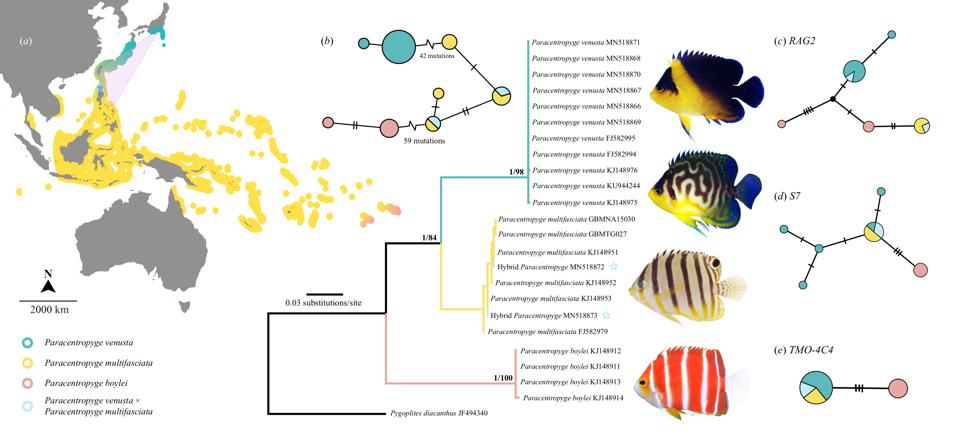
Figure 4. (a) Geographical distribution of species of Paracentropyge. Known localities of hybrids … [+]
doi:10.1098/rspb.2020.1459
How can marine angelfishes hybridize so often?
As a result of this survey, Mr Tea and his collaborators report that marine angelfishes are one of the most prolifically hybridizing families of fishes on coral reefs. Nevertheless, they were surprised to find hybrids between species separated by more than 10 million years of evolutionary time, and with as much as a 12% pairwise distance between their mitochondrial DNAs. Pairwise distance is a measurement of differences in pairs of DNA sequences.
“This genetic separation is quite astounding, considering that hybrids are rarely reported between species that share more than 2 percent in genetic distance”, Mr Tea observed. “Though coral reef fish hybrids are common; they are usually formed by closely-related species.”
Mr Tea and his collaborators also found that even when the parental species look quite different, hybridization occurs on coral reefs, often due to a combination of factors, including external fertilization and the marine environment itself.
“Marine angelfishes, like many coral reef species, are broadcast spawners that fertilize their eggs externally”, Mr Tea elaborated in email. “Given that physical barriers of isolation are fewer in a watery realm, and with so many species living together on reefs, the chances of accidental fertilization even between species that do not normally come together intentionally is higher than, say, in terrestrial species.”
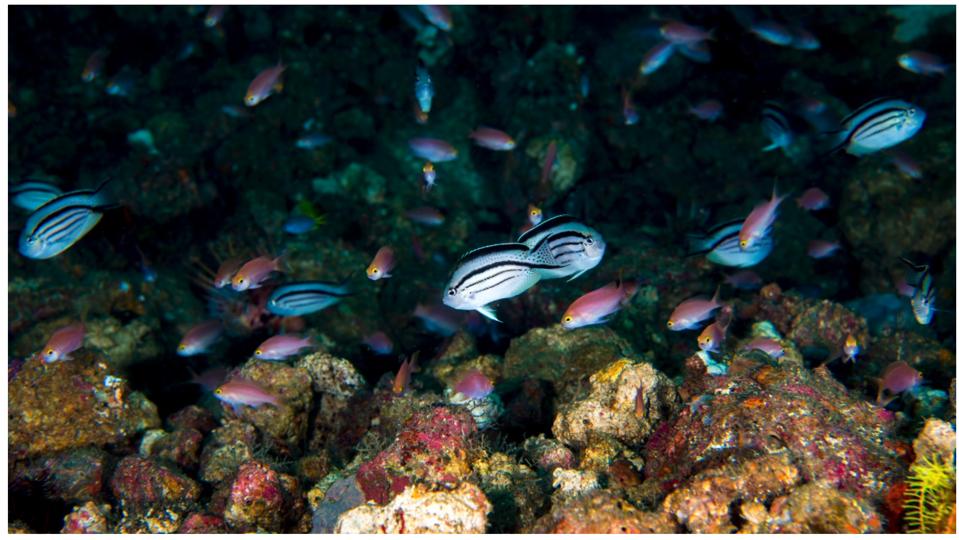
Figure 5. A harem of female (dominant male out of frame) Lamarck’s black-striped angelfish … [+]
L.A. Rocha
Another intriguing possibility is that some life history traits may enhance hybridization, too. For example, living in harems, which is a fairly common life history trait of the Pomacanthid family, could also enhance hybridization. We know that many species in the Pomacanthid family are protogynous hermaphrodites, where each individual in a harem is capable of changing its sex, although this transition is typically suppressed by the presence of a dominant male, thereby maintaining a female biased sex ratio in the harem.
Further, many species in the Pomacanthid family — including some Pomacanthus species — live in mixed-species aggregations on the same coral reef. Thus, synchronous spawning in these mixed-species harems could provide increased opportunities for hybridization through accidental fertilization, disassortative mating (choosing a mate that looks different) and sneak spawning.
With so much hybridization occurring, will marine angelfishes eventually merge into just a few species?
“Simply put, the answer is no — at least, not really”, Mr Tea replied in email.
Studies indicate that most hybrids in marine angelfishes occur between distantly related species so they are less likely to be fertile and thus, they end up as ‘evolutionary dead-ends’.
“This means that they are unable to breed with their parents, or among themselves, and so species erosion is prevented”, Mr Tea explained in email. “However, this isn’t always the case. In some areas of the world, for example, the Christmas Islands, where closely related sister species abut in distribution, we often see way more hybrids than pure blooded parents. In situations such as these, there is a continuum of parents and their hybrids.”
Genetic mixing between species is known as ‘introgression’, and it is common in specific regions of the world known as ‘hybrid zones’. But introgression is often localized to these areas, and so does not affect the species as a whole in other parts of their distributions.
What do angelfishes reveal about the Biological Species Concept?
“There are several proposed species concepts. Dozens. The one most people are familiar with is the biological species concept, which states that species are a group of organisms that can successfully interbreed and produce fertile offspring”, said ichthyologist Luiz Rocha, an Associate Curator and Follett Chair of Ichthyology at the California Academy of Sciences as well as an adjunct professor at the University of California, Santa Cruz and San Francisco State University. Professor Rocha, who was not involved in this study, is an expert in speciation in coral reef fishes.
“If we follow this concept, several angelfish species are not valid”, Professor Rocha pointed out in email. “However, in practice, very few people follow this concept, and angelfish species (even the ones that hybridize and leave fertile offspring) do fit several other species concepts, like the ecological, evolutionary, and taxonomic concepts.”
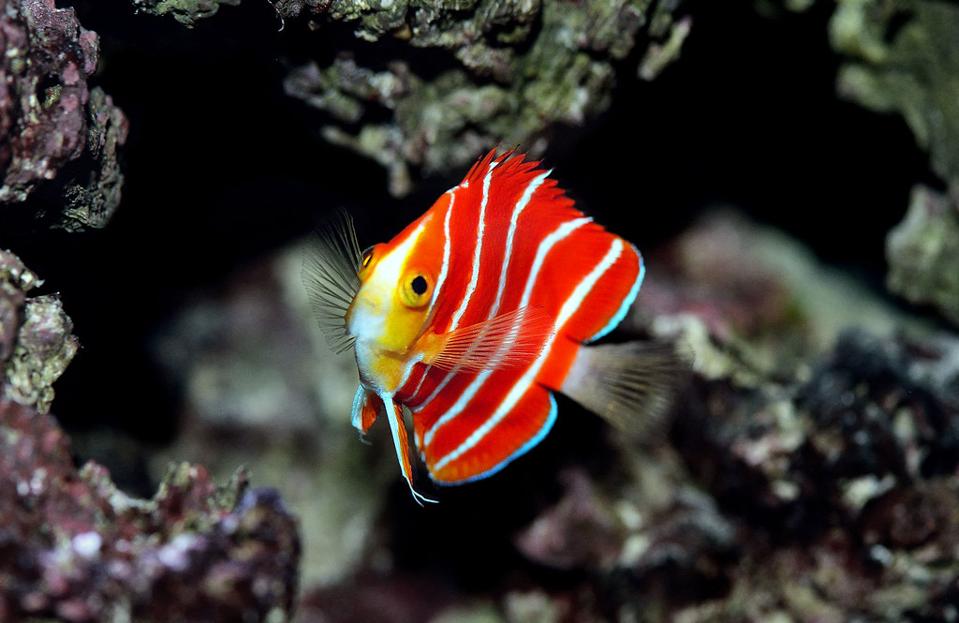
Most marine angelfishes are restrict to shallow coral reefs, seldom venturing deeper than 50 m (160 … [+]
Yi-Kai Tea
Has the rate of hybridization increased recently, or has our ability to detect hybrids improved recently?
“Absolutely the latter”, Professor Rocha replied in email. “Now with underwater photography, the internet, and genetics, our ability to detect them greatly increased. Especially in groups as charismatic as angelfishes.”
“With molecular techniques advancing so quickly, we are now able to detect and confirm hybrids better than ever”, Mr Tea agreed in email.
Mr Tea recognized that not all hybrids can be easily detected by simply looking at them.
“Although most hybrids show intermediate coloration between their parents, thus allowing easy visual identification, this is not always the case. Some hybrids are masked by having coloration that lean more towards one parent over the other — this is especially common in hybrids between very closely related species, where repeated back-crossing and interbreeding can give rise to a myriad of offspring with intermediate colors.”
Cryptic species hybrids are even more difficult to identify visually.
“It is also important to remember that there are many other fish groups that are not as colorful, and so visual identification would be of little use”, Mr Tea pointed out in email. “In those instances, we are still able to detect hybrid ancestry using DNA techniques.”
The study that launched a thousand questions
Why do some fishes hybridize, whilst others don’t? What genetic and ecological thresholds limit and permit hybridization? This large-scale survey provides a critical launchpad for tackling these and other key questions concerning hybridization in coral reef fishes — the largest group of vertebrate species in the marine environment.
“Given the weak barriers of separation in marine systems, we expect hybridization to occur more widely between closely related species”, Mr Tea said in email. But he noted that, curiously, “some species have very little separating them in terms of genetic distance and ecological overlap, yet we absolutely never find hybrids between them.”
Is this a stochastic process?
“We simply don’t know”, Mr Tea replied in email. “We still do not know why some species just never seem to form hybrids. The regal angelfish for example — Pygoplites diacanthus — is found throughout the Indian and Pacific Oceans, yet has never been reported to hybridize. It is the only genus in the family not reported to form hybrids.”
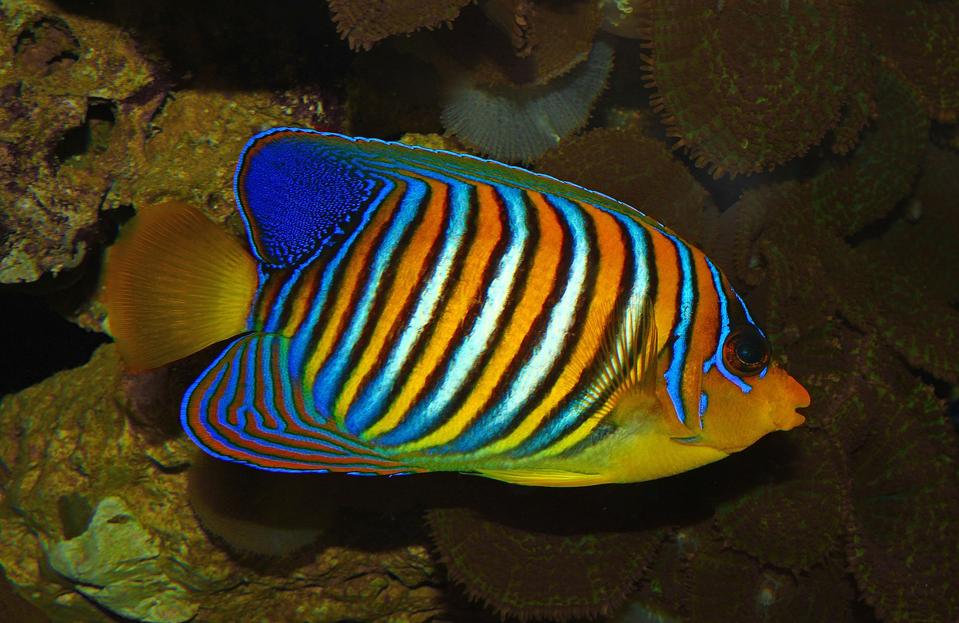
Figure 6. Regal angelfish (Pygoplites diacanthus, Pomacanthidae), also known as the Royal angelfish. … [+]
H Zell via a Creative Commons license
“There is still so little we know about the secrets of our coral reefs”, Mr Tea concluded in email. “Although we characterize and show that hybridization is a common process, we still don’t really know much about it. Over the years we have shown that genetic distance and relatedness is key to permitting hybridization, but recent studies have shown that species separated by tens of millions of years can still come together and form viable offspring.”
“This phenomenon is still largely poorly known and we are only beginning to chip away at it.”
Twitter is for the fishes, too
“This was an opportunity that kind of grew out of nothing really, and it has been great fun”, Mr Tea said with his characteristic enthusiasm. “In fact, Luiz [Rocha] and I often compete with each other (to the amusement of science twitter) to see who has the best angelfishes photos!”
Twitter is a great tool to follow the musings of the close-knit scientific fish community and to brighten your day with lots of gorgeous photographs of colorful — or just plain weird — fishes.
“I highly encourage readers to follow along — there are heaps of incredible fish photographs floating around twitter, and it’s always great when ideas spark into collaborative studies! Luiz and I are on twitter as @coralreeffish and @fishguykai, respectively.”
Source:
Yi-Kai Tea, Jean-Paul A. Hobbs, Federico Vitelli, Joseph D. DiBattista, Simon Y. W. Ho and Nathan Lo (2020). Angels in disguise: sympatric hybridization in the marine angelfishes is widespread and occurs between deeply divergent lineages, Proceedings of the Royal Society B: Biological Sciences, 287(1932):20201459 | doi:10.1098/rspb.2020.1459







