


Before the Big Ten and PAC-12 officially announced their conferences would cancel fall sports, including the coveted multimillion-dollar football operations, players, coaches and even parents attempted to save the 2020 season.
Orchestrated by Power Five players, the #WeWantToPlay movement was created to give voice to athletes who wanted to compete despite reservations by school administrations and league presidents that would be possible in the middle of a raging coronavirus pandemic that had already robbed Americans of graduations, county fairs, and family reunions.
And lives, too.
Ohio State quarterback Justin Fields most recently started a petition in the hopes of influencing the Big Ten to reverse its decision and reinstate fall sports.
“We want to play. We believe that safety protocols have been established and can be maintained to mitigate concerns of exposure to Covid 19,” Fields wrote. “We believe that we should have the right to make decisions about what is best for our health and our future. Don’t let our hard work and sacrifice be in vain. #LetUsPlay!”
Since the petition was created by Fields, it has received more than 230,000 signatures in a show of support for the movement.
Even President Donald Trump has backed players’ efforts to get back on the field.
In an interview on Fox Sports Radio, Trump said the prospect of canceling college football would be “a tragic mistake.”
“These football players are very young, strong people, and physically, I mean they’re physically in extraordinary shape,” Trump said. “So they’re not going to have a problem, you’re not going to see people, you know, could there be? Could it happen? But I doubt it.”
Trump wasn’t the only politician to get into the act of trying to save big-time college football. Nebraska Sen. Ben Sasse sent a letter to Big Ten presidents pleading them to hold the 2020 college football season.
“Life is about tradeoffs. There are no guarantees that college football will be completely safe–that’s absolutely true; it’s always true. But the structure and discipline of football programs is very likely safer than what the lived experience of 18-to-22-year-olds will be if there isn’t a season,” Sasse wrote.
A lot is a stake for major college football to occur. Millions of dollars are on the line for universities. Entire communities that rely on college football to drive its economy could endure significant financial damage if there is no season.
But lost in the battle to save Power 5 football is the realization that not every team or conference has influential and power figures at the ready to vouch for them.
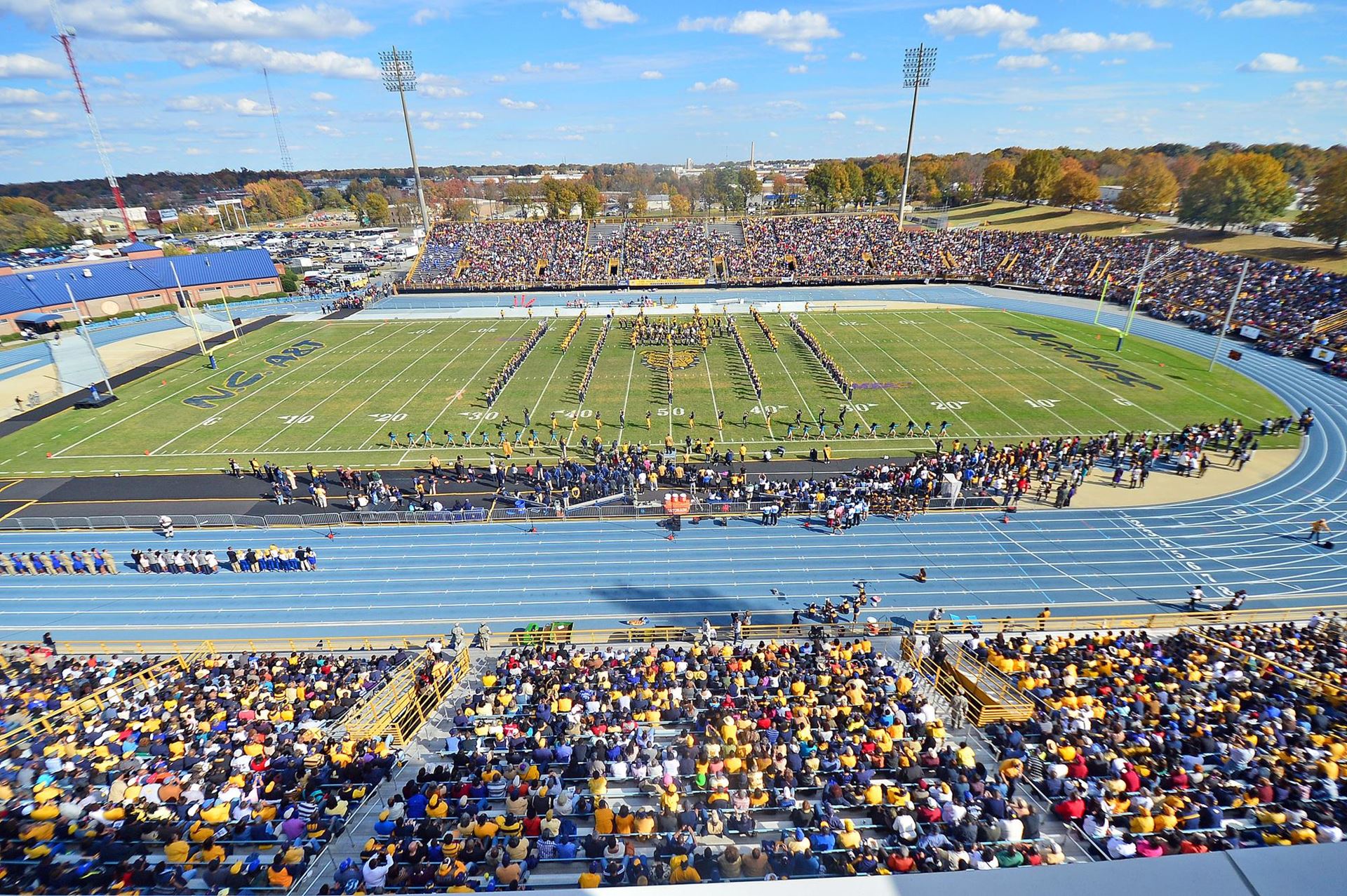
Take HBCU conferences as an example. None of them will be playing football in fall 2020. And those decisions, unlike in FBS territories, were not politicized.
University presidents, school athletic directors, and league officials understood the risk was just too great for athletes and staff to participate in sports during a time in which a pandemic was happening and no cure or truly effective therapeutic was available to mitigate the COVID-19.
Schools in the SWAC, MEAC, and down to the Division II level and beyond also did not have the luxury of investing thousands upon thousands of dollars a month to execute the required testing protocols it would take to complete a season.
How big is that gap?
At the University of Illinois, head football coach Lovie Smith told the press that players would be tested daily upon arriving on campus in addition to in-season NCAA testing protocols. The estimated expense would set the school back $300,000 a month.
There is no historically black college that can come close to affording the cost associated with such frequent testing. It is why schools such as Morehouse College, which has just a $2 million athletic budget, canceled fall sports.
“We can’t,” Morehouse President David Thomas told Sports Illustrated, “or at least I’m not smart enough to know how we can. “Every president and athletic director needs to look at [the positive tests]. How can we go forward with a season, given what we know about the virus, and think we won’t accelerate transmission?”
What also should not be lost is that Black people so far have been disproportionately impacted by COVID-19.
A study by Johns Hopkins Center for Health Equity and the Urban League showed that the coronavirus infection rate for African Americans is 62 per 10,000 people compared with 23 per 10,000 people for whites.
A Harvard Center for Population and Development Studies report found that Black people with COVID-19 in the 25-34 age group had a mortality rate 7.3 times that of non-Hispanic white people. The disparity was nine times higher in the 35-44 age group and 6.9 times higher for the 49-54 group.
While those under 25 tend to have less severe COVID-19 outcomes, minorities — particularly younger Black people — are hospitalized at higher rates relative to the population.
A COVID-NET survey compiled by Axios said that Black people between 18-49 made up 23% of hospitalizations compared to just 13% of whites in the same age group.
“I think that in terms of institutions trying to manage that and what it looks like if a student contracted it,” Dillard athletic director Kiki Baker Barnes told HBCU Sports in June. “I think the institution opens itself up to all kinds of liabilities.”
She later added: “Who’s going to take on that liability?”
It seems right now that the risk is just too great for football to happen, especially at universities and colleges that simply do not have to resources to take the field safely despite whatever pressures exist to return to normalcy.
Many HBCUs are now vulnerable financially in the midst of a pandemic that doesn’t provide an outlet for schools to generate revenue through athletics. Its fans, athletes, and everyone with ties are equally susceptible to all the horrors and disparities that COVID-19 has already presented since March.
There are no star HBCU athletes with the cache, no political might nor financial incentive attractive enough to make it worthwhile. There is no safety net for black colleges in the event of a worst-case scenario. The only and humane option is to #NotPlay.







