

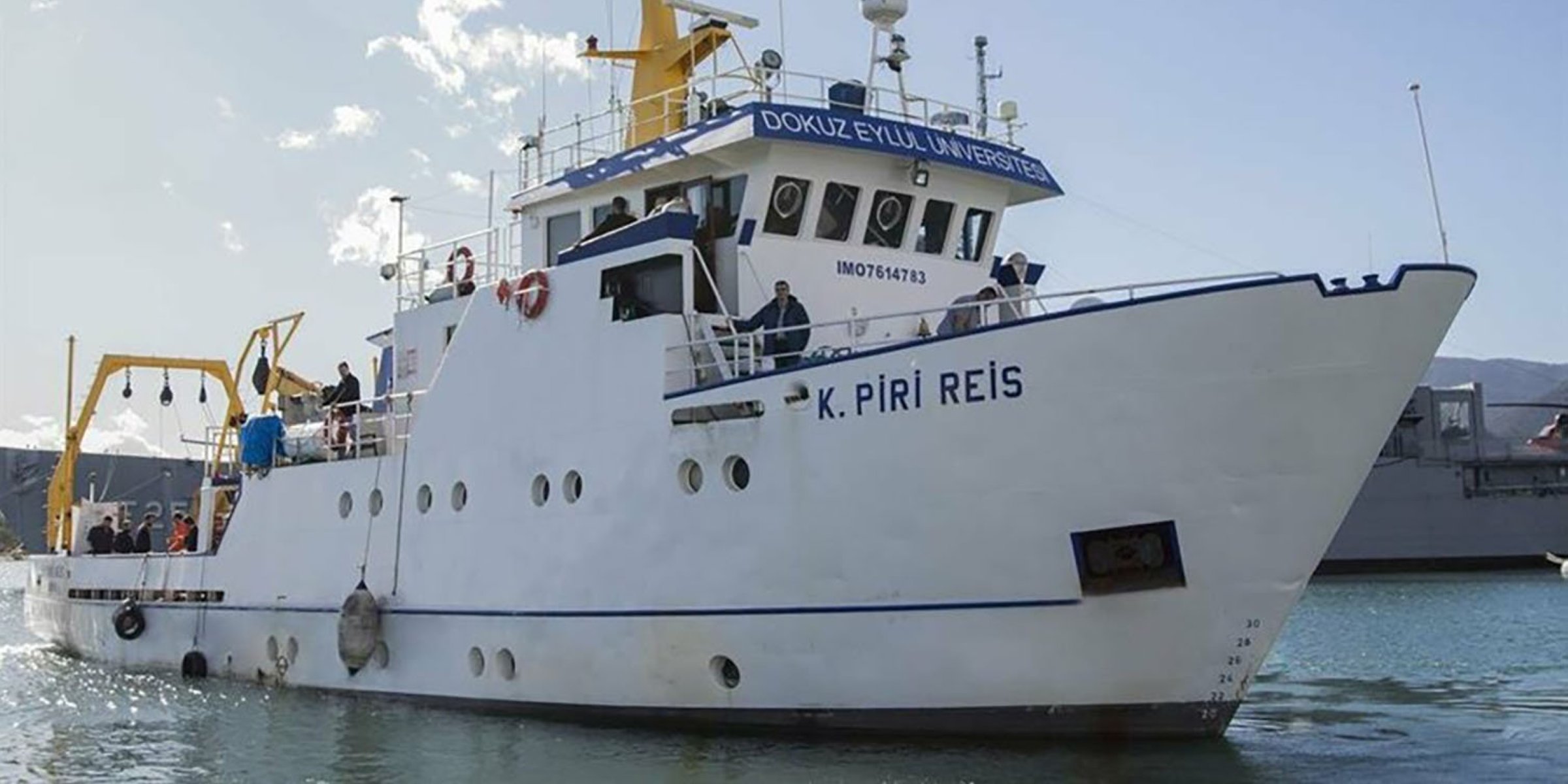
A Turkish seismic ship will conduct research on gas hydrate resources in the Black Sea, a local university announced on Wednesday.
The statement from Dokuz Eylül University (DEU) in the western Izmir province said a protocol was signed between the Institute of Marine Sciences and Technology and Dokuz Eylul Technology Development Zone for the project on investigating the gas hydrate resources in the Black Sea with the university’s research vessel, Koca Piri Reis.
The project is intended to determine the number of gas hydrates that exist in wide areas in the Black Sea, the gas volume they contain and the geochemical composition of the gas, and to find the most suitable gas production model.
Derman Dondurur, a professor at the DEU Institute of Marine Sciences and Technology faculty, said in a statement that it is possible to obtain 164 cubic meters (5,791 cubic feet) of natural gas from 1 cubic meter of gas hydrate under ideal conditions.
Dondurur underlined that the main research method in the project will be seismic studies, adding that all the activities will be carried out by the Koca Piri Reis research vessel.
He also said that the research will include the collection of sediment samples from the sea bottom and its geochemical and geotechnical analysis.
DEU Rector Nukhet Hotar said the researchers closely follow Turkey’s recent steps and policies in the energy field.
“I wish this important project, which will support our country’s moves in the field of energy and its efforts to reduce foreign dependency in energy, will be beneficial,” she said.
Meanwhile, Turkey’s first oil and gas drilling vessel, Fatih, last month started its first drilling in the Black Sea at the Tuna-1 zone, Energy and Natural Resources Minister Fatih Dönmez had said.
Fatih departed for its long-awaited drilling mission in the region from northern Turkey’s Trabzon on June 26, following the completion of installation works. The 229-meter-long (751-foot-long) vessel, which weighs 5,283 gross tons, is capable of drilling to a maximum depth of 40,000 feet.
Named after Istanbul’s Ottoman conqueror Sultan Mehmed II, known as Fatih in Turkish, the vessel will be carrying out activities in the region where drilling work has been suspended for a long time.
The Tuna-1 zone is located off the mouth of the Danube block at the crossroads of the Bulgarian and Romanian maritime borders and the inland waters of Turkey.
Turkey’s first seismic vessel, Barbaros Hayrettin Paşa, has previously carried out seismic surveys in the Black Sea and identified rich reserves of natural gas in the Danube block in the Turkish seawaters of the western Black Sea. Romania and Bulgaria have been producing oil and gas for many years in the Danube block.







