


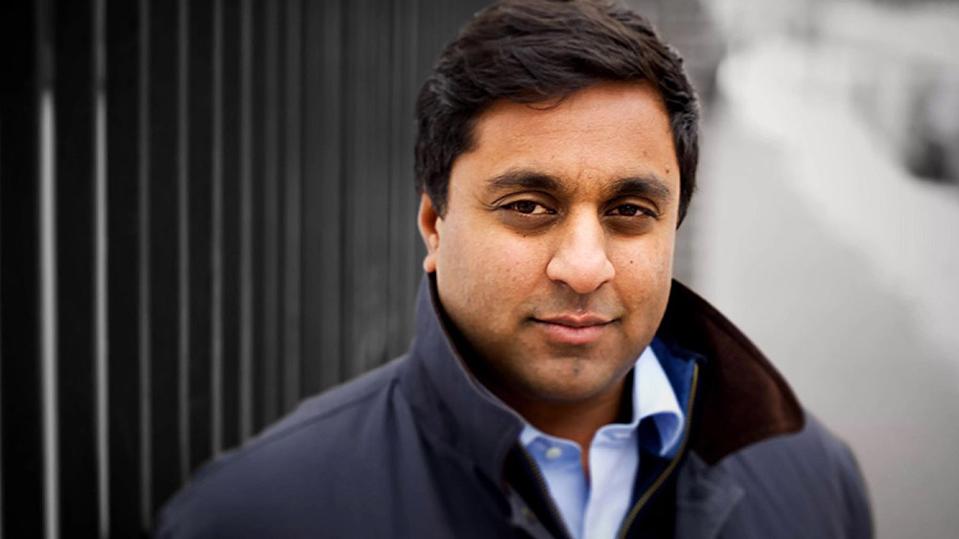
Semil Shah from Haystack
As the General Partner at Haystack Ventures and a Venture Partner at Lightspeed, today Semil Shah is one of the most sought-after early stage investors for startups. But the road to get there was not easy. In fact, when Semil was trying to get his foot in the door in Silicon Valley, it did not come from the traditional paths but because of the writing he was doing online with Twitter, Techcrunch and his own blog. Today, he remains one of the leading commentators on the startup ecosystem and we sat down to discuss his views on the IPO’s of 2019, unpacking acquisitions, and the future of consumer brands in this innovation ecosystem.
Dave Knox: In 2019 we’ve seen this wave of long awaited IPOs from some of the biggest names in tech. What’s your takeaways for how the market has reacted to some of those IPOs and what’s going to be the impact on startups in the near term?
Semil Shah: I think we’ve learned two things. One is for more capital efficient software-driven companies that have the benefit of a network effect in a global market like Slack or Zoom. The line I use is that it’s not inconceivable to think every professional in Malaysia will use Slack and Zoom, right? We couldn’t say that 10 years ago. So the head room or those companies and the ability to grow total addressable market is huge on a capital efficient basis.
You have seen a market for awarding that potential upside. What we’ve also learned from the 2019 IPO market is if you have a company like Uber with very high burn rate and it costs you a lot of money to make money, then people view the stock as a more mature stock with less upside potential. There’s still tremendous value in the platform. But Uber is unprecedented in the amount of spend that it incurs.
And so if you put those two things together, I think capital efficient businesses with head room that continue to go public, people will salivate in the public markets that invest in these companies and exploit that head room. And companies that have very, very heavy high burn rates that are tough to put a cork into that will be factored into consideration and potentially screw people.
Knox: One of the things you often write is an “unpacking” post when a major acquisition takes place. What are you trying to capture on these takeaway posts?
Shah: Part of it is tactical in the sense that in the moment when an acquisition happens, it’s so rare and people may know the other people and so it just becomes like the police blogger you would read in your local newspapers growing up. You want to know what’s happening in your neighborhood. And so when an acquisition happens, it’s sort of like it’s immediate neighborhood news, right?
It’s like getting an alert on Nextdoor. So part of that is the tactical praying on the urgency of attention. And then second is I feel like I’m uniquely qualified to explain to people what’s happening because frankly a lot of journalists don’t really understand what’s happening and why companies might be buying companies and where the price may be where it is or what the term may be for investors and shareholders.
And then third, I think it’s just a reminder for everybody that these events are very rare. The exits at M&A that are meaningful don’t happen that often. And so we should stop and take a look and say, “Okay, this is a rare event. Why did it happen?” And I think it’s also just a good sober medicine for everybody, including myself where you can work really hard or do all the right things and may not generate an exit.
Knox: How should Fortune 500 companies in CPG or Retail think about the new business world that is being created by technology?
Shah: If you and I were sitting in the room with the chief strategy officers of Unilever, Target, Kroger and I would just say, “Who are your core customers and what’s your recurring relationship with them? What service are you providing?” I think that’s a very tough question for these CPGs to answer.
And if you think about the most unique companies today and the most innovative companies today, they all have some recurring daily or weekly relationship or service provision to the consumer, right? And so CPG doesn’t have it, you’re just selling stuff. So you need scale and you need people to purchase, continually to purchase. I mean when you frame the question in terms of what’s the recurring relationship in service provided to the customer, it’s very difficult for these CPG companies to have any answer.
And so I think it would take something radically different for people to feel like they’re part of something. Take Whole Foods in the early days. They started in a lot of their shops to pushback retail space and favor of kind of dining or having a pizza oven or some places for people to eat or have coffee. That became kind of a congregation place for some people in some neighborhoods. Again, that’s a small example, but I do think the CPG companies will have to think about how do I use real estate that physically get in front of my customer. And have more of a recurring service with them in some way.
Knox: In a recent post, you talked about the concept of triangulation and how as an early stage investor, one signal is that you hear about a company from multiple non-overlapping sources. How can that same principle be used by larger companies for startup engagement?
Shah: Let me answer that in two parts. One is what’s the part that’s just happening varies in terms of the Bay Area. The issue in the Bay area is that we have a lot of companies being formed, which has its pros and cons associated with it. And it’s very easy now to have one person tell you about a startup and they’ll say, I really recommend this. And so you get too many recommendations and referrals.
So one way of sifting through that is do other people who may not know each other tell you about the same thing. Because in the same way that that kind of go through a cave in the middle of the night and don’t run into things is that they’re constantly bouncing sonar signals off the wall. And I think that’s what a lot of investors do here. Because they’re being told so many things. They want to hear it from multiple sources to get to the ground truth and then they can hone it.
In terms of companies, I think it’s a little bit different and I think it kind of comes more from the melding of the product leaders at these CPG companies plus their strategy departments and asking “Where do we take the company over the next 20, 50, 100 years? What’s our customer engagement model?
And I think it’s more of a vision around that. And then find pieces that fit into that and then integrating it rather than saying, “Oh, this is a startup we need to buy.” It’s more of a strategy question, right? So someone in the room may agree with me and say, “Okay, we need a real estate footprint” and people in the room may disagree with me and say, “No, that’s a huge cap X and we don’t want to engage that way.” Right? And so I think once those debates are had, then once a strategy is laid out, then the M&A teams can execute against that strategy.
Knox: Speaking of those signals that these companies can learn from, one of your Haystack investments is a really cool company called Second Measure that provides a unique view into consumer spending. How do you think large CPG and media companies can use Second Measure’s data to kind of do exactly what you just described?
Shah: One of the many reasons these new startups are interesting is because they’re able to capture new types of consumer data and purchasing data and spend data in ways that we haven’t. Second Measure’s not the only company, but it’s a very interesting company in the space where they’ve brokered arrangements with financial institutions and credit card providers to aggregate and anonymize data to show hedge funds and VC funds and public investors what’s happening to credit card spend. So they may say, “Look, DoorDash is gaining share from GrubHub and we see less credit cards hitting GrubHub than we see hitting DoorDash” and they can do interesting market sizing. I’m a little bit biased but I think Second Measure was a large part of changing the narrative around the Delivery Food Wards when DoorDash started to separate from GrubHub and Seamless and even Uber Eats just showing the lift that they were able to take.
For me it is like a focus group. There’s a huge debate in the Valley whether people who are product creators should just create versus going to focus groups. I don’t know what the answer is, but I do think there’s a wealth of data out there now that you can pay for it. And that could be more impactful to CPGs in developing their strategy and their product design because the sample size is much larger. Right? And you can start looking at cohorts over months, over quarters, over years and so that just hasn’t been available before.







