

The European Union should approach loot boxes from a consumer protection perspective rather than a gambling one, a recent study has recommended.
Conducted on behalf of the EU Internal Market and Consumer Protection committee, ‘Loot boxes in online games and their effect on consumers, in particular young consumers’ is among the most comprehensive loot box investigations to date, and outlines “problematic design features” of current industry monetisation and engagement mechanics.
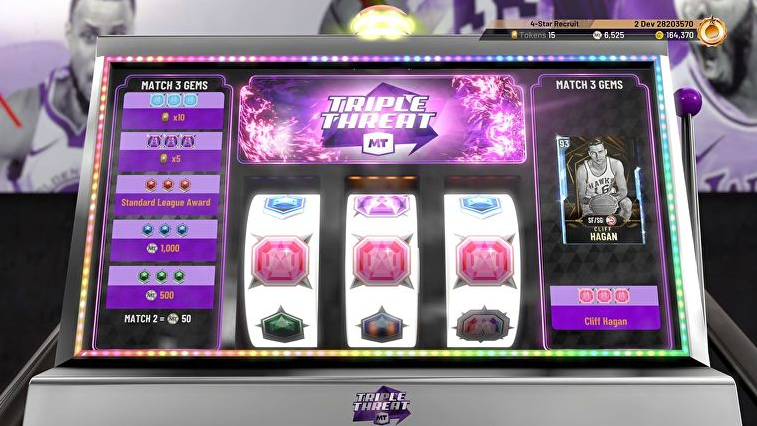
These mechanics create an “irresistible urge to play” and a “growing tension that could only be relieved by playing.” This is supported by the many shared characteristics of loot boxes with gambling, such as “presentational features” which mimic the casino aesthetic or otherwise glamorise potentially addictive loops.
The IMCP report noted that while these design features are not exclusive to games, they use “well-documented behavioural bias — systematic pitfalls in behaviour compared to how rational and well-informed consumers should behave — to sell content” and present “very real gambling-like activities.”
Certain features may become problematic for players because they tend to prolong gaming sessions, and could motivate players to repeatedly spend money on loot boxes, or resemble additive techniques applied in casino gambling. Perhaps the most striking example of this can be seen with the MyTeam trailer for NBA 2K20, which focused entirely on casino-inspired loot box minigames.
[Design features] use “well-documented behavioural bias — systematic pitfalls in behaviour compared to how rational and well-informed consumers should behave — to sell content”
“Some reward structures and presentation features might mislead players regarding the likelihood of receiving valuable items and could promote addiction,” reads the report. “These issues could be alleviated through responsible game design which refrains from using proven addictive features. Moreover, players should be clearly informed about the presence of loot boxes in games prior to downloading/purchasing them and about the probabilities of receiving certain items from a loot box at the moment of access.”
Considering the hamstrung attempts to limit access to problematic design elements such as loot boxes through gambling legislation, the IMCP study suggests refocusing efforts on consumer protection, where the EU has competence over legislation. The report recommends that protective measures be introduced at multiple points throughout the consumer journey.
The starting point would be “balancing out the asymmetry in information between players and publishers.” This would include raising awareness about risk, disclosing probability, and establishing robust refund policies. However, even the report authors note that experts doubt the efficiency of such measures.
Parental controls were also highlighted as an important factor, but again the authors noted that such controls aren’t effective unless they are the default, and parents properly understand them. Furthermore, it was suggested that parental controls be reframed to motivate adoption by adult players to protect themselves from potentially harmful practices.
“While consumer information, transparency and player control measures are certainly welcome initiatives, it is recommended that their effectiveness is systematically verified, for example through consumer testing,” reads the report. “It also needs to be made sure that such measures are supervised and enforced by independent bodies”
Attempts to fold loot boxes into gambling regulation have proven largely fruitless, and any legislation would struggle to keep pace with industry developments. We have already seen this with the adoption of battle passess over loot boxes as a means of monetisation.
The battle pass model proved favourable to many consumers and publishers alike, removing the elements of chance, and other gambling-like aspects. Even so, battle passess are not free from criticism, and have come under fire for monopolising a player’s time. The Fortnite battle pass, for example, requires anywhere between 75 and 150 hours of playtime to unlock all of the content. As psychologist Jamie Madigan highlights, these systems use “subtle and effective tricks of psychology” to keep players engaged.
“Some reward structures and presentation features might mislead players regarding the likelihood of receiving valuable items and could promote addiction”
Evidence of battle pass implications on player behaviour is still largely anecdotal however, and further scientific analysis is required. This only compounds the problem, as games can change tact in a single patch, while regulators and academics are still chasing their tails year after year.
It’s been nearly three years since the Star Wars Battlefront 2 debacle, and loot boxes remain one of the most controversial industry talking points. Although not a new mechanic, the recent discussion has been framed around whether loot boxes constitute gambling, with consumers, publishers, and regulators all taking wildly different stances.
A recent UK government inquiry into immersive and addictive technologies suggested that loot boxes be regulated under gambling law. Belgium and the Netherlands have — to differing degrees — folded loot boxes into their gambling regulation frameworks. This resulted in companies like Electronic Arts, Valve, and Blizzard simply making in-game currency unavailable in accordance with national law while continuing business unabated elsewhere: hardly the solution many have been looking for.
The argument in favour of regulating loot boxes as gambling has been slowed by a lack of conclusive scientific evidence regarding the behavioural and psychological outcomes. However, early studies from University of Tasmania researchers Dr. Aaron Drummond and Dr. James Sauer found that loot boxes are “psychologically akin to gambling.” This position was later reinforced by Dr. David Zendle and Dr. Paul Cairns of York St. John University and University of York, whose research found “important links between loot box spending and problem gambling.”
Another hurdle to the gambling approach is that regulatory and legal frameworks across EU member states are “not sufficiently harmonised” for any Europe-wide initiative. As a result, the EU Commission has not directly addressed the issue of loot boxes, but has issued several recommendations about protecting minors in the broader context of gaming and gambling.
However, 19 out of the 30 nation members of the Gaming Regulators European Forum signed a declaration in 2018 voicing their concerns “related to the blurring of lines between gambling and gaming.” The declaration identified skin gambling, loot boxes, social casino gaming, and gambling themed content as areas of concern.
Although each EU member state has autonomy over how it legislates gambling, there are three common aspects that factor into almost every state’s definition: Something of monetary value must be wagered, the outcome is determined at least partly by luck, and the reward must also be of monetary value.
The jury may still be out on the extent and nature of harm these strategies cause, but there is blood in the water and the regulators are circling
Except for a few rare instances such as Counter-Strike: Global Offensive, the contents of a loot box cannot be exchanged for real-world money. Being unable to cash out in this way effectively nullifies any legal connection to gambling, and is typically the decisive factor when assessing whether loot boxes could be regulated under gambling law.
A review into these practices found they do not technically constitute gambling, and the GREF was satisfied with action taken by companies like Valve to stamp out third-party grey markets where players would illicitly trade the contents of loot boxes for real-world money. Still though, the IMCP report suggests that gambling authorities “intensify their cooperation” on this front.
It also also highlights the scant few industry and regulatory practices relating to loot boxes. Aside from the direct action taken by gaming authorities in Belgium and the Netherlands, the Protecting Children from Abusive Games Act was put before the US Congress last year, but has not been adopted or even discussed in Congress since.
Beyond that, PEGI introduced a new in-game transactions warning label, Apple now requires games on the App Store to disclose loot box odds, and some games such as Fortnite, Rocket League, and Heroes of the Storm have done away with the controversial mechanic entirely.
The industry has been living under the shadow of looming regulation for several years now, especially in Europe where individual nation states have paid close attention to the issue. The EU may have no authority over gambling legislation, but it is able to harmonise rules on consumer protection within the single market.
Recommendations made by the IMCP report could present a major shift in tactics away from the minutiae of gamling legislation and towards a more holistic approach, addressing directly the “harmful effects on players” of certain gaming mechanics.
The industry has resisted all attempts to reign in some of its more questionable monetisation and engagement techniques. EA’s attempt to rebrand loot boxes as “surprise mechanics” being one of the most notable moments from last year’s UK government inquiry. The jury may still be out on the extent and nature of harm these strategies cause, but there is blood in the water and the regulators are circling.







